What should you check before choosing?
Start with the amount of laundry you want to dry without hanging it out, then check the installation requirements and full-cycle figures for the models you’re considering.
| Priority |
What to check |
What I need |
| Drying capacity |
Compare the washing capacity with the capacity for a wash-and-dry cycle. Check how much laundry can stay in the drum for both stages to run one after the other. |
I want to take out my whole load dry without removing some of it first: the drying capacity, not just the washing capacity, needs to match my load. |
| Space and access |
Check the width, height and depth of the exact model. Also measure the space needed in front of the door and the route to its final position. |
I don’t have room for two appliances or a permanent drying rack; the machine also needs to fit through the doors and into the space available. |
| Full cycle |
Compare the duration, water use and electricity consumption listed for the wash-and-dry cycle on a like-for-like basis, using the energy label and EU product information sheet. |
If I dry laundry in the machine often, the waiting time and full-cycle consumption matter just as much as the space I could save. |
A guide to the brands
The specifications below apply to specific models; they don’t describe every machine from each brand.
Bosch
For the WNG24402FR, Bosch lists a 9 kg washing capacity, a 6 kg wash-and-dry capacity and dimensions of 848 × 598 × 590 mm.
- The capacity for the full cycle is listed separately from the washing capacity.
- A 9 kg wash load can’t be dried in full in one 6 kg wash-and-dry cycle.
LG
LG describes the F964R35WR as an all-in-one washer-dryer with a 9 kg washing capacity and a 6 kg drying capacity.
- The combined design means you don’t need to install a separate tumble dryer.
- To compare it with other models, check the wash-and-dry cycle figures for the specific variant you choose.
Samsung
Samsung lists a 9 kg washing capacity and a 6 kg drying capacity for the WD90DG5B15BE, with dimensions of 600 × 850 × 600 mm.
- The listed dimensions give you a starting point for checking the space available.
- The drying capacity is lower than the washing capacity, so allow for the clearance needed for installation too.
Whirlpool
Whirlpool lists a 9 kg washing capacity, a 7 kg drying capacity and a depth of 60,5 cm for the FFWDB976258BCVFR.
- Its listed 7 kg drying capacity may suit a larger load than a model limited to 6 kg, provided the other aspects meet your needs.
- Check that the depth and clearance in front of the door suit the space available.
Washer-dryers available at Joybuy
These three washer-dryers combine washing and drying in one appliance. Each has a listed drying capacity of 6 kg, so compare this with your usual load before choosing a model.
 Image unavailable
Samsung WD11DG6B85BEU3 — 11 kg wash, 6 kg dry
This washer-dryer lets you wash and then dry your laundry in one appliance, as long as the load you want to dry doesn’t exceed the stated 6 kg capacity.
The stated washing capacity is 11 kg, so a load heavier than 6 kg will need to be reduced before drying. Check the dimensions, the route to the installation space and the EU energy label information for the variant being sold.
View on Joybuy
 Image unavailable
Samsung WD10HG6U34BEU3 — 10 kg wash, 6 kg dry
This washer-dryer is a good fit if you need a single appliance and your load fits within the stated 6 kg drying capacity.
The stated 10 kg capacity is for washing; it doesn’t mean you can dry the whole load in one go. Check the EU energy information sheet for this variant to compare the full-cycle duration and consumption, then measure the delivery route.
View on Joybuy
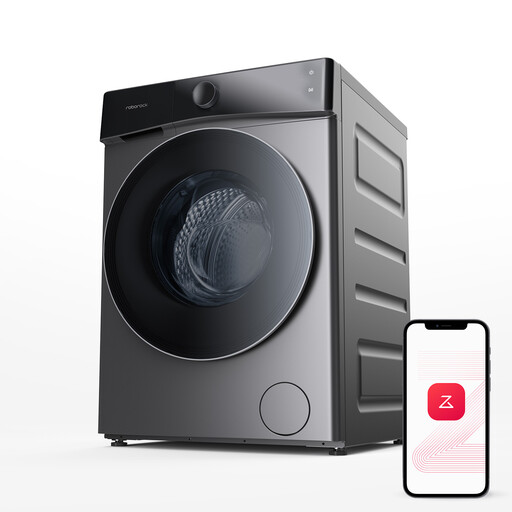 Image unavailable
Roborock Zeo Lite Gray — 10 kg wash, 6 kg dry
This washer-dryer lets you run a wash-and-dry cycle for a load within its stated drying capacity of 6 kg.
The stated washing capacity is 10 kg; a load of this size can’t be dried in full in a single 6 kg cycle. Check the dimensions and the clearance needed, as well as the duration and consumption figures for the wash-and-dry cycle for the variant being sold.
View on Joybuy
Frequently asked questions
Why won’t a 9/6 kg washer-dryer dry 9 kg of laundry?
The 9 kg figure is the maximum washing capacity, while 6 kg is the maximum stated load for drying or for a wash-and-dry cycle. To finish with the whole load dry without removing any laundry, keep the load within that second capacity. Bosch, for example, lists these as two separate figures for the WNG24402FR.
What should I compare on a washer-dryer’s energy label?
Look at the information for the wash-and-dry cycle, including its capacity, duration and water and electricity consumption, rather than considering the washing figures alone. EU energy labelling rules cover this information for washer-dryers, so compare models using the same cycle basis.
Are separate appliances worth it if I have enough space?
They’re worth considering if you often dry large loads and have room to install them. UFC-Que Choisir says a washer-dryer takes longer to dry clothes than a conventional tumble dryer. If space is limited, a washer-dryer has the advantage of combining both functions in one appliance.
What should I measure before a washer-dryer is delivered?
Measure the available width, height and depth, and don’t forget the space needed to open the door and the delivery route. Check the dimensions of your chosen model and make sure it can be moved, while packaged, through the doors, corridors and any lift. Samsung also highlights the importance of checking access.


