A washer-dryer can be a good solution when space is limited, provided you can plan your laundry around its drying capacity, which is generally lower than its washing capacity, according to UFC-Que Choisir. If you can put up a clothes airer occasionally, that’s another way to dry your laundry. For frequent, larger loads, consider two separate appliances if you have room to install them. Before choosing a washer-dryer, compare the capacity, duration and energy and water consumption of its wash-and-dry cycle, not just its washing specifications.
Who is this solution suitable for?
People without space to dry clothes regularly
If two appliances and a clothes airer would take up too much room, a washer-dryer combines washing and drying in one spot. However, check that your laundry load fits within its drying capacity, which is generally lower than its washing capacity, according to UFC-Que Choisir.
Households that dry smaller loads
You can plan your laundry around the amount the appliance can dry in one cycle. For example, Bosch, Electrolux and LG list washing/drying capacities of 9/6 kg, 10/6 kg and 8.5/5 kg respectively for some of their models. Check both capacities for the model you’re interested in.
Households that often dry large loads
If splitting a load or waiting for a long cycle would disrupt your routine, first look into whether you could install two appliances or use a clothes airer. UFC-Que Choisir highlights the lower drying capacity of washer-dryers and the limitations of their drying function compared with a separate tumble dryer.
How do you choose a drying solution?
Washer-dryer
Worth considering: when you only have room for one appliance and your loads fit within its drying capacity.
The trade-off: drying capacity is generally lower than washing capacity. UFC-Que Choisir also notes limitations in drying performance and water consumption during drying for most of the models it tested.
Washing machine and clothes airer
Worth considering: if you have somewhere to dry your laundry, even temporarily, and can wait for it to dry.
The trade-off: the airer takes up space while your laundry dries, and it won’t solve the problem if there’s nowhere suitable to put it.
Two separate appliances
Worth considering: if you regularly dry large loads and have room to install a washing machine and tumble dryer.
The trade-off: you’ll need space and suitable installation conditions for both appliances. Compare their energy and water consumption model by model.
If a washer-dryer is right for your home, check these criteria against the specific model before making your choice.
| Priority |
What to check |
What you need |
| Drying capacity |
Compare the washing and drying capacities in kg, as well as the load limit for a combined wash-and-dry programme. UFC-Que Choisir says the washing capacity is generally higher than the drying capacity. |
I want to dry my laundry without regularly having to take some of it out. |
| Full cycle |
Compare the duration, water use and electricity consumption of the wash-and-dry cycle on a like-for-like basis. EU energy labelling regulations set out specific measurements for this cycle on domestic washer-dryers. |
My laundry routine needs to fit around the time it takes to wash and then dry a load. |
| Installation |
Measure the width, height, depth and clearance needed for the door. Also check the connections and installation requirements for your chosen model. |
One appliance needs to fit in the room without blocking access to the door or making maintenance difficult. |
| Maintenance |
Check the manual for instructions on cleaning accessible parts and managing lint. Electrolux notes that filtration systems vary, particularly on some heat-pump models. |
I’d like to know what maintenance is needed before using the drying function regularly. |
What should you watch out for before buying?
-
Choosing based on washing capacity alone
A machine that can wash a full load may not be able to dry the same amount. The capacities listed by Bosch, Electrolux and LG for the models mentioned above show the difference.
Make a note of both capacities and compare the drying capacity with the size of your usual loads.
-
Looking only at the washing energy rating
The washing rating alone doesn’t tell you how the combined cycle performs. For example, Electrolux gives the EW9W1166RA an A rating for washing and a B rating for washing and drying.
If you plan to use both functions, compare the wash-and-dry cycle figures for each model.
-
Underestimating the time and water needed for a full cycle
UFC-Que Choisir notes that most washer-dryers it tested use water during drying. LG lists a full-load wash-and-dry cycle of 7 h 50 and 90 L per cycle for its F852SV52IRS. These figures don’t apply to other models.
Check the duration and consumption figures for the wash-and-dry cycle of the appliance you’re considering, then make sure they suit your laundry routine.
-
Assuming a compact model will fit without any issues
A reduced depth doesn’t guarantee that the door will open or that connections and maintenance areas will remain accessible.
Measure the space and required clearances using the exact dimensions of the model, rather than relying on the word ‘slim’ alone.
Which branded models should you compare?
These examples highlight features to compare on specific models; they don’t imply that entire ranges are available.
Bosch
The French range includes washer-dryers worth considering in terms of their capacity and installation requirements.
- Bosch lists a washing capacity of 9 kg and a combined wash-and-dry capacity of 6 kg for the WNG24400FR.
- These capacities apply to this model. Check the specifications of any other Bosch appliance you’re considering.
Electrolux
The PerfectCare 900 EW9W1166RA is worth considering if you’re comparing heat-pump washer-dryers.
- Electrolux lists a washing capacity of 10 kg and a drying capacity of 6 kg for the EW9W1166RA.
- Its stated energy ratings, A for washing and B for washing and drying, don’t apply to the whole range.
LG
The F852SV52IRS is a Slim model to consider if depth is an important factor in your choice.
- LG lists a depth of 47.5 cm, a washing capacity of 8.5 kg and a drying capacity of 5 kg for this model.
- LG lists a full-load wash-and-dry cycle time of 7 h 50. Check that the duration and drying capacity suit your needs.
Washer-dryers available on Joybuy
Both of these washer-dryers combine washing and drying in one appliance. First compare their drying capacity with your usual loads, then check their dimensions and full-cycle figures before deciding.
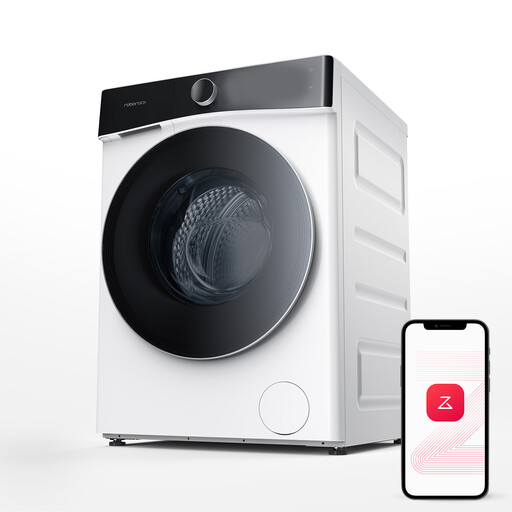 Image unavailable
Roborock Zeo Lite, 10/6 kg washer-dryer, white
If you want to dry your laundry without installing a second appliance, compare your usual loads with its 6 kg drying capacity, compared with 10 kg for washing. The model features Zeo-Cycle technology and the LintClear system. Before buying, check its dimensions and the duration, water use and electricity consumption of its wash-and-dry cycle.
View on Joybuy
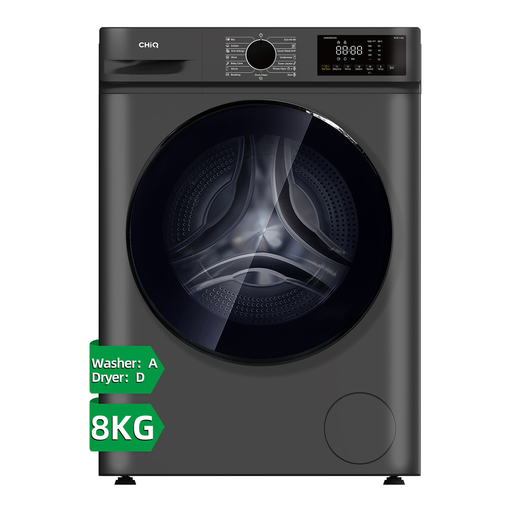 Image unavailable
CHiQ JW85882HG, 8/5 kg washer-dryer, dark grey
Its stated capacities are 8 kg for washing and 5 kg for drying, so plan your loads around the latter figure. The product title gives a width of 465 mm, while the description lists dimensions of 600 × 520 × 847 mm. Confirm the width and required clearances before ordering. Also check the duration and consumption figures for the wash-and-dry cycle.
View on Joybuy
Frequently asked questions
Why does a washer-dryer show two capacity figures?
As UFC-Que Choisir points out, the amount it can dry is generally lower than the amount it can wash. You may therefore need to split a full wash load before drying it. Compare both figures in kg for the specific model, and use the drying capacity to plan combined cycles.
What should I look for on the energy label if I’ll use both functions?
Look at the wash-and-dry cycle figures, including capacity, energy, water and duration, rather than just the washing rating. EU energy labelling regulations for domestic washer-dryers include specific measurements for the full cycle. Compare figures measured on the same basis.
Can a washer-dryer replace a separate tumble dryer for large loads?
Not necessarily. UFC-Que Choisir says washer-dryers’ drying performance doesn’t match that of a separate tumble dryer. If you often dry large loads, compare the actual drying capacity and cycle times, then check whether you could install two appliances at home.
How do I deal with lint after drying?
Follow the cleaning instructions in the manual for your chosen model. Electrolux says that standard washer-dryers generally don’t have a separate lint filter for drying, although there are exceptions, including some heat-pump models. Find out which parts need cleaning before settling into a regular routine.


