
Livraison le jour même ou le lendemain

Qualité garantie

Débloquez vos offres de bienvenue: Livraison GRATUITE | Jusqu'à -80 % | 30 jours d'essai gratuits à JoyPlus
Téléchargez l'application
When you live in an apartment and every square foot counts, the laundry chore can quickly turn into a real headache. The washer-dryer then emerges as the perfect solution: a single appliance to get your clothes clean and dry. But beware: behind this space-saving promise lie pitfalls that can turn what seems like a smart investment into a real source of frustration.
As a product expert at Joybuy, my mission is to guide you through the jungle of options to help you make the right choice. Let's break down the mistakes to avoid and the essential criteria for finding the appliance that will truly meet your expectations, without falling for marketing claims that are too good to be true.
The market is flooded with models, each with more enticing features than the last. However, certain design flaws or oversold features are often the source of many disappointments.
To avoid these disappointments, it's best to focus on a few non-negotiable technical specifications. They are the true benchmark for the performance and durability of your future appliance.
The first thing to look at is the dual capacity rating. A 10 kg washer-dryer for washing and 6 kg for drying (often noted as 10/6 kg) is a good standard for a family. If you live alone or as a couple, an 8/5 kg model may be more than enough. The key is to choose a drying capacity that matches the size of your typical laundry loads, so you can run a complete cycle without intervention. For the tightest spaces, a slimline washer-dryer (shallow depth) or an integrated washer-dryer will fit perfectly into your kitchen without sacrificing a decent capacity.
Since 2021, the new energy label is both clearer and more stringent. It displays two distinct ratings:
An A-rated washer-dryer for washing is a guarantee of controlled water and electricity consumption for your daily laundry. The combined cycle rating, which is logically lower, simply reflects the fact that drying is a very energy-intensive process. To get a clear idea, compare the consumption in kWh per 100 cycles: it's the best indicator of the annual running cost.
Beyond the fundamentals, certain innovations are real game-changers for daily use:
Rather than an endless list, we've selected three models that meet very specific needs, applying the criteria we've just discussed.
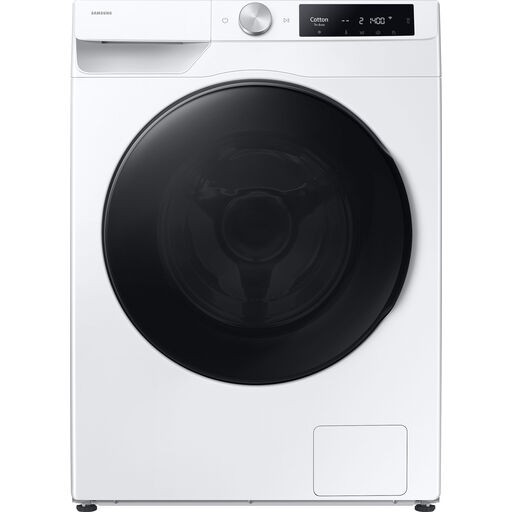
Why it's a great match: With its very large 11 kg washing capacity, it's built for the large laundry loads of families. Smart technologies like AI Wash and SmartThings connectivity allow you to optimise cycles and manage the machine remotely, a precious time-saver in daily life.
The wash/dry capacity ratio (11/6 kg) is clearly stated, avoiding any nasty surprises. The auto-dose detergent system and AI-powered cycle adjustments prevent waste and ensure optimal drying.
A-rated for washing for controlled consumption. The anti-allergen steam programme provides enhanced hygiene, a plus for households with young children.
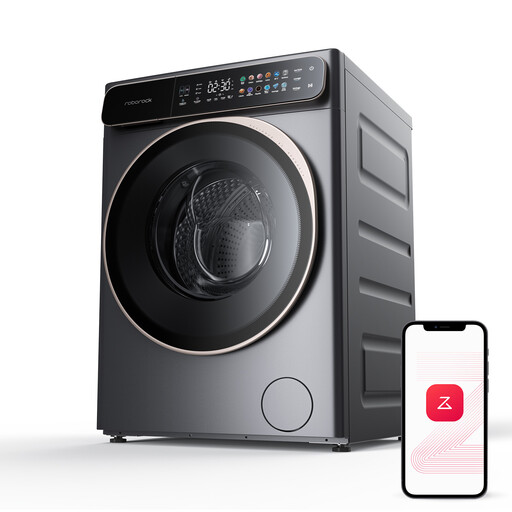
Why it's a great match: This is aimed at those who want the very latest innovations. The auto-dosing system, app control, and especially the Zeo-Cycle drying technology make it a high-end appliance that takes care of the most delicate textiles.
It tackles the pitfalls of harsh drying and maintenance head-on. The Zeo-Cycle technology dries at a low temperature to preserve clothes, while the LintClear system automatically cleans the lint filter.
Gentle drying and automated maintenance. The automatic detergent and softener dosing system simplifies your life for nearly a month.
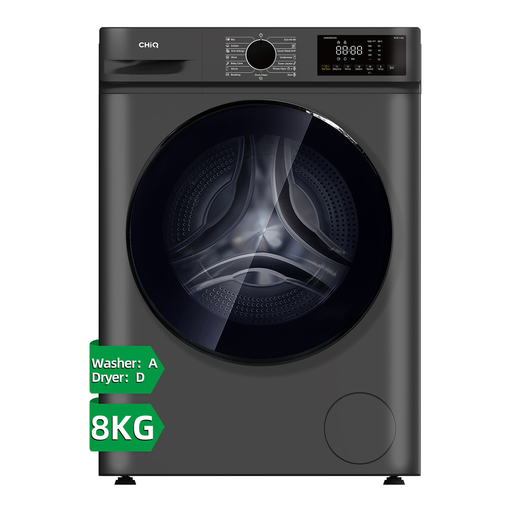
Why it's a great match: Its slimline design (only 520 mm deep) is engineered to fit into tight spaces. It offers a versatile 8/5 kg capacity, perfect for a couple or small family, with modern features like a steam function and a quiet Inverter motor.
It strikes the right balance between compactness, capacity, and features. The inclusion of a steam function and an Inverter motor sets it apart from entry-level models that often sacrifice these features on the altar of price.
Excellent size-to-capacity ratio. The BLDC Inverter motor ensures discreet operation, a decisive advantage for installation in an open-plan kitchen or studio apartment.
We have selected other models that meet our strict specifications and current European safety standards.
It all depends on usage and the specific models. For washing alone, an A-rated washer-dryer is just as efficient as an equivalent standalone washing machine. The difference lies in the combined cycle: it is often more water and electricity-hungry than using two separate, high-performance appliances. The choice is therefore a trade-off between energy consumption and the considerable space savings. To decide, the energy label and its consumption per 100 cycles remains your best guide.
The average lifespan is estimated at around 10 years, which is comparable to a standard washing machine. Of course, this longevity depends on the frequency of use, build quality, and, above all, the rigour of its maintenance. Regular cleaning of the lint filter and door seal is absolutely essential. Note that models equipped with an induction (Inverter) motor are generally known for their superior durability.
Yes, that's the whole point of this type of appliance! But be careful, there is one golden rule: the weight of the laundry must never exceed the machine's maximum drying capacity. For example, with a 10/6 kg model, you can run a complete "Wash and Dry" cycle with 6 kg of laundry (or less). If you wash a 10 kg load, you will have to remove some of the damp laundry before you can start the drying cycle.