
Livraison le jour même ou le lendemain

Qualité garantie

Débloquez vos offres de bienvenue: Livraison GRATUITE | Jusqu'à -80 % | 30 jours d'essai gratuits à JoyPlus
Téléchargez l'application
A marker that stains clothes, a tip that collapses after just a few uses or a format that is unsuitable for small hands can quickly turn a creative session into a frustrating experience. For parents, teachers and relatives, choosing washable markers for children is therefore about more than simply counting the number of colours listed on the box.
Here are the main pitfalls to avoid, the criteria to consider and a selection of kits suited to different uses, from discovering drawing to creating highly detailed colouring projects.
Ink described as washable will not necessarily disappear from every surface. Product listings generally refer to easier cleaning from skin and most fabrics, but the result depends on how much time has passed, the material and the colour used.
A stain left on a light-coloured textile for several hours can be much harder to remove. To avoid unpleasant surprises, choose water-based ink and act quickly with water and soap, following the manufacturer’s recommendations.
A 24-colour set may seem like better value, but a 3- or 4-year-old may struggle to sort and put away so many markers. A set of 6 or 12 colours makes it easier to identify shades and reduces the risk of markers going missing.
A wider palette becomes more useful once children start creating detailed drawings, cards, comics or lettering projects.
Fine tips are ideal for details but less practical for filling large areas. By contrast, washable dot markers make it easy to create patterns, prints and solid areas, although they offer less precision.
The marker barrel also deserves some attention. A thick or oval format will often be easier for small hands to hold than a standard slim marker.
For use at home or at school, check that the markers contain water-based ink, and look for information about the recommended age, use under supervision and precautions in case of contact with the eyes or mouth.
The ‘non-toxic’ label remains a characteristic declared by the manufacturer. It does not replace checking the labelling, warnings and compliance information shown on the packaging. In France and the European Union, pay particular attention to the regulatory markings applicable to toys and stationery intended for children.
Brush and chisel-tip markers are better suited to children who want to experiment with different drawing styles. For toddlers, washable crayons focus more on ease of handling and simplicity of use.
A case with a handle is easy to carry between home and school. After each activity, replace the caps carefully to help prevent the ink from drying out. With dual-tip markers, remember to check both ends before putting the case away.
Washable does not mean that the ink can be used without care on walls, furniture or delicate surfaces. A washable tablecloth or protective sheet is therefore still a good idea.
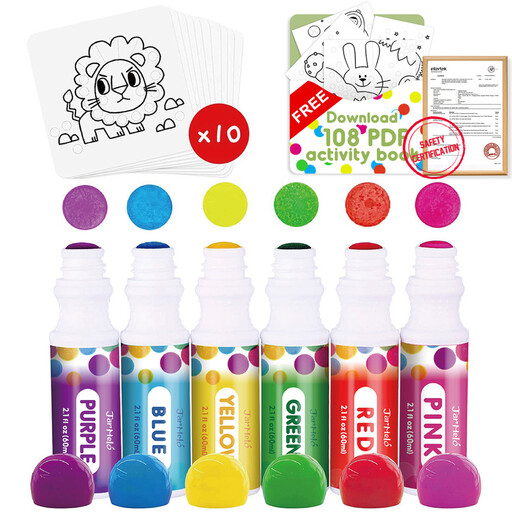
Why this choice suits this user: An assortment of six colours is perfect for first drawings, discovery activities and children who are still learning to put their creative materials away.
The round sponge tip avoids the difficulties associated with fine tips, while the limited number of colours makes sorting easier.
Water-based, alcohol-free ink described as 90% washable from skin and most fabrics. An activity booklet is included.
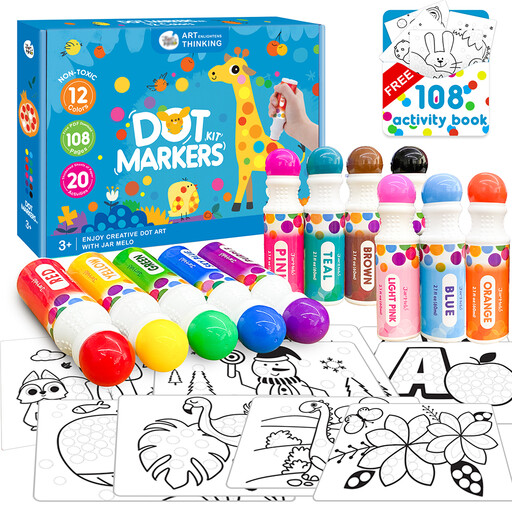
Why this choice suits this user: The twelve shades offer more possibilities for colouring, educational worksheets and family craft activities.
The jumbo format is designed for small hands, while the sponge tip can create dots, lines and large areas without having to switch tools.
The set includes 20 activity sheets and access to more than 120 digital pages, as well as the 12 markers.
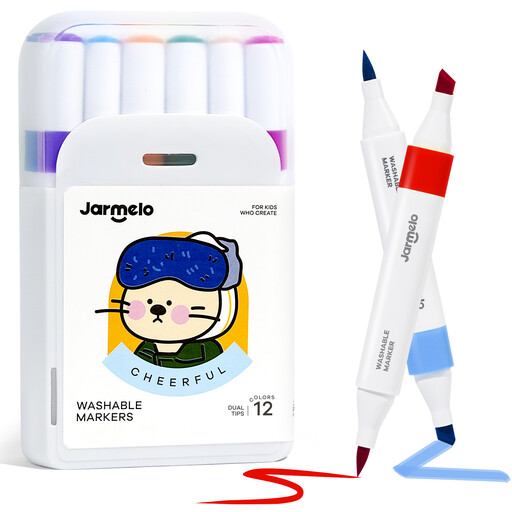
Why this choice suits this user: From around the age of 4, children can explore drawing, colouring and lettering with two types of tip.
The dual tip means there is no need to buy a brush marker and a chisel-tip marker separately in every colour.
Water-based ink described as alcohol-free and 90% washable from skin and most fabrics, with a storage case.
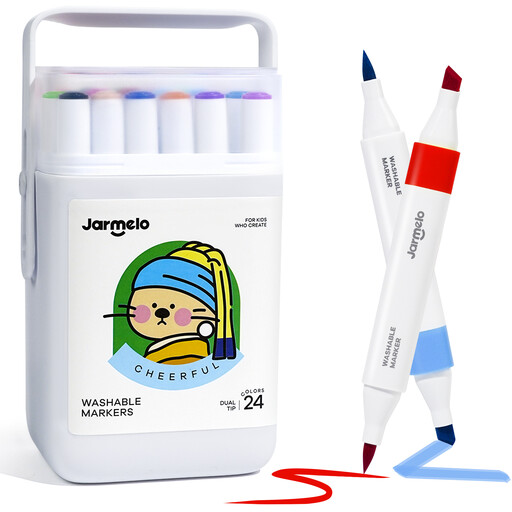
Why this choice suits this user: This set is aimed at children aged 4 to 12 who regularly use their markers for detailed drawings, posters or school projects.
The brush and chisel tips offer two uses per marker, while the case with a handle makes it easy to store all 24 colours.
A wide colour palette and water-based ink described as alcohol-free and 90% washable from skin and most fabrics.
We have put together an updated selection of products for creative activities and colouring, featuring the key characteristics to compare before you buy.
No. Washability claims generally apply to certain surfaces and assume that the ink is cleaned quickly. The product information for Jar Melo models states that they are 90% washable from skin and most fabrics. Always test the product on a small, inconspicuous area and avoid delicate textiles.
It depends on how often it is used, storage conditions and whether the cap is replaced properly. Put the cap back on immediately after use, keep the case in a dry place and check the tip if the ink begins to flow less evenly. A marker that dries out after just a few uses has often not been capped properly.
They can be suitable for fine motor skills activities, colour-recognition worksheets and group projects. Their sponge tip releases more ink than a fine marker : make sure you protect the table and use paper that is thick enough.