
Livraison le jour même ou le lendemain

Qualité garantie

Débloquez vos offres de bienvenue: Livraison GRATUITE | Jusqu'à -80 % | 30 jours d'essai gratuits à JoyPlus
Téléchargez l'application
When temperatures drop, a warm winter duvet can make all the difference when it comes to enjoying comfortable nights. However, you still need to choose a model suited to your room temperature, bed size and care routine. If it is too lightweight, it will let the cold through. If it is too thick or dense, it can quickly become too warm and difficult to wash.
Before comparing models, it is worth knowing the main pitfalls to avoid.
A very thick duvet is not necessarily the warmest. Thermal comfort mainly depends on the type of filling, its fill weight, loft and manufacturing quality. A hollowfibre duvet may look very bulky while remaining lightweight, whereas a duvet filled with down and feathers offers a different structure and feel.
Terms such as “extra warm”, “hypoallergenic” or “all seasons” should be checked against verifiable information: composition, fill weight, thermal rating, certifications and care instructions. A manufacturer’s claim is not a medical guarantee. If you are prone to allergies, also check the cover fabric and washing recommendations.
A 220 x 240 cm winter duvet is suitable for many double beds, but it may not fit inside the drum of a standard household washing machine. Conversely, a 140 x 200 cm duvet is designed for a single bed and will provide limited overhang on a double bed. Choosing a washable duvet therefore means considering both your machine’s capacity and your drying options.
A duck down duvet generally provides a soft feel and a sense of lightness. A feather and down duvet often combines the support of feathers with the loft and softness of down. However, take the time to check the exact proportions: two products with similar names may have very different compositions.
Synthetic fibres, particularly polyester hollowfibre, are a practical alternative. They are often easier to wash and dry, which can be useful for families or anyone looking to avoid the demands of specialist care.
Expressed in g/m², fill weight indicates the amount of filling used, but it is not enough on its own to determine how warm a duvet will be. Where provided, the “Tog” rating offers an additional point of reference. For example, the Good Nite model is rated at 15 Tog. This figure should be considered alongside your room’s usual temperature and how sensitive you are to the cold.
In a poorly heated room, a warm natural duvet or a denser winter model may be a sensible choice. In a well-heated bedroom, an all-seasons duvet or an extra blanket may sometimes help prevent overheating.
A cotton cover feels pleasant against the skin and gives bed linen a more natural feel. Square stitching helps keep the filling in place and limits areas with less filling. Certifications such as OEKO-TEX Standard 100, CertiPUR, Sanitized and ISO 9001 do not all cover the same criteria. Check which certificate they refer to and what it actually guarantees for the product in question.
Some product descriptions also mention anti-dust-mite or antibacterial properties. Treat these as characteristics claimed by the manufacturer, not as a medical guarantee. A hypoallergenic duvet does not replace the recommended hygiene measures required in cases of allergy.
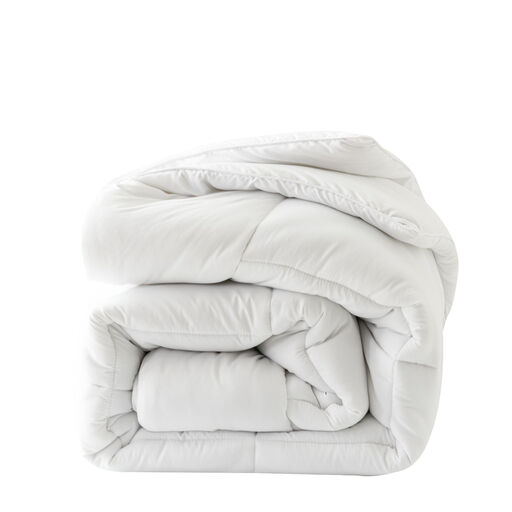
Why this choice suits this profile : its 15 Tog rating provides a simple reference point when choosing a winter duvet, without having to compare different types of fibre.
The microfibre description and thermal rating provide more specific information than a simple promise of warmth.
Microfibre filling, double-bed size of 200 x 200 cm and a 15 Tog rating stated in the product name.

Why this choice suits this profile : this double-bed size combines an organic cotton sateen cover with a natural filling stated as 90% duck feathers and 10% down.
The detailed composition prevents you from interpreting the term “down” as a promise that the product is predominantly filled with down.
220 x 240 cm dimensions, square stitching, 100% cotton sateen cover and washing instructions stating a maximum temperature of 40 °C.
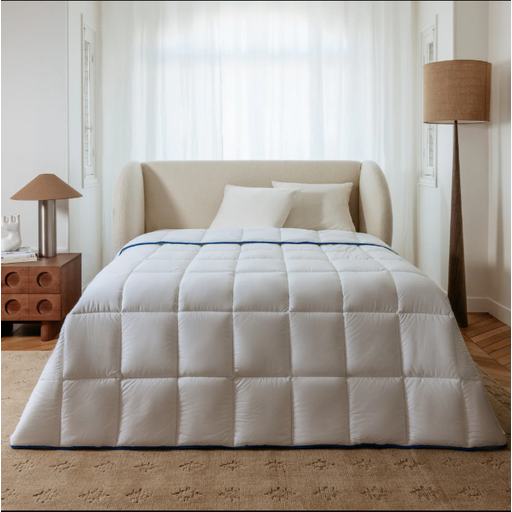
Why this choice suits this profile : its single-bed size and machine-washable design may suit a child’s bedroom, guest room or any situation requiring frequent washing.
The product details specify the composition, 400 g/m² fill weight and 40 °C washing instructions, rather than simply promising warmth without figures.
Cotton percale cover, siliconised polyester hollowfibres and certifications listed in the product details, including OEKO-TEX Standard 100.
To preserve a duvet’s loft, air it regularly without leaving it exposed to moisture for long periods. Always follow the care label instructions: some natural models require gentle drying or professional cleaning. Synthetic duvets that can be washed at 40 °C are often more practical, but they generally need a sufficiently spacious drum.
A duvet cover protects the duvet from stains and means you can wash it less often. Also inspect the stitching, loops and areas where the filling could shift. An all-seasons duvet can be a smart choice for adjusting warmth throughout the year, provided the joining system is clearly explained.
Compare the thermal rating, fill weight and composition. A model rated at 15 Tog, or a winter duvet made with down and feathers, may be suitable for a cool room. In a well-heated bedroom, a less insulating option will often be more comfortable.
It depends on the model. Some natural duvets can be washed at 40 °C and dried at a low temperature, while others must be taken to a professional cleaner. Check the product details and make sure your washing machine can accommodate the duvet before buying it.
Start by measuring the mattress and allow for sufficient overhang at the sides. Sizes 200 x 200 cm, 220 x 230 cm and 220 x 240 cm suit different bed configurations. For a single bed, 140 x 200 cm remains a common size, but the mattress depth must also be taken into account.