
Livraison le jour même ou le lendemain

Qualité garantie

Débloquez vos offres de bienvenue: Livraison GRATUITE | Jusqu'à -80 % | 30 jours d'essai gratuits à JoyPlus
Téléchargez l'application
An all-season duvet can make bedding simpler, but not every option suits the same needs. If it’s too warm, it can quickly become uncomfortable in spring. If it’s too lightweight, it may not be enough in a bedroom that isn’t heated much. The right choice depends on your room temperature, how sensitive you are to the cold, your bed size and how much care you’re prepared to give it.
Before you order, watch out for these three common mistakes:
TOG measures the thermal resistance of some bedding products. It helps you compare warmth levels, but doesn’t guarantee comfort in every situation. The room temperature, your pyjamas and how sensitive you are to the cold all matter too.
In a French home where temperatures can vary considerably with the seasons, an adjustable duvet is often more practical than a single, particularly thick one.
A microfibre duvet is appealing for its reasonable weight, generally straightforward care and the availability of options described as hypoallergenic. Hollow fibres trap air while keeping the duvet relatively lightweight. Before buying, check the washing temperature and drying instructions.
A duck feather and down duvet feels different. Feathers provide more structure, while down gives the duvet its plumpness. The proportion of each material therefore matters. Some options available here contain 90% duck feathers and 10% duck down. Details such as box stitching help keep the filling in place and reduce the risk of cold spots.
If you have sensitivities or allergies, look for clear information about the composition, any certifications shown, washing instructions and the outer fabric. ‘Hypoallergenic’ describes a product feature as claimed by the manufacturer, but it isn’t an individual medical guarantee.
The right size depends on your mattress, as well as how much overhang you want at the sides:
Corner fastenings, ties and box stitching help keep the filling in place. They also stop the duvet from bunching up inside its cover.
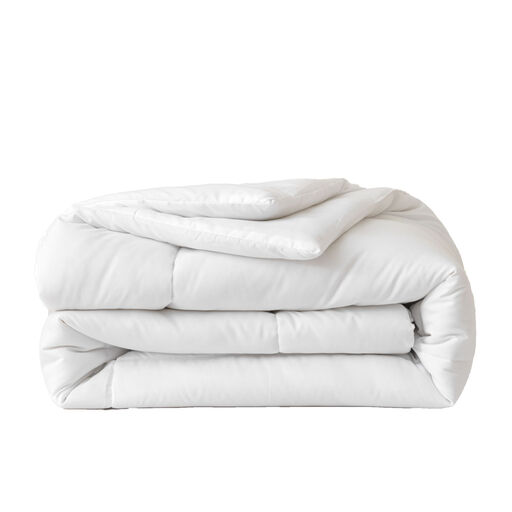
Why it suits this profile : this size offers versatile warmth for a single bed, without the need to buy several duvets. The range also comes in 4.5 and 15 tog, depending on the season.
The warmth rating is clearly stated, and the box stitching helps keep the filling in place.
Microfibre filling described as hypoallergenic, corner fastenings and machine washing listed as features.
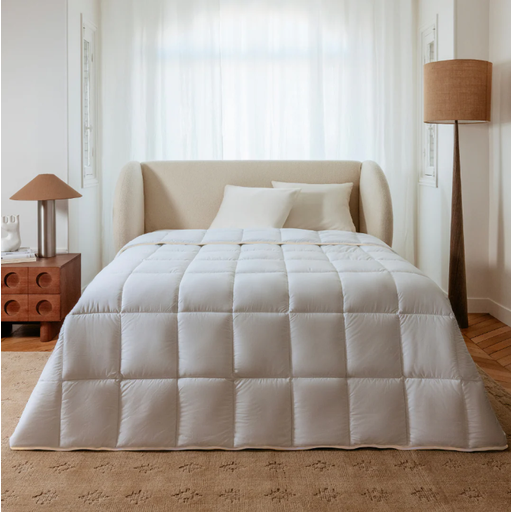
Why it suits this profile : its organic cotton sateen cover and natural filling are ideal if you’re looking for a cosy feel and a generous size for a double bed.
The composition clearly distinguishes feathers from down, rather than relying on a generic product name.
Filling listed as 90% feathers and 10% down, box stitching, and machine washable up to 40 °C according to the product listing.
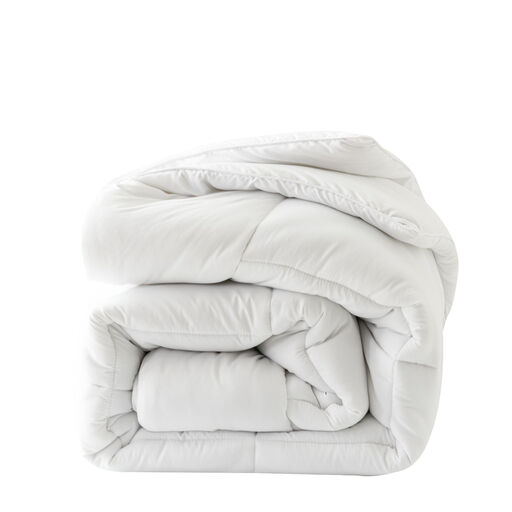
Why it suits this profile : this option is ideal for couples looking for a warm duvet for a cool or lightly heated bedroom, with generous coverage for the bed.
The 15 tog rating is clearly intended for cold nights, rather than being presented as a one-size-fits-all solution.
Microfibre filling described as hypoallergenic, box stitching, corner fastenings and gentle machine washing listed as features.
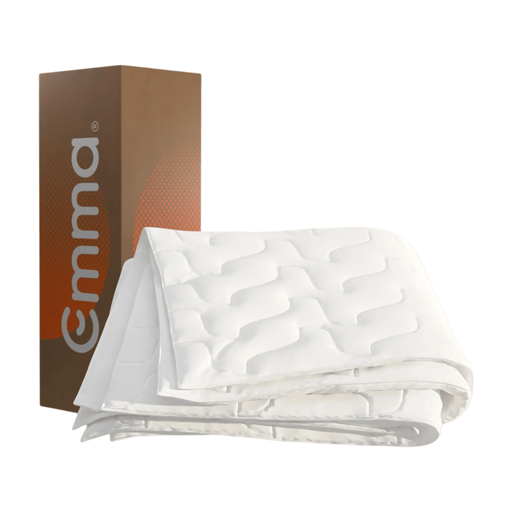
Why it suits this profile : its two removable layers let you adapt your bedding to the season, and its size suits many double beds.
The 3-in-1 design means you don’t have to choose a single thickness for very different temperatures.
Two separable layers, suitable for use in summer and winter, with machine washing listed in the care instructions.
Always follow the instructions on the manufacturer’s label. A machine-washable duvet should be placed in a drum large enough to avoid compressing its filling too much. Microfibre options are often easier to care for than duvets filled with natural materials, but they still need to dry completely.
To keep your duvet plump for as long as possible:
Lifespan depends on the filling, how often you wash it, the quality of the stitching and how it’s used. Replace your duvet when it becomes uneven, stays flat for a long time or no longer provides the warmth you need.
Choose a lightweight duvet rated 4.5 tog, or use the summer layer of a 4-season duvet. A breathable cover and a less dense filling can also help you feel less stifled. However, room temperature remains the key factor.
A 10.5 tog duvet may be suitable in a well-heated bedroom, especially if you don’t feel the cold easily. In a cool room, a 15 tog duvet or a 4-season option used with both layers will generally be more suitable.
Measure your mattress and consider how much overhang you’d like. 200 × 200 cm and 220 × 240 cm are common sizes, but a wide bed or a couple who move around a lot in their sleep may need a larger duvet. Always refer to the product specifications rather than relying on the marketing description.