
Livraison le jour même ou le lendemain

Qualité garantie

Débloquez vos offres de bienvenue: Livraison GRATUITE | Jusqu'à -80 % | 30 jours d'essai gratuits à JoyPlus
Téléchargez l'application
Living in a studio, a small flat, or a student room often comes with a major challenge: a lack of storage. The infamous chair piled high with clothes, the stacks of laundry threatening to topple over... it's an all-too-familiar scenario. In this context, finding a wardrobe storage solution that is practical, affordable, and suited to a limited space can feel like an uphill battle.
This guide is here to help. As the Head of Product Recommendations at Joybuy, I have selected practical options for organising your clothes without undertaking major DIY projects or breaking the bank. Together, let's explore flexible solutions, from freestanding wardrobes to hanging closet organisers, with one goal in mind: to help you reclaim an organised and functional living space.
Before you fall for a particular model, let's review a few key points to ensure you make the right choice.
First things first: get out your tape measure! Precisely measure the space you have available. Do you have an unused corner, an existing wardrobe to optimise, or do you need a completely standalone solution?
Take stock of your wardrobe: do you mostly have items that need to be hung (coats, dresses, shirts) or clothes that can be folded?
A fabric wardrobe with both a hanging section and shelves is an excellent compromise. Remember to check the maximum weight capacity for the rail and shelves, which is usually indicated in kilograms. This is the best way to ensure your setup doesn't collapse under the weight of your belongings. Models with a fabric cover also protect your clothes from dust—a real bonus for seasonal storage.
For many, simplicity of installation is a decisive factor. Most modern fabric wardrobes and clothes racks are designed for tool-free assembly. Interlocking tube systems with plastic connectors are the standard and guarantee quick assembly.
In terms of materials, a structure with metal tubes ensures better sturdiness and durability than an all-plastic model. The fabric, often non-woven, should be thick enough to withstand daily wear and tear.
Here are a few smart solutions, specially designed for compact spaces.
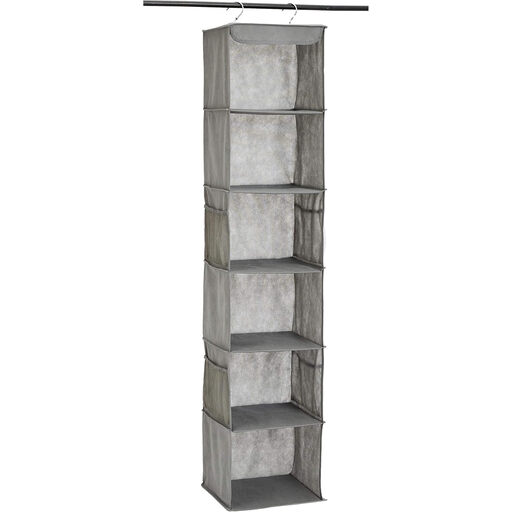
Why it stands out: This organiser is perfect for maximising vertical space, which is often under-utilised in a wardrobe. It transforms a small section of your clothes rail into an ultra-practical storage column.
Key features:
Who is it for? Ideal for those who already have a wardrobe but are in desperate need of shelves. A perfect solution for students, for organising a child's wardrobe, or for optimising an entryway closet.
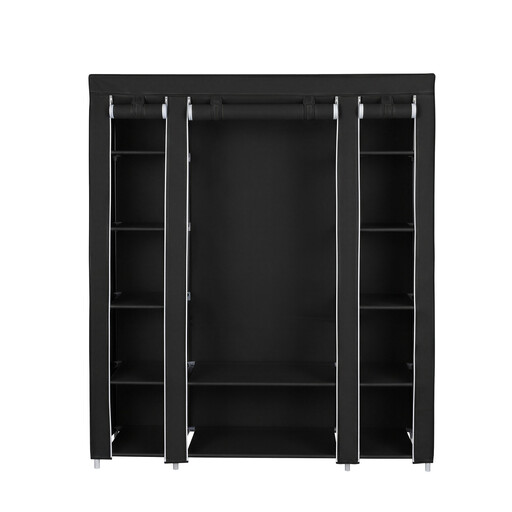
Why it stands out: This fabric wardrobe is a true freestanding closet. Its large capacity and protective cover make it a complete solution for those without a built-in wardrobe.
Key features:
Who is it for? Perfect for young professionals in rented accommodation, students in university halls, or for furnishing a guest room. It's also an excellent option for storing out-of-season clothes in the cellar or garage.
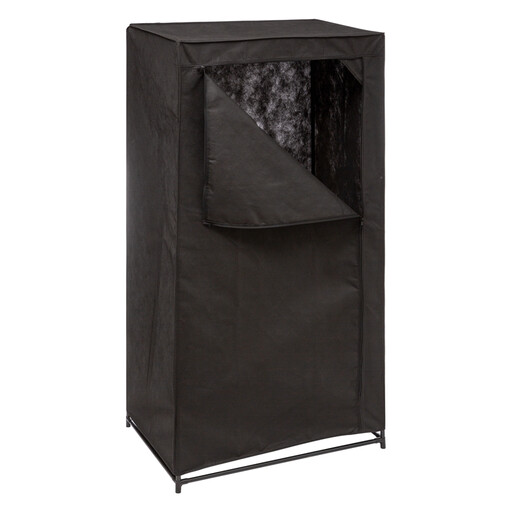
Why it stands out: With its sleek, minimalist design, this open clothes rack is as much a piece of furniture as it is a storage item. Its lightweight and compact structure fits beautifully into modern interiors.
Key features:
Who is it for? For fans of minimalist style looking for extra storage for their everyday outfits. An excellent choice for an entryway, a studio flat, or to complement an existing wardrobe.
Your space and needs are unique, and our selection is just a starting point. If you'd like to explore a wider variety of solutions, from modular shelving to storage boxes, take a look at our full category.
? Discover all our wardrobe storage solutions
The simplest solution is to opt for a no-drill freestanding wardrobe. These models are self-supporting: they are stable and require no wall support. They can be metal clothes racks, fabric wardrobes with a tubular frame, or organisers that hang from an existing rail.
The main differences are portability, cost, and assembly. A fabric wardrobe is lightweight, much more affordable, and can usually be assembled without tools. It's perfect for temporary use, for renters, or for those on a tight budget. A traditional wardrobe made of wood or particleboard is more durable and sturdy, but also more expensive, heavier, and can be more complex to assemble.
The golden rule: always respect the weight limits specified by the manufacturer for the rail and shelves. Distribute the load evenly and ensure the structure is correctly assembled on a flat surface. Some models, like the Ochama wardrobe, come with an anti-tip kit: be sure to install it for maximum safety.