
Livraison le jour même ou le lendemain

Qualité garantie

Débloquez vos offres de bienvenue: Livraison GRATUITE | Jusqu'à -80 % | 30 jours d'essai gratuits à JoyPlus
Téléchargez l'application
A well-organised wardrobe is the secret to transforming a chaotic morning routine into a serene one. But faced with a jungle of storage solutions, it's easy to feel lost. Whether you're looking to optimise a studio flat, furnish a guest room, or simply tame your own wardrobe, finding the perfect fit is crucial.
As a product specialist for Joybuy, I spend my days separating the wheat from the chaff. My goal? To guide you towards a truly informed choice. Forget the marketing spiel; this guide focuses on the practical details that make a real difference day-to-day and help you avoid buyer's remorse.
The storage market is full of grand promises. The problem is that certain design flaws can turn a great idea into a useless product after just a few months. Here are the warning signs you should never ignore.
To ensure you're making a sound investment, a few technical details make all the difference. These are the true markers of a product's quality and practicality.
Before any purchase, check the maximum load capacity stated by the manufacturer. Expressed in kilograms, it gives you a clear idea of what the structure can actually handle.
A good storage system should adapt to you, not the other way around. Modularity isn't a gimmick; it's a game-changer, especially in small spaces.
The term "wardrobe storage" actually covers several types of products.
Every storage need is unique. Here are a few options that cater to different user profiles, taking into account functionality and durability.
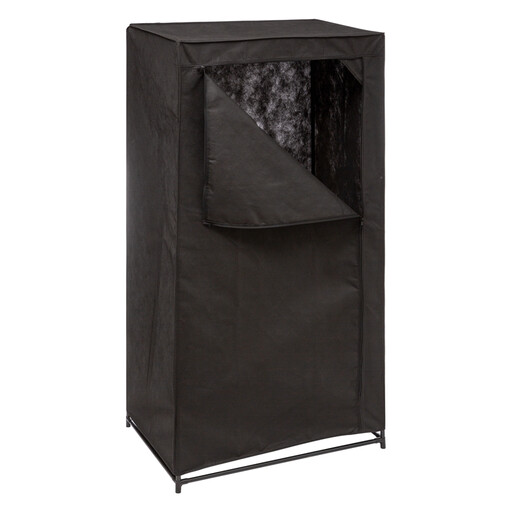
Why we recommend it: Perfect for a student flat or a first apartment, this clever freestanding closet combines a hanging rail and shelves in an ultra-compact footprint (W 68 x D 45 x H 148 cm). No need to drill into walls; it's self-supporting and light enough to be moved easily.
Its steel tube structure with PP connectors ensures much better stability than a simple fabric wardrobe without a frame. It won't wobble.
An all-in-one solution (hanging rail + shelves) with a minimal footprint, perfect for optimising space in a bedroom or entryway.
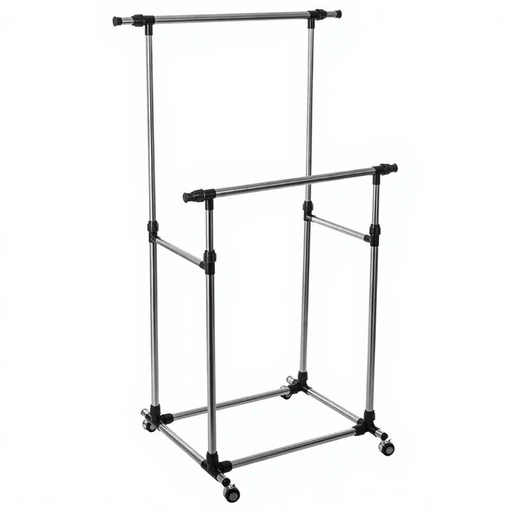
Why we recommend it: For those who lack the space to hang everything, this double stainless steel rack is the ultimate robust solution. Its telescopic structure adjusts in width (from 87 to 158 cm) and height (from 97 to 164 cm) to fit your space and needs perfectly.
Its all-stainless-steel construction and wide base (66 cm) give it excellent stability, even when fully loaded. Say goodbye to the risk of tipping and the frustration of fixed, ill-fitting racks.
Double the storage capacity thanks to its two bars and maximum flexibility with its fully adjustable dimensions.
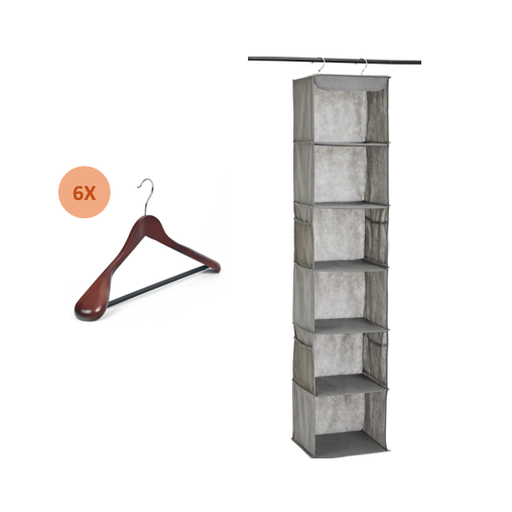
Why we recommend it: This set is the finishing touch for those who already have a closet but want to take their organisation and aesthetics to the next level. It combines sturdy solid wood hangers with a hanging organiser for a harmonious result.
It saves you from buying multiple mismatched and ineffective solutions. The wooden hangers (supporting up to 12 kg) won't break like plastic ones and will preserve the shape of your clothes.
Instantly creates a cohesive organisation system, combining quality hanging storage with vertical space for folded clothes.
Our editorial team has selected a full range of products that meet our quality criteria and current safety standards.
It all depends on its materials and how you use it. An entry-level model with plastic connectors will last one to two years with moderate use. Conversely, a stainless steel rack, properly assembled and used without exceeding its maximum load capacity, can last for many, many years.
Always place it on a flat, stable surface. Distribute the weight of the clothes evenly along the rail. If your model has locking castors, remember to engage them once the rack is in place. And of course, the golden rule: never overload it beyond the recommended capacity.
Yes, but on two conditions: the sturdiness of the wall-mounted coat rack itself and, most importantly, the quality of your wall and its mounting. For a heavy object, it is imperative to screw the rack into a solid wall (brick, concrete) or into the metal studs of a plasterboard partition, using wall plugs and screws appropriate for the surface.