
Livraison le jour même ou le lendemain

Qualité garantie

Débloquez vos offres de bienvenue: Livraison GRATUITE | Jusqu'à -80 % | 30 jours d'essai gratuits à JoyPlus
Téléchargez l'application
Clutter builds up, and every square foot counts, especially in apartments and studios where space is a rare commodity. A good wall storage system is the ideal solution to free up floor space and organize your home. However, the market is saturated with products that make tempting promises but often deliver disappointing results. Between an adhesive that rips off paint and a shelf that rusts in a few weeks, it's all too easy to make the wrong purchase.
As the Head of Product Recommendations at Joybuy, my role is to help you navigate this jungle of options. Let's forget the marketing jargon and focus on the criteria that truly matter. Here’s how to avoid the most common pitfalls and choose a storage solution that will satisfy you for years to come.
To make the right choice, focus on a few simple but fundamental technical features. They are the true barometer of a product's quality and suitability.
It all starts with the mounting method. This depends on the type of wall you have and what you plan to hang on it.
In any case, one non-negotiable criterion is the maximum supported load. If this information isn't clearly stated, it should be a red flag.
The material determines not only the aesthetics but, more importantly, the longevity of your wall organizer.
The difference is often in the design details. Look closely: are the hooks spaced far enough apart? Does the shelf have a lip to prevent items from falling? Does an over-the-door organizer make good use of the full height? Modularity is a real bonus, allowing you to adapt the storage as your needs evolve.
No more endless lists. We've paired specific products with concrete needs, so you can find the solution that's truly right for you.
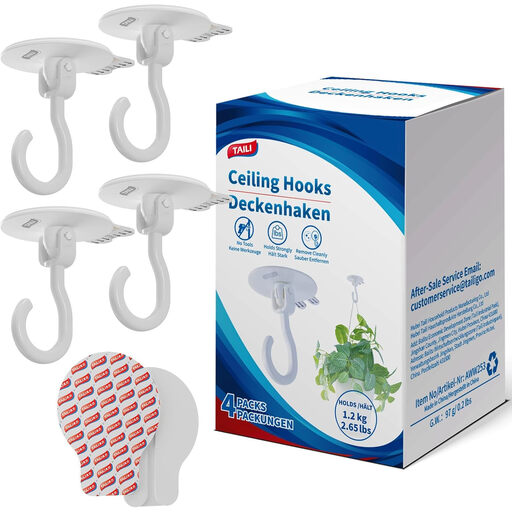
Why we chose it: For anyone looking for a completely reversible no-drill storage solution. Ideal for hanging lightweight plants, string lights, or kitchen utensils without starting a DIY project or risking your security deposit.
It avoids the "universal" adhesive pitfall by clearly specifying compatible smooth surfaces and offering a damage-free removal system that preserves painted walls (satin or gloss finishes).
Its 2-in-1 design allows for wall or ceiling use thanks to 360° rotation and 180° tilt, offering maximum versatility.
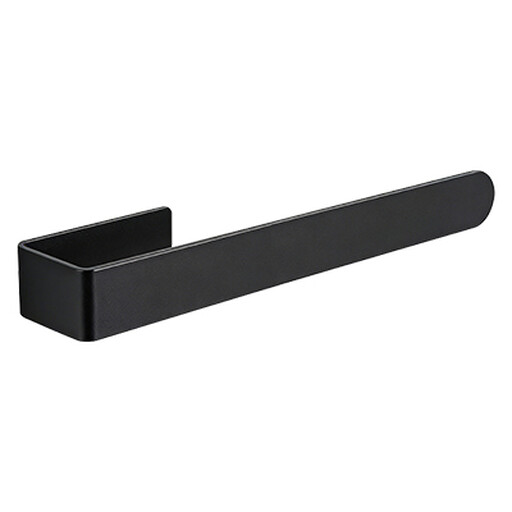
Why we chose it: A durable and multifunctional bathroom storage solution. It combines a towel bar with hooks for washcloths or other accessories, all in a material built to last.
Made of stainless steel, it's specifically designed to withstand moisture and steam, thus avoiding the "surprise corrosion" pitfall typical of low-grade metals.
Its dual functionality (bar + hooks) makes it a 2-in-1 solution that optimizes the often-limited wall space above a sink or next to a shower.
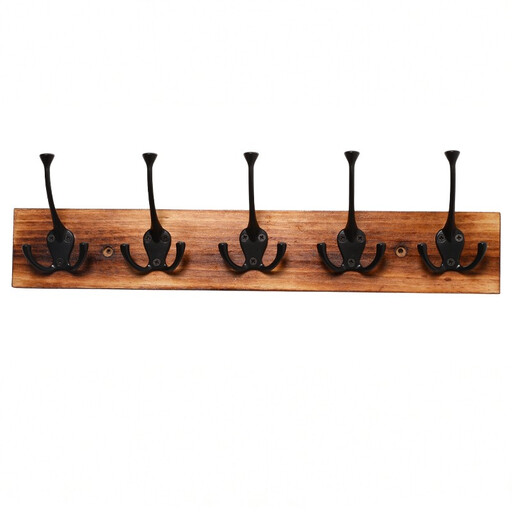
Why we chose it: For those who see storage as a decorative element in its own right. This wood and metal wall coat rack fits just as well in an entryway for keys and hats as it does in a kitchen for towels and utensils.
It avoids the "illusory space-saver" pitfall by offering high hanging capacity (five double hooks) on a slim profile that frees up counters and surfaces without visually weighing down the space.
Its refined aesthetic, combining distressed-finish wood and black metal, makes it both a practical and decorative object that adds character to the room.
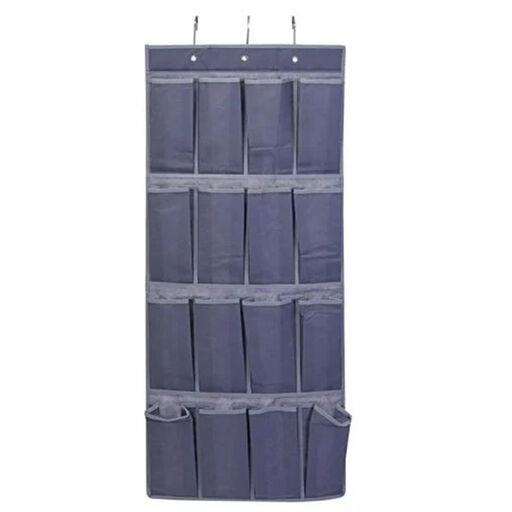
Why we chose it: The ultimate space-saving solution. This over-the-door organizer utilizes a frequently overlooked space—the back of a door—to store shoes, cleaning supplies, toys, or accessories, freeing up closets and drawers.
It's the perfect answer to the "illusory space-saver." Instead of taking up visible wall space, it hides behind a door, offering impressive storage capacity with zero visual impact on the room.
Instant, tool-free installation and extreme versatility thanks to its 16 pockets, perfect for any room in the house, from the bedroom to the laundry room.
We've compiled a complete selection of products that meet our criteria for quality and durability.
It's all in the preparation and following the instructions. Make sure the surface is clean, dry, and compatible (in general, highly textured surfaces, wallpaper, or delicate paint are off-limits). For removal, follow the method recommended by the manufacturer. Models with a tab that you pull slowly downwards are usually the safest for a clean, damage-free removal.
This varies enormously from one product to another. A simple adhesive hook might hold from 500 g to 2 kg, while more complex adhesive systems can handle 5 to 7 kg. Always read the maximum load indicated on the packaging and never exceed it, especially with valuable or fragile items.
The vast majority of models are designed for very simple installation. Adhesive or over-the-door solutions require no tools. Screw-in models come with the necessary hardware (screws and anchors), but they do require a drill. In that case, it's crucial to correctly identify your wall type (drywall, brick, etc.) to choose the appropriate drill bit and anchors.