
Livraison le jour même ou le lendemain

Qualité garantie

Débloquez vos offres de bienvenue: Livraison GRATUITE | Jusqu'à -80 % | 30 jours d'essai gratuits à JoyPlus
Téléchargez l'application
Redecorating a room without undertaking major renovations or breaking the bank is possible. The wall sticker has become the go-to solution for instantly refreshing your interior. The problem: the market is flooded with products of widely varying quality. Make the wrong choice, and you're headed for disaster: damaged walls, fading colours, or a disappointing final look.
Before you get started, let's review the most common pitfalls so you can avoid them:
This guide is here to give you all the keys to choosing an adhesive wall decoration that will elevate your interior, without any unpleasant surprises.
To ensure you don't make a mistake, focus on a few technical specifications that make all the difference. This guarantees an easy application and, most importantly, damage-free removal.
These two terms are often used interchangeably, yet there are nuances. Most quality wall stickers are made of PVC (polyvinyl chloride). What you need to look at is its thickness and finish. A well-made PVC is flexible enough to conform to the wall but sturdy enough not to tear. The finish, whether matte or glossy, is primarily a matter of taste: matte, being more understated and elegant, has the advantage of preventing unsightly reflections.
The quality of the glue is crucial. Prioritise products that are clearly labelled as "removable" and "repositionable". A quality adhesive allows you to peel off and slightly readjust the sticker during application if you make a mistake. But most importantly, it must be removable cleanly, without leaving any glue residue or damaging paint that is in good condition.
A wall decal does not adhere the same way to all surfaces. The ideal surface? Smooth, clean, and dry: painted walls (preferably with a satin or gloss finish), glass, tile, metal, or varnished wood. Be cautious with highly textured walls (like plaster or popcorn ceilings) or those covered with wallpaper, as adhesion will be poor and removal riskier. If you have just painted a wall, it is imperative to wait at least three weeks before applying a sticker.
Rather than a generic product list, we've selected models tailored to specific needs. This should help you better envision the possibilities.
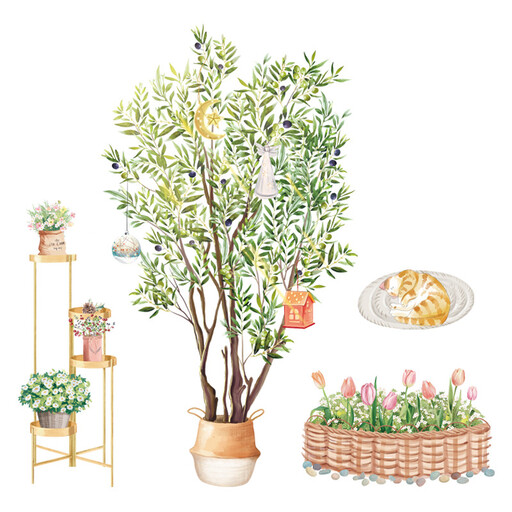
Why we chose it: Ideal for adding greenery to a living room or bedroom without the maintenance of real plants. This type of plant sticker allows you to create a fresh and soothing atmosphere in an instant.
This model is designed to be removable. Its adhesive is intended for application on smooth surfaces and for residue-free removal, which is reassuring for renters.
The set of two sheets allows for a custom composition. You can arrange the different plants as you see fit for a truly unique result.
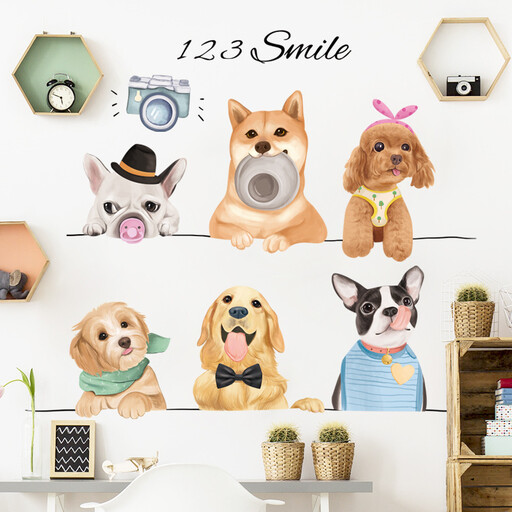
Why we chose it: Perfect for a kid's wall sticker. It creates a playful and charming world in a bedroom or playroom without investing in fixed decor that may not grow with their tastes.
The "peel and stick" principle makes application incredibly simple. Most importantly, it removes just as easily as the child's tastes change, without any risk to the paint.
The individual stickers can be placed wherever you like. It's the perfect opportunity for a creative activity with your child to imagine a unique scene.
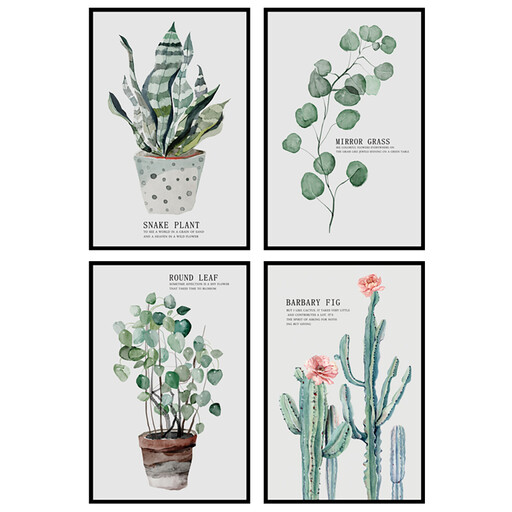
Why we chose it: This adhesive wallpaper perfectly mimics a framed picture, without needing to pull out a drill. The geometric border adds a modern and sophisticated touch, perfect for giving character to a bedroom or living room.
It offers high-impact visual decoration while being completely reversible. The ideal solution for renters who want to assert their style without leaving a trace.
The 3D effect and polygonal frame provide a depth and elegance far beyond simple flat stickers. This is closer to a true decorative object.
Discover our full selection of products that meet our quality criteria and safety standards.
Generally, the answer is no. Wall stickers are designed for single use. Even if they are removable, the adhesive loses its sticking power once the sticker is peeled off and won't guarantee a secure hold on a second application. It's better to see it as a single-use decor item that is very easy to replace.
To avoid any risk, the best technique is to gently heat the sticker with a hairdryer on a low setting. Hold the device about eight inches from the wall to soften the glue. Then, carefully peel off the decal starting from a corner, pulling slowly and parallel to the wall (not towards you). If any glue residue remains, a soft cloth soaked in soapy water should be enough to remove it.
Stickers adhere best to smooth, clean, dry, and non-porous surfaces. This includes painted walls (satin or gloss finish), glass, metal, smooth plastic, or varnished wood. Be careful with matte paints or textured surfaces (like plaster), as adhesion will be weaker and removal riskier. When in doubt, always test on a small, inconspicuous area first.