
Livraison le jour même ou le lendemain

Qualité garantie

Débloquez vos offres de bienvenue: Livraison GRATUITE | Jusqu'à -80 % | 30 jours d'essai gratuits à JoyPlus
Téléchargez l'application
A well-chosen wall shelf can transform a room, providing both functional wall storage and a touch of personal wall decor. The problem? The market is flooded with models that look stunning in photos but are often disappointing once installed. To prevent your purchase from turning into a headache, it's crucial to know the most common pitfalls.
We'll explain the key things to watch out for to make an informed decision, and present our selection of products that meet specific needs.
A tempting price or a trendy design can hide deal-breaking flaws. Here are three classic mistakes that can compromise the strength and safety of your installation.
To avoid buyer's remorse, you need to look beyond the design. Focus on these key technical features, which are true indicators of quality and longevity.
The choice of material has a direct impact on your shelf's aesthetics, sturdiness, and maintenance.
wood shelf): Oak, pine, rubberwood... these species are a guarantee of durability and can support significant weight. They bring a warm, authentic touch, perfect for living room wall decor.How the shelf attaches to the wall is fundamental.
floating shelf): The system relies on metal rods inserted into the thickness of the shelf board. The effect is very clean and streamlined, but be careful: this type of mount requires a solid wall and precision installation, otherwise the shelf will start to droop.Always check the recommended maximum load and compare it to your actual needs. A shelf for displaying three picture frames doesn't have the same requirements as a wall-mounted bookshelf. Generally, a capacity of 5 to 10 kg (11 to 22 lbs) per shelf is sufficient for decorative objects. For books or dishes, aim for at least 15 to 20 kg (33 to 44 lbs).
Instead of a soulless catalog, here are products that cater to clear user profiles, keeping our quality criteria and the pitfalls to avoid in mind.
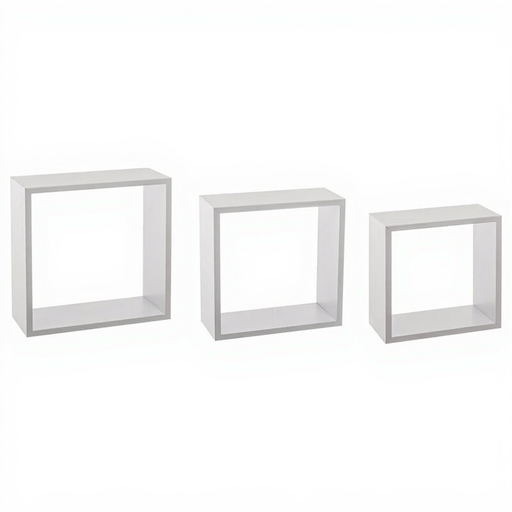
Why we chose it: The perfect solution for creating a feature wall with character. This set of wall shelves of the cube shelf type offers complete freedom in arrangement to showcase your plants, paperbacks, or travel souvenirs.
No more rigid, impersonal designs. The three independent modules give you total flexibility. Group them, space them out, spread them apart... You decide, for a result that's truly you.
Modularity. The three different sizes (24, 27, and 30 cm) allow you to create visual rhythm and fully customize your wall decor.
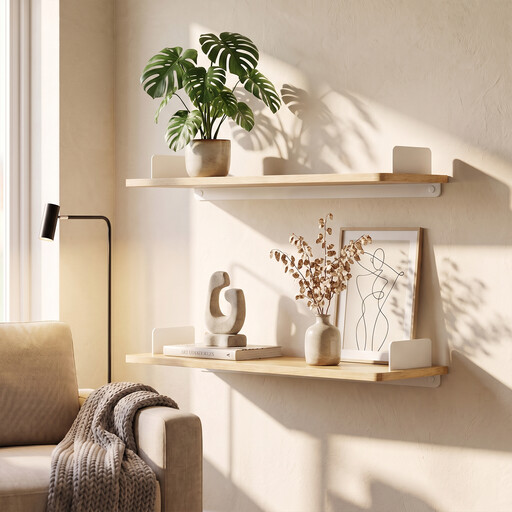
Why we chose it: Essential for your collection of coffee table books, vinyl records, or ceramic dinnerware. The combination of a solid wood board and aluminum alloy brackets is a guarantee of rock-solid stability.
Say goodbye to the anxiety of a sagging shelf. Its structure (solid rubberwood and metal brackets) is built for sturdiness. The stated 20 kg capacity is realistic and perfectly suited for heavy-duty use.
The durability of the materials. The duo of FSC-certified solid wood and aluminum is built to last, light-years away from cheap MDF. Its protective varnish also makes it water-resistant.
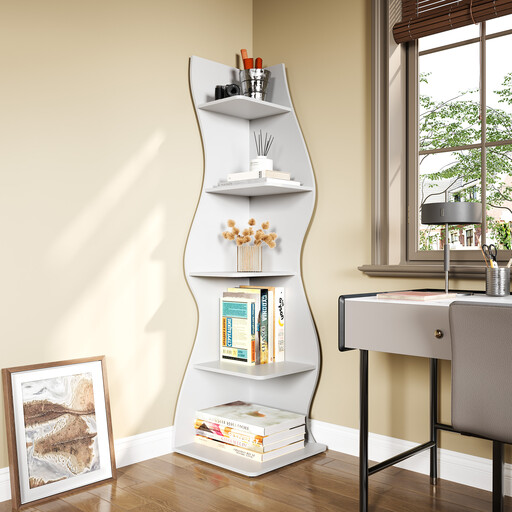
Why we chose it: This is THE solution for reclaiming often-neglected corners in a living room, bedroom, or office. It transforms wasted space into a vertical storage area that is as practical as it is aesthetic.
Instead of letting a corner gather dust, this shelf dresses it up and makes it useful. It meets a specific need that standard straight shelves ignore, putting an end to wasted space.
Space-saving. Its five tiers offer impressive vertical storage capacity with an almost zero footprint. Perfect for small apartments or already crowded rooms.
Explore our full selection of products that meet our quality criteria and safety standards.
1. What kind of wall anchor should I use to mount a wall shelf? The choice of anchor depends entirely on your wall. For drywall (plasterboard), you need Molly bolts or hollow-wall anchors. For hollow brick, opt for expansion anchors or a chemical anchor. For solid concrete, a standard nylon expansion anchor will do the job. Rule of thumb: always ignore the anchors included in the kit and buy ones specifically designed for your wall type.
2. How do I install a floating shelf so it's perfectly level? Your best friend: the bubble level. Once you've marked the first hole, use the level to draw a perfectly horizontal guideline for the other drill holes. When screwing in the mounts, tighten them gradually while checking for levelness, allowing you to make final adjustments before the final tightening.
3. What's the difference between an MDF and a solid wood shelf?MDF (Medium-Density Fiberboard) is a composite of compressed and glued wood fibers. It's smooth, uniform, and cost-effective, but it's susceptible to moisture and can bend more easily under weight. Solid wood, on the other hand, comes directly from a tree. It is much more robust, durable, and can be sanded or repaired if damaged. Logically, its cost is higher.