
Livraison le jour même ou le lendemain

Qualité garantie

Débloquez vos offres de bienvenue: Livraison GRATUITE | Jusqu'à -80 % | 30 jours d'essai gratuits à JoyPlus
Téléchargez l'application
The wall shelf seems like the perfect solution for optimizing your space and personalizing your decor. Yet, the wrong choice can quickly turn this great idea into a real headache: a model that sags, fixings that ruin your walls, or a material that deteriorates in just a few months. As the Head of Product Recommendations at Joybuy, my mission is to guide you through the overwhelming number of options to find THE product that meets your needs, without letting you fall for embellished marketing promises.
Before you take the plunge, let's review the three most common pitfalls and, most importantly, how to avoid them.
To avoid these nasty surprises, there are three technical points to keep a close eye on.
The mounting method determines not only the look of your wall storage, but more importantly, its stability.
The choice of material should be guided by aesthetics, of course, but primarily by its intended use and the room where it will be installed.
This information, expressed in kilograms or pounds, is crucial. It is always specified for a correct installation on a standard wall. Keep in mind that this capacity includes the weight of the shelf itself. For a set of wall shelves, the stated capacity applies to each individual shelf.
To help you see more clearly, here are a few products that tick all the boxes, tailored for specific needs.
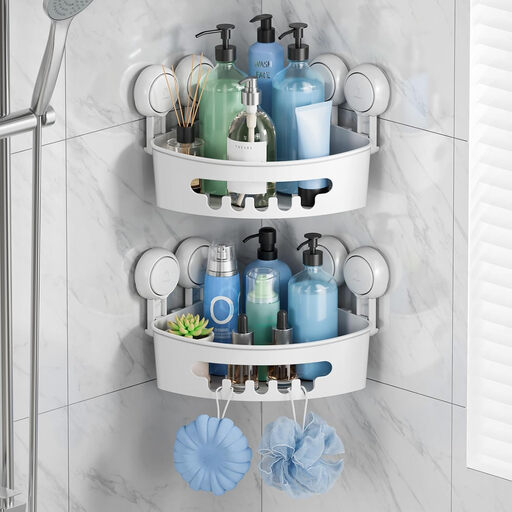
Why we chose it: This is THE solution for those who can't or don't want to drill into their walls. Ideal for organizing your shower products without damaging the tilework, it's perfect for renters.
It bypasses the fixing trap, as it simply doesn't need any. Its suction cup system is designed for maximum adhesion on the smooth, non-porous surfaces typical of bathrooms.
Installs in seconds without tools, can be repositioned at will, and features a slatted design to drain water. The manufacturer states a maximum load capacity of 10 kg.
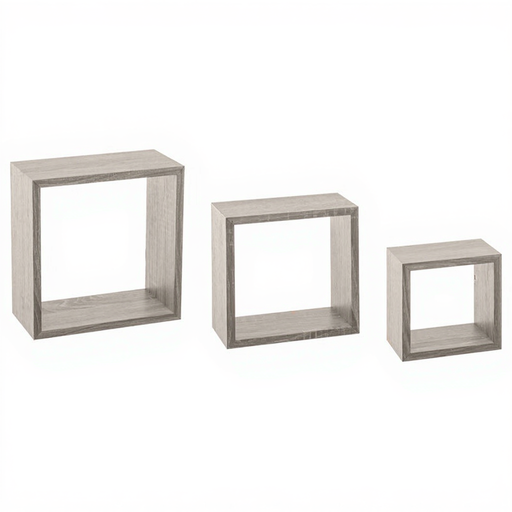
Why we chose it: This set allows you to create a graphic and 100% personalized wall arrangement. It's ideal for showcasing decorative objects, small plants, or souvenirs in a living room or bedroom.
Its invisible mounting system, provided you pair it with the right wall anchors, avoids the trap of unsightly brackets. The clean aesthetic of the cube shelf is thus fully preserved.
A set of wall shelves in three different sizes for a creative composition. The grey oak effect finish effortlessly integrates into modern or Scandinavian-inspired interiors.
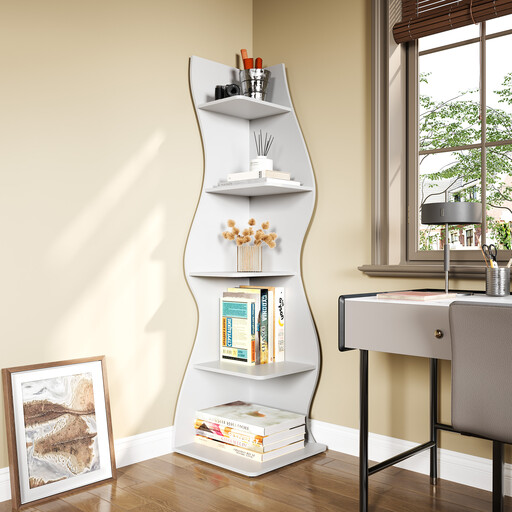
Why we chose it: This shelf transforms an awkward, often wasted corner into a stylish, vertical storage space. It's perfect for small apartments, entryways, or offices where every square inch counts.
Its specific corner shelf design solves the impossible equation of fitting standard shelves into these nooks. It maximizes storage without encroaching on your living space.
Five tiers of storage with a minimal footprint. Its structure is designed to hold books, plants, and decorative items with stability and elegance.
We have curated a complete selection of products that meet our criteria for quality and safety.
This is THE question we get all the time. For a drywall wall, forget the anchors included in the box. You absolutely must use metal expansion anchors (like Molly bolts). Once the anchor is inserted, a special setting tool expands its wings behind the plasterboard, creating an ultra-strong anchor point capable of supporting heavy loads.
Yes, but with one non-negotiable condition: follow the instructions to the letter. The reliability of a suction-cup shelf rests on two pillars: the quality of the suction cup itself and, most importantly, the nature of the surface. It will only hold on a perfectly smooth, clean, and non-porous surface like glossy tile, glass, or a mirror. On a painted wall, wood, or textured tile, it's guaranteed to fail.
The actual capacity depends on a trio of factors: the sturdiness of the shelf board, the length and quality of the invisible mounting rods, and above all, the strength of your wall and the chosen anchors. A 25 cm deep shelf creates a much greater leverage effect than a 15 cm deep one. The golden rule: always trust the maximum weight capacity stated by the manufacturer and never exceed it under any circumstances.