
Livraison le jour même ou le lendemain

Qualité garantie

Débloquez vos offres de bienvenue: Livraison GRATUITE | Jusqu'à -80 % | 30 jours d'essai gratuits à JoyPlus
Téléchargez l'application
Installing a wall shelf is one of the best ways to optimise space and personalise your decor. However, this seemingly simple purchase can quickly turn into a headache. Between fixings that don't hold and materials that warp, it's easy to make the wrong choice. This guide breaks down the essential points to check to find the ideal shelf, perfectly suited to your walls and your needs.
Before you get started, let's review the most common pitfalls that could compromise the strength and safety of your installation.
For a successful purchase, three parameters must be examined closely. They will determine the strength, aesthetics, and functionality of your wall storage.
This is the most critical point. The maximum load capacity indicated by the manufacturer is a theoretical value, valid only if the shelf is installed on a solid wall with the appropriate fixings.
The material influences both the style and the sturdiness of the shelf.
The final look of your installation will depend on the type of mounting.
Every storage project is unique. We have selected a few models that meet specific needs, always keeping our quality and practicality criteria in mind.
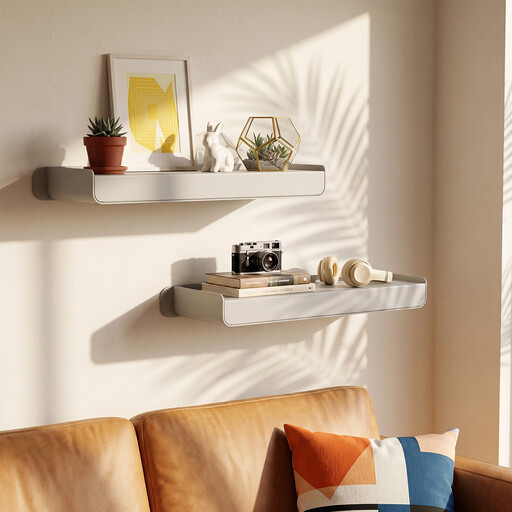
Why we chose it: Perfect for those seeking a clean aesthetic without compromising on strength. Its minimalist style and metal construction make it a prime choice for a contemporary interior.
Made from sturdy aluminium, it won't warp like a low-end material. Its stated load capacity of 20 kg is a mark of reliability, provided you use the correct fixings for your wall.
Its material, aluminium, is resistant to water and rust. This makes it equally at home in a living room, kitchen, or bathroom.
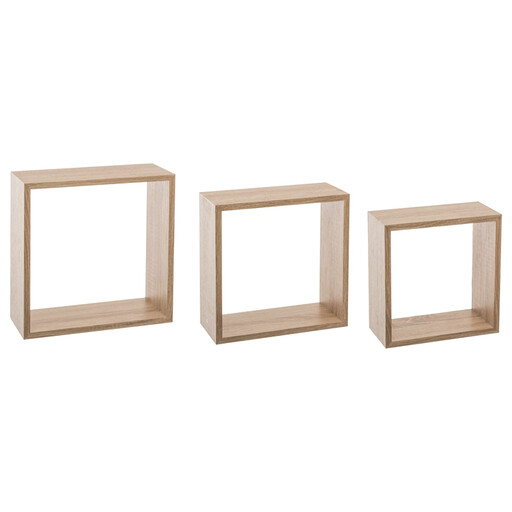
Why we chose it: Ideal for those who want to create a personalised wall display. This set of three different-sized cubes allows you to play with volumes to showcase decorative objects.
The product description is transparent: it's made of engineered wood (MDF), which prevents unpleasant surprises. Its use is geared towards decoration, thus avoiding the trap of overloading a shelf not designed for heavy items.
Modularity. The three sizes allow great compositional freedom for a unique and dynamic wall.
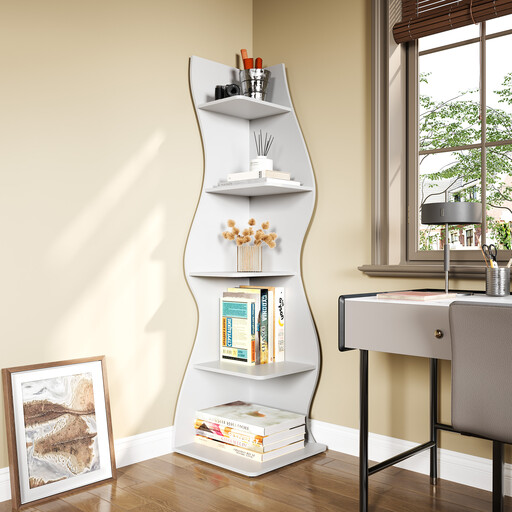
Why we chose it: This corner shelf is the perfect solution for transforming an unused corner into a storage or display area that is both aesthetic and functional.
It bypasses the "design over function" trap by offering a design entirely dedicated to a specific use: optimising a corner. Its 5-tier structure maximises vertical storage.
Significant space saving. It utilises an often-wasted space while offering generous storage capacity across 5 levels.
We have selected a wide range of products for you that meet our quality and safety criteria.
For a plasterboard (drywall) partition, it is essential to use metal expansion anchors, better known as Molly bolts. When screwed in, they expand in a star shape behind the board, distributing the load over a larger area and ensuring a very strong fixing for medium to heavy loads.
To prevent a shelf from sagging, several golden rules apply. Scrupulously respect the maximum load capacity indicated by the manufacturer and distribute the weight evenly across the shelf. When installing, use a spirit level to ensure it is perfectly horizontal. Finally, for heavy items like a book collection, opt for materials that will not bend, such as solid wood or metal.
Absolutely, but the choice of material is crucial. Opt for materials resistant to moisture and corrosion, such as aluminium, stainless steel, or treated wood (for example, bamboo or a varnished solid wood). Avoid standard MDF or particleboard at all costs, as they swell and deteriorate quickly in contact with moisture. Good ventilation in the room also remains a prerequisite.