
Livraison le jour même ou le lendemain

Qualité garantie

Débloquez vos offres de bienvenue: Livraison GRATUITE | Jusqu'à -80 % | 30 jours d'essai gratuits à JoyPlus
Téléchargez l'application
A wall sconce is far more than just a light fixture. It's a true decorative element that sculpts space, shapes an atmosphere, and provides functional light exactly where it's needed. But faced with the vast sea of available models, a promising purchase can quickly turn into a costly disappointment. Behind an appealing design, you might find a fixture that's poorly suited for your room or destined for rapid obsolescence.
As a product expert at Joybuy, my role is to help you see things more clearly. Let's break down the most common mistakes and the essential criteria for making an informed choice, whether you're looking for an indoor wall sconce for your living room or a robust solution for your home's exterior.
Before falling for a particular look, a quick review of the technical specifications is essential. This is what guarantees the longevity and suitability of your wall light.
To make the right choice, three technical criteria must be scrutinised. They are the guarantors of your wall light's performance and lifespan.
The IP (Ingress Protection) rating is an international standard that classifies an electrical device's level of protection against solid objects (the first digit) and liquids (the second digit). For a wall sconce, here are the key ratings to know:
The function of your sconce will dictate the type of lighting to choose:
Here is a selection of models that tick all the boxes for specific needs.
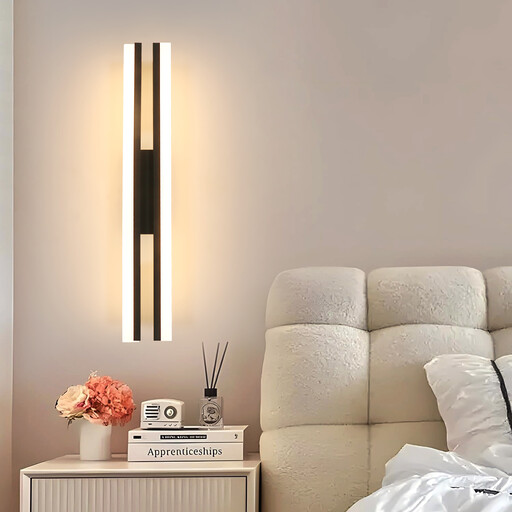
Why we chose it: The ideal choice for adorning a living room, bedroom, or staircase with a clean, modern touch. Its linear design and black finish integrate perfectly into contemporary decor.
Here, the integrated LED is not a flaw but a deliberate design choice that allows for this ultra-slim silhouette. Designed for ambient lighting, its fixed light is an intentional feature.
Versatile, it can be installed vertically or horizontally to adapt to your wall's layout.
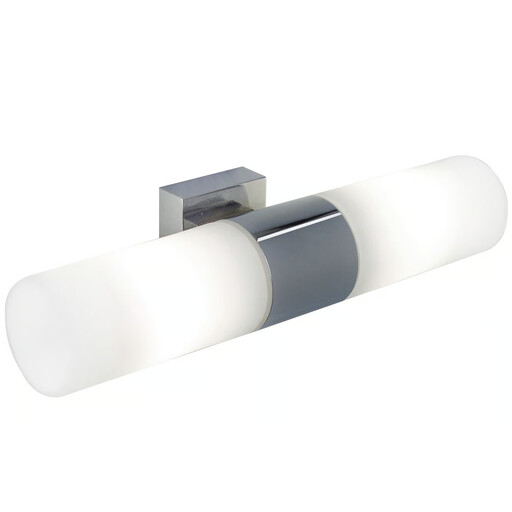
Why we chose it: The perfect blend of elegance and safety for lighting a bathroom mirror. Its timeless design and opal glass globes diffuse a soft, flattering, and glare-free light.
Its IP44 rating makes it an easy choice for damp locations: it's protected against splashes, which prevents rust and electrical hazards. Its standard E14 sockets are a guarantee of flexibility.
The mouth-blown opal glass adds an artisanal touch and ensures a perfectly diffuse and even light, ideal for getting ready in the morning.
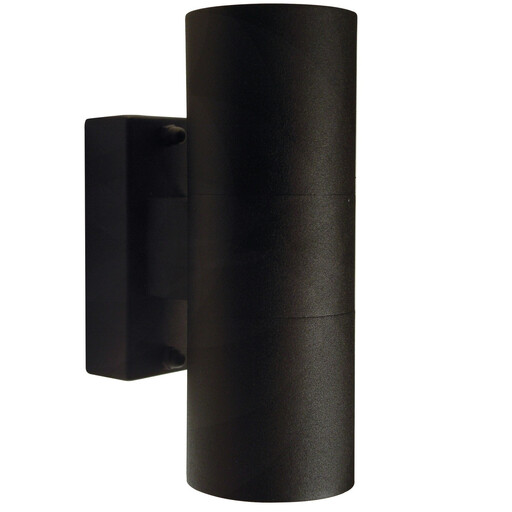
Why we chose it: Ideal for marking an entrance, enhancing a facade, or lighting the area around a garage. This black wall sconce casts an "up and down" beam that accentuates the architectural lines of your home.
Its robust metal construction and IP54 rating ensure excellent resistance to the elements (dust and rain), a critical and often overlooked criterion for an outdoor wall light.
Its dual beam is as aesthetic as it is functional. The GU10 sockets, compatible with standard LED bulbs, make it easy to maintain.
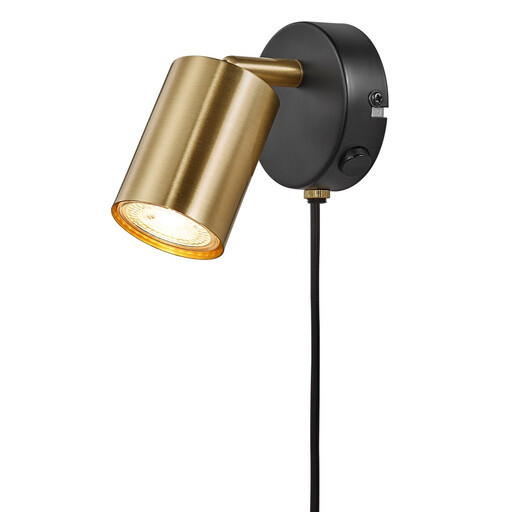
Why we chose it: An adjustable wall sconce that is as compact as it is functional. Perfect as a bedside light, above a desk, or to spotlight a decorative object. Its simple and effective design adapts to any style.
No more fixed, poorly aimed lighting! Its fully mobile head (tilts 90° and rotates 350°) allows you to direct the light with surgical precision onto your book or work surface.
Total flexibility of directional lighting and the peace of mind of a standard GU10 socket for hassle-free bulb replacement.
Discover our full selection of products that meet our rigorous selection criteria and current safety standards.
There's no hard and fast rule; it all depends on the room and its use. However, here are a few guidelines:
In almost all cases, no. The LED module is soldered and inseparable from the fixture's structure. This is why it's crucial to check the lifespan announced by the manufacturer (in hours). A longevity of 20,000 to 30,000 hours is equivalent to many years of typical use.
Colour temperature, expressed in Kelvins (K), plays a crucial role in a room's atmosphere.