
Livraison le jour même ou le lendemain

Qualité garantie

Débloquez vos offres de bienvenue: Livraison GRATUITE | Jusqu'à -80 % | 30 jours d'essai gratuits à JoyPlus
Téléchargez l'application
A well-chosen wall sconce has the power to metamorphose a room, transforming it from a merely functional space into a warm, characterful interior. But faced with a multitude of models, making a purchase can quickly become a headache. Between seductive designs and obscure technical specs, it's easy to make a mistake: you end up with a fixture that's unsuitable, disappointing, or even dangerous. Before you take the plunge, let's review the classic pitfalls to avoid so you don't regret your purchase.
To avoid these setbacks, you just need to master a few technical criteria that never lie.
While design is often the first consideration, the technical aspects are the key to a successful purchase. Here are the three essential points to verify to make a truly informed choice.
The Ingress Protection (IP) rating is a European standard that classifies light fixtures according to their resistance to solids and liquids. It consists of two digits: the first for protection against solids (dust) and the second against liquids (water).
The type of lighting directly impacts maintenance, energy consumption, and the lighting ambiance.
Beyond the technical aspects, think about ergonomics and daily use.
To illustrate these tips concretely, here is a selection of models that meet specific needs while sidestepping the most common traps.
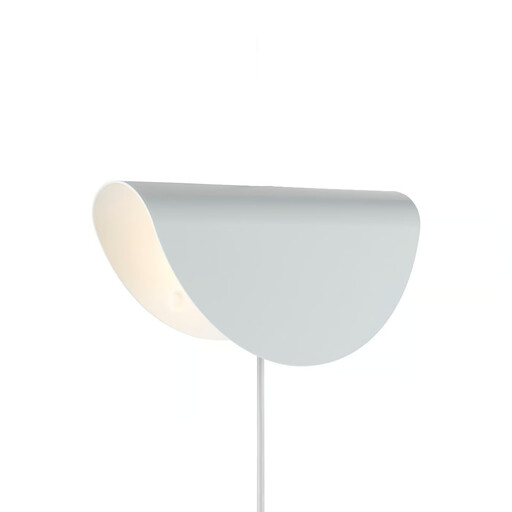
Why we love it: Its clean retro design and soft shape fit just as well in a classic decor as a contemporary one. It's the ideal all-rounder for a hallway or bedroom.
Its long 150 cm cable with an integrated switch ends the installation headache. No electrician needed, an outlet is all it takes! The E14 socket is a widely used classic, making bulbs easy to find.
Its versatility: it can be mounted facing up for soft, indirect light, or facing down for a more direct beam.
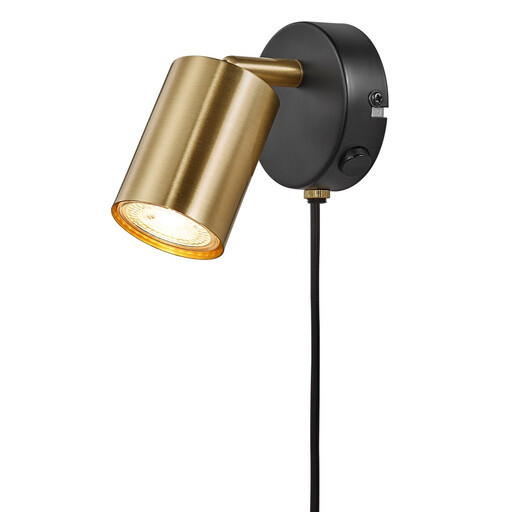
Why we love it: Perfect for targeted lighting. Whether above a countertop or as a reading light, its adjustable head directs light exactly where you need it. Its brushed brass finish is right on trend.
It uses a GU10 socket, an ultra-common standard for spotlights, so changing the bulb is child's play. Its adjustable head solves the problem of fixed lighting that is often poorly aimed.
Its head swivels 350° and tilts 90°, offering total flexibility. The switch is cleverly integrated directly onto the base for easy access.
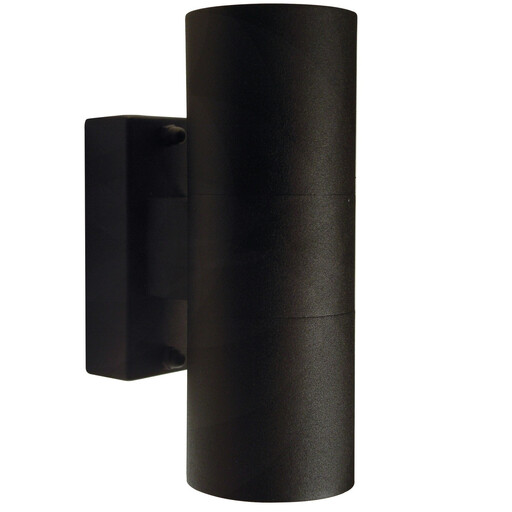
Why we love it: Specifically designed for the outdoors, it combines minimalist design with robustness. Its dual light beam (up and down) creates a very architectural "up & down" effect, perfect for enhancing a fa?ade, entryway, or garage.
Its IP54 rating unambiguously qualifies it for outdoor use. It thus avoids pitfall #1: installing an indoor light outside. Note that its installation (Class 1) requires a connection to a ground wire.
Its durable metal construction and dual lighting provide both aesthetics and security. It is compatible with standard GU10 bulbs.
We have selected a complete range of light fixtures that meet our quality criteria and French safety standards.
As a general rule, a wall sconce is installed about 1.80 m (5' 11") from the floor. However, it all depends on its use. For ambient lighting in a hallway, this height is adequate. For a bedside reading light, it should be placed lower, about 20-30 cm (8-12 inches) above your shoulder when seated. On a staircase, follow the slope, maintaining a constant height relative to the steps.
Yes, that's the whole point! A sconce sold with a cable and switch is designed to be plugged directly into a power outlet. The installation simply involves fixing its bracket to the wall. It's the ideal solution if you're not a DIY enthusiast.
The difference is fundamental and a matter of safety. An IP20 sconce is only designed for dry rooms (bedroom, living room) as it is not protected against moisture. An IP44 sconce is protected against water splashes, making it mandatory for safe installation in a bathroom (while respecting safety zones) or under a porch outdoors. Installing an IP20 fixture in a wet room is therefore strictly forbidden and dangerous.