
Livraison le jour même ou le lendemain

Qualité garantie

Débloquez vos offres de bienvenue: Livraison GRATUITE | Jusqu'à -80 % | 30 jours d'essai gratuits à JoyPlus
Téléchargez l'application
A well-chosen wall mount can be a game-changer: it can optimise a small studio, showcase a decorative object, or make a room more functional. But with a jungle of options available, it's easy to make a mistake. The wrong choice can cost you time, money, and in the worst-case scenario, a damaged wall or a precious object on the floor. To help you avoid disaster, our editorial team has broken down the topic and is sharing their pro tips.
Here are the two beginner mistakes you must avoid:
To ensure a safe and durable installation, it's important to check a few key parameters before any purchase.
This is the foundation of everything. Each wall type requires its own dedicated anchor for a rock-solid hold.
For a wall-mounted TV installation, the VESA (Video Electronics Standards Association) standard is essential. It standardises the spacing (in millimetres) between the four mounting holes on the back of your television (e.g., 200x200 mm or 400x400 mm).
Before buying, check your TV's VESA standard and ensure the TV wall mount is compatible. Without this, it's impossible to assemble them.
The maximum load displayed on the packaging is vital information, but be sure to read it carefully.
To put theory into practice, here are a few solutions that meet different needs.
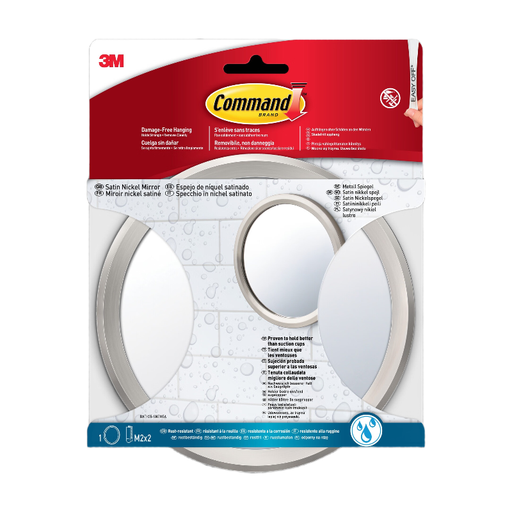
Why we love it: The perfect solution for renters who want to personalise their space without taking out the drill. Ideal for damp rooms like the bathroom, it can be removed without leaving a single trace. Your security deposit will thank you on moving day.
It completely eliminates the headache of drilling and choosing anchors. Its adhesive technology is specially designed for smooth surfaces and humid environments, ensuring a damage-free installation.
Tool-free, damage-free installation and removal. The adhesive strips come off cleanly, leaving no sticky residue or peeling paint.
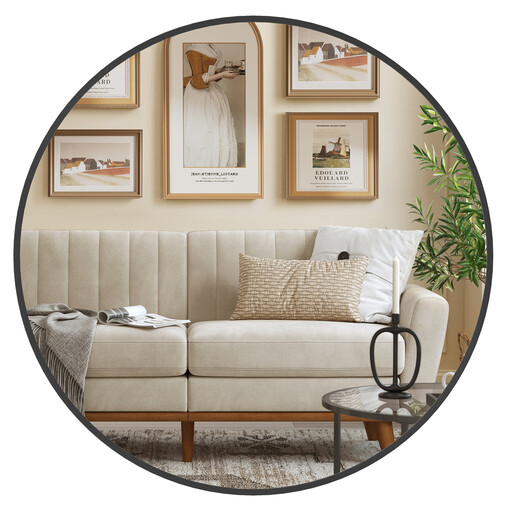
Why we love it: More than just a mirror, it's a true statement piece. Its minimalist design and brushed aluminium alloy frame bring an instant touch of elegance to an entryway, living room, or bedroom.
The mirror has integrated, reinforced mounting points. No more risky DIY projects: the installation is simple, secure, and designed to prevent any damage to the object.
Its water- and corrosion-resistant design allows it to be placed anywhere, from the living room to the bathroom. The brushed metal frame ensures a flawless finish and excellent durability.
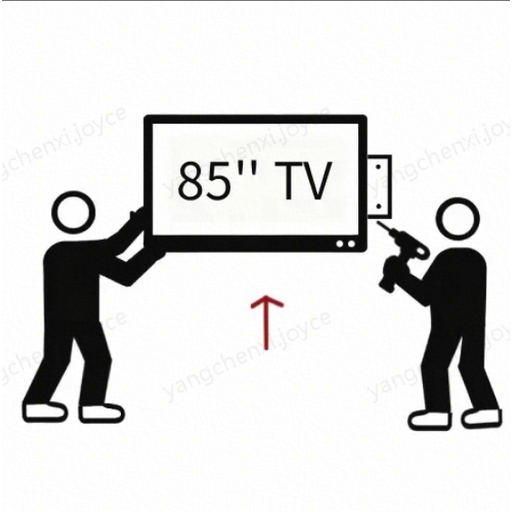
Why we love it: For anyone who wants to take absolutely no risks with a large, heavy, and valuable television. This service guarantees a professional, secure, and correctly executed installation. Peace of mind is priceless.
It neutralises the two critical mistakes: misdiagnosing the wall type and underestimating the load. The service includes the appropriate wall mount and an expert technician for a 100% secure installation.
Absolute peace of mind. The installation is carried out by a professional who guarantees the safety of your equipment and your loved ones, while optimising the viewing angle for a perfect cinema experience.
Discover our full selection of products that meet our quality criteria and the strictest safety standards.
For a plasterboard wall (drywall), metal expansion anchors (like Molly bolts) are the gold standard. As you screw them in, their "umbrella" mechanism expands behind the board to distribute the load and ensure maximum strength. For lighter objects like frames or small decorations, self-drilling plastic anchors can also do the job.
The reliability of a drill-free mount depends on a trio of factors: the quality of the adhesive, the weight of the object, and the condition of the surface. For light to medium-weight objects (a small mirror, towel rack, decorative wall sconce) on a pristine surface (smooth, clean, and dry, like tile or glass), modern adhesives are impressively effective. However, for heavy items like a television or a large shelf, don't take any risks: drilling remains the only truly secure option. In all cases, read the instructions and scrupulously respect the indicated maximum load.
The VESA standard will tell you. Take a look at the back of your television: you'll see four screw holes arranged in a square or rectangle. Measure the horizontal and then the vertical distance (in millimetres) between these holes. The result (e.g., 400 x 200 mm) is your VESA standard. All you have to do is choose a TV wall mount that lists the same compatibility.