
Livraison le jour même ou le lendemain

Qualité garantie

Débloquez vos offres de bienvenue: Livraison GRATUITE | Jusqu'à -80 % | 30 jours d'essai gratuits à JoyPlus
Téléchargez l'application
A cluttered entryway, jackets piling up on a chair, a handbag left on the floor… Sound familiar? A well-chosen wall-mounted coat rack is the simplest solution to optimise your space and restore order. But there's a catch: the market is flooded with products that make tempting promises but often prove disappointing in practice. To avoid making the wrong choice, it's crucial to know the most common traps.
I'm the Head of Product Curation at Joybuy, and my role is to test these items for you. Let me guide you in making the right choice and avoiding unpleasant surprises.
Buying a wall-mounted coat rack might seem trivial, but a few often-overlooked details can turn a good idea into a real headache—or even damage your walls.
The "Miracle" Adhesive Trap: Many models of drill-free adhesive hooks promise the world: a strong hold with no tools required. The reality is often less rosy: a poor-quality adhesive will give way under the weight of a winter coat and, in the worst-case scenario, rip off paint or a chunk of drywall when you try to remove it. The promise of an easy installation then turns into an unplanned DIY and painting session.
Flimsy Materials Hidden by a Stylish Design: A designer wall hook might look appealing in photos but could be hiding a cheap particleboard (MDF) or overly thin metal construction. These materials handle moisture poorly—a critical factor for a bathroom hook—and are likely to rust, warp, or simply break.
Poorly Designed Ergonomics: Some coat racks have hooks so close together that it's impossible to hang more than one thick jacket. Others feature sharp edges that, over time, will leave marks on or even damage the collars of your coats and the straps of your bags.
To avoid these disappointments, it's best to focus on a few objective technical criteria. These are the true guarantors of quality and durability for your future entryway storage.
The ideal mounting system depends on your wall type, what you plan to hang, and even whether you are a homeowner or a renter.
The lifespan of your coat rack depends directly on the materials it's made from.
A coat rack must, above all, be practical. Check the spacing between the hooks: a minimum of 10 to 15?cm (4 to 6 inches) is recommended to comfortably hang bulky items without them overlapping. Also, ensure the hook ends are rounded or have a ball tip to prevent them from marking or tearing your belongings.
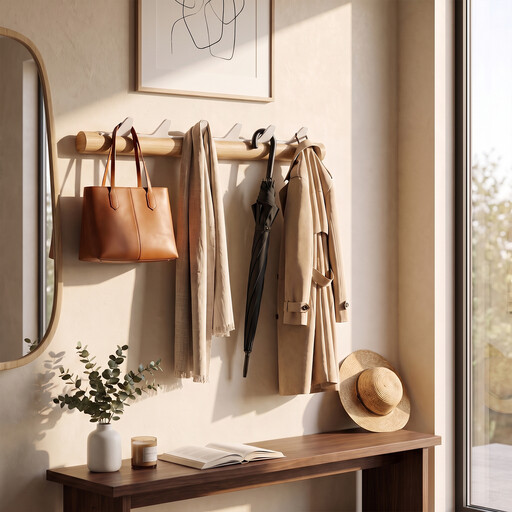
The Profile: Ideal for those seeking a solution that is aesthetic, long-lasting, and capable of holding the whole family's belongings in the entryway. The combination of wood and metal blends easily with many decor styles.
This model relies on FSC-certified solid rubberwood and sturdy aluminium alloy hooks, a far cry from low-end materials. Its rounded edges protect clothing.
Its high load capacity (up to 30 kg) and durable materials provide peace of mind for years to come.
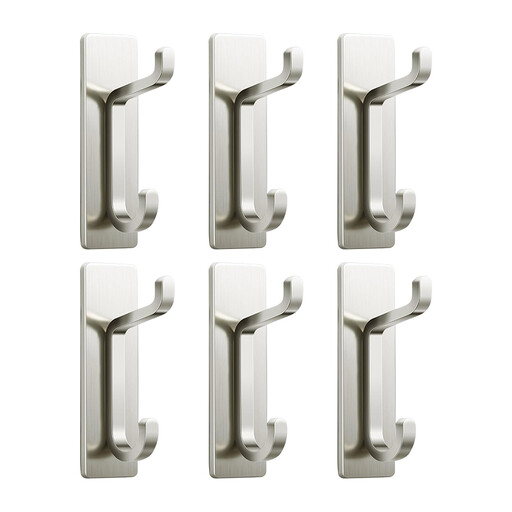
The Profile: Perfect for renters, or for outfitting a bathroom and kitchen without damaging walls or tile. An ideal solution for adding discreet and effective hanging points exactly where you need them.
Unlike cheap "miracle" adhesives, this model uses a high-quality fastener designed for maximum adhesion on smooth surfaces. By following the installation instructions, it provides a reliable hold without the risk of damaging the wall.
Installs in seconds with no tools required. Its stainless steel construction guarantees perfect rust resistance, a non-negotiable feature for a bathroom.
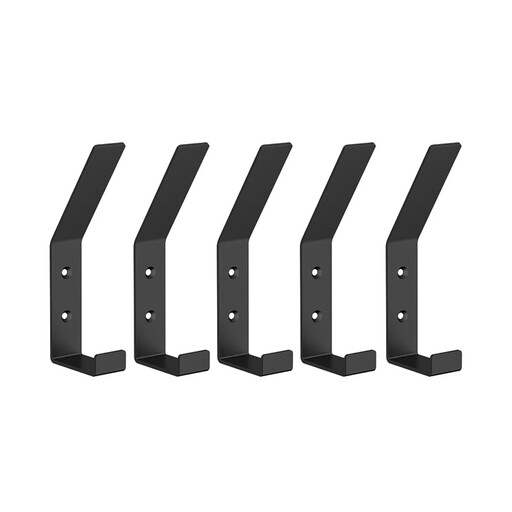
The Profile: For anyone who needs instant, portable, temporary storage. Perfect for the back of a bedroom, bathroom, or closet door, with zero commitment.
The classic pitfall of over-the-door hooks? Flimsiness and the risk of scratching the paint. This stainless steel model is far more robust than plastic or thin metal alternatives.
Zero installation: just hang them over the door. A 100% reversible and mobile solution that you can move from room to room as your needs change.
Discover our full selection of products that meet our criteria for quality and durability.
This information varies widely from one product to another, ranging from 1?kg to over 5?kg per hook. It is therefore imperative to check the maximum load capacity specified by the manufacturer on the packaging. Remember that performance also depends on the surface: it must be perfectly clean, dry, and smooth (e.g., tile, glass, metal) to ensure optimal adhesion.
For a secure installation in a hollow wall made of plasterboard (drywall), simple screws will never be enough. It is essential to use hollow-wall expansion anchors, commonly known as Molly bolts. These anchors expand behind the board, distributing the load and preventing the coat rack from being torn from the wall under the weight of coats.
Yes, but only if it is specifically designed for it. A model made of solid wood (like bamboo, which is naturally moisture-resistant) and protected by a quality water-repellent varnish can certainly work. However, for very humid or poorly ventilated bathrooms, materials like stainless steel or aluminium remain safer choices to eliminate any risk of mould or warping.