
Livraison le jour même ou le lendemain

Qualité garantie

Débloquez vos offres de bienvenue: Livraison GRATUITE | Jusqu'à -80 % | 30 jours d'essai gratuits à JoyPlus
Téléchargez l'application
Finding the right wall mount can transform a cluttered space into a sanctuary of calm. But the project can quickly turn into a nightmare: an adhesive hook that rips off the paint, a shelf that collapses in the middle of the night, or a no-drill wall mount that simply doesn't live up to its promises. As a product expert at Joybuy, I'm here to guide you through this maze and help you make the right choice: one that's reliable, durable, and perfectly suited to your home.
Before you get started, let's review the common pitfalls that turn a great wall storage idea into a real headache.
To avoid these disappointments, a few simple checks are necessary before you buy. Keep these points in mind, and you'll ensure a reliable and long-lasting installation.
The nature of your wall dictates the type of mount you can use. This is the most critical factor.
Don't just settle for the number on the packaging. Adopt a simple rule: always choose a mount with a stated load capacity that is at least double the weight of the object you want to hang. For a 2 kg object, opt for a mount that supports 4 or 5 kg. This safety margin absorbs unexpected stresses and guarantees peace of mind.
The choice of material has a direct impact on the longevity of your installation.
Instead of a random list, we've matched specific solutions to typical user profiles.
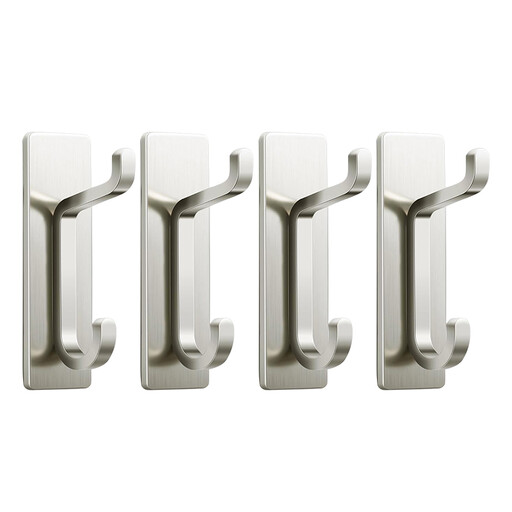
Why it's a great choice: Ideal for organizing a kitchen, entryway, or bathroom without drilling holes. The perfect solution for renters who need to leave their apartment walls pristine at the end of a lease.
This type of hook is designed for a reliable hold on smooth surfaces while ensuring damage-free removal when you follow the instructions. It sidesteps the pitfall of low-quality adhesives that take the paint with them.
Installs in seconds with no tools required. The stainless steel design is both discreet and corrosion-resistant, making it ideal for many different rooms.
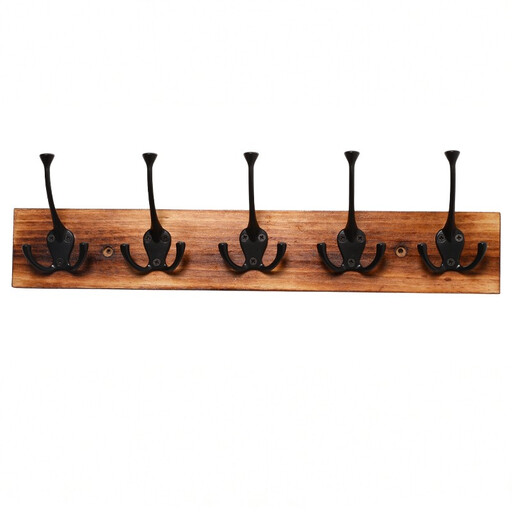
Why it's a great choice: For those who want to combine style and function. This hook rack blends the warmth of wood with the sturdiness of metal, adding a decorative touch to an entryway, kitchen, or hallway.
By relying on a screw-in installation, this rack bypasses the limited load capacity of adhesives. It's designed to support heavy items (coats, bags, bath towels) without ever failing.
The combination of quality materials (solid wood and metal) ensures excellent durability. Its five double hooks help optimize vertical storage space.
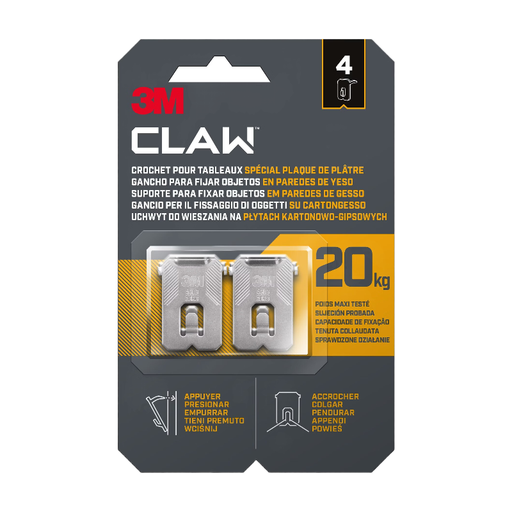
Why it's a great choice: For hanging heavy objects (frames, mirrors) on drywall without needing to find a stud, drill, or even open your toolbox. It's a genius solution for anyone intimidated by a power drill.
This system solves the problem of unrealistic load capacities by offering a reliable, engineered solution tested for a specific wall type. Its steel claws lock securely into the drywall, providing a hold that's incomparable to an adhesive for the same weight.
Tool-free installation with just a push of your thumb. The load capacity of up to 20 kg lets you secure valuable items without any drilling or anchors.
We've curated a full range of products that meet our standards for quality and safety.
1. How do I remove an adhesive hook without damaging the wall? Most modern adhesives are designed for clean removal. The easiest method is to gently pull the adhesive tab straight down, parallel to the wall. For more stubborn adhesives, lightly heating the area with a hairdryer can help soften the glue. It's essential to always read the manufacturer's instructions before both application and removal.
2. What's the difference between an adhesive hook and a suction cup hook? An adhesive hook uses a glue to stick to the wall. It's versatile (works on painted walls, wood, etc.), but removal can sometimes be tricky. A suction cup hook, on the other hand, works by creating a vacuum. It is only effective on perfectly smooth, non-porous, and clean surfaces (glass, tile, ceramic). Its biggest advantage: it's removable and endlessly reusable, without leaving a single trace.
3. Can you really install a TV wall mount without drilling? For large, heavy televisions, the answer is a categorical no. Safety must always come first: a proper TV wall mount must be securely anchored into a load-bearing wall (concrete, brick) or into the studs of a drywall partition, using appropriate screws and anchors. So-called "no-drill" solutions for TVs are actually furniture stands or cantilever mounts that rest against the wall but do not attach to it. For a truly secure and permanent wall installation, drilling remains essential.