
Livraison le jour même ou le lendemain

Qualité garantie

Débloquez vos offres de bienvenue: Livraison GRATUITE | Jusqu'à -80 % | 30 jours d'essai gratuits à JoyPlus
Téléchargez l'application
Far more than just a practical object, a wall mirror is a true design asset: it enlarges spaces, amplifies light, and defines a room's style. But be warned, a poor choice can be a costly mistake and ruin your wall. To help you avoid this disappointment, you first need to know the pitfalls to avoid.
As a product expert for the Joybuy editorial team, I'm breaking down the 3 mistakes to avoid when buying a wall mirror—and more importantly, how to get around them.
To make an informed choice, focus on a few technical details that make all the difference in the quality and durability of your wall mirror.
The first, non-negotiable step is to identify your wall type (concrete, brick, plasterboard). The mounting system must be suitable:
Always check the maximum load capacity of the included hardware and compare it to the mirror's weight. For a particularly heavy mirror or if you have any doubts, don't hesitate to consult a professional.
For a crisp, true reflection, it all comes down to the thickness and quality of the glass. Aim for a thickness of 4 to 6 mm: this is a hallmark of quality that limits the risk of distortion.
The silvering, that thin reflective layer on the back of the glass, is just as crucial. Poor-quality silvering can develop spots over time (those infamous black dots that appear), especially on a bathroom mirror exposed to moisture.
The frame sets the tone, but it also guarantees your mirror's longevity.
To help you see how these criteria apply in practice, here are our recommended options for different needs and styles.
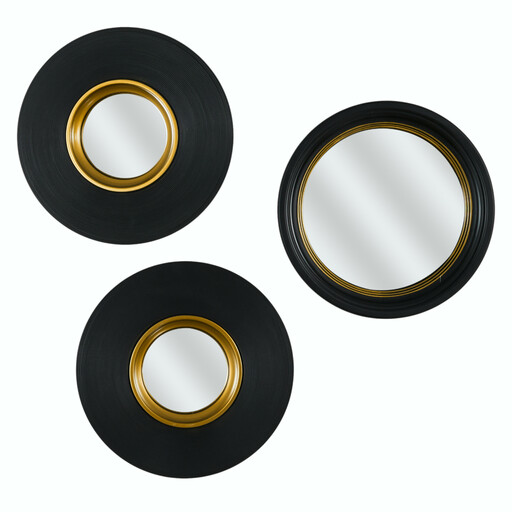
Why we chose it: The perfect solution for creating an artistic focal point on a bare wall. This set of mirrors transforms an ordinary wall into a modern composition, playing with light and spatial perception.
The kit includes standard fixings. For specific walls (like plasterboard), the guide directs you to best practices, preventing the risk of a fall. The ABS frame is stable and resistant to moisture.
Instant decorative mirror effect with an original convex design; a coordinated, ready-to-hang set.
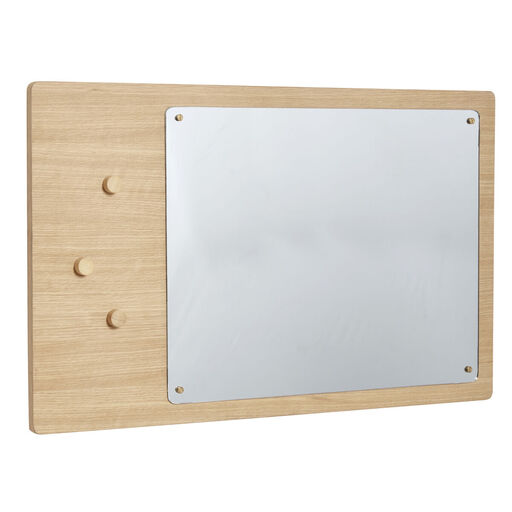
Why we chose it: Essential for an entryway, kitchen, or office. This magnetic mirror doubles as an ultra-functional memo board for displaying notes, photos, or shopping lists.
Its FSC-certified MDF body and oak veneer protect it from warping. Its robust construction is a guarantee of longevity, a far cry from low-quality frames.
Dual practical and aesthetic function; sustainable and responsible materials (FSC-certified wood).
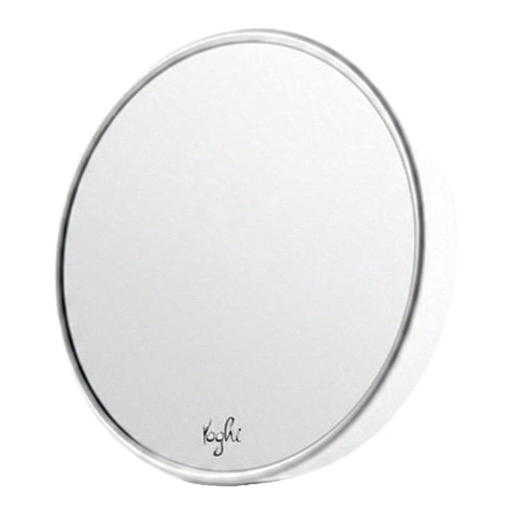
Why we chose it: The essential companion for precision makeup application, tweezing, or inserting contact lenses. Its compact size and powerful magnification meet a very specific need.
Its 3-suction-cup system ensures maximum grip on smooth surfaces (like tiles or another mirror), avoiding the pitfall of single-suction models that inevitably fall.
10x magnifying mirror for maximum clarity; portable and secure suction-cup mounting.
Discover our full selection of mirrors that meet our strictest quality and safety standards.
For a heavy mirror, safety is the top priority. Identify your wall type. On a plasterboard wall, expansion anchors (like Molly bolts) are mandatory. For a concrete or brick wall, anchors rated for the mirror's weight will suffice. Always use a spirit level for perfect alignment and, if in doubt, don't hesitate to call a professional.
No need to overcomplicate it: the simplest method is often the best. Take two clean microfibre cloths. Lightly dampen the first with a mixture of water and white vinegar (avoid ammonia-based products, which can damage the silvering). Use the first cloth to clean, then immediately dry with the second for a flawless, streak-free finish.
It all depends on the desired effect and its purpose. For practical use (that last look before you leave), a model at least 40-50 cm wide is comfortable. For a decorative effect aimed at enlarging the space, go for a large model (over 100 cm in height) or create a composition with a set of mirrors. The key is to always respect the proportions of the room and the wall.