
Livraison le jour même ou le lendemain

Qualité garantie

Débloquez vos offres de bienvenue: Livraison GRATUITE | Jusqu'à -80 % | 30 jours d'essai gratuits à JoyPlus
Téléchargez l'application
Wall hooks are perfect for freeing up space in a hallway, bathroom, kitchen or bedroom. But you need to choose the right model. After a few weeks, some purchases turn out to be disappointing: adhesive that peels off, a hook that's too small for a coat, fixings that don't suit your wall, or a design that looks nice but isn't very practical.
Before you opt for an adhesive wall hook, a wall peg or a wall-mounted coat rack, it's worth keeping three common pitfalls in mind:
In a rented property, no-drill hooks are particularly handy, provided you follow the manufacturer's instructions. Adhesive models are generally designed for clean, dry, smooth surfaces such as tiles, glass, metal or certain painted walls.
For a successful installation, you usually need to:
It's best to avoid wallpaper as well as textured, crumbly or freshly painted surfaces, unless the manufacturer explicitly states otherwise. Even when a product is described as removable, test it in an inconspicuous spot if possible.
A coat hook needs to support much more than a model intended for keys. Think about the combined weight of a damp garment, a bag or any accessories you plan to hang on it.
As a guide, the small Command metal hook supports approximately 225 g. It's therefore best suited to keys, small utensils or lightweight decorations. The medium Command metal model has a stated capacity of up to 1.3 kg, while the large white design hook is rated at 2.2 kg, according to the information on each product page.
For heavier, regular use, a metal peg or a coat rack fixed with suitable screws and wall plugs will generally be a better choice. The capacity then depends directly on the wall surface: plasterboard, brick, concrete or wood all require different fixings.
The material affects the appearance, durability and everyday ease of use:
In a bathroom or kitchen, choose a finish that's suitable for humid conditions and wipe off splashes regularly. For a wall-mounted coat rack with several hooks, also check the alignment and tighten the fixings if needed.
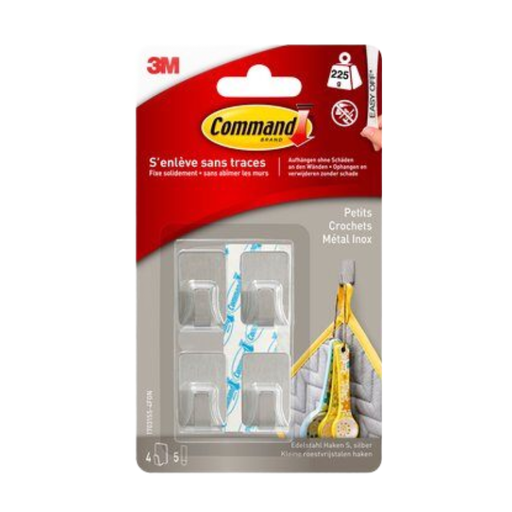
Why this choice suits this profile: This adhesive wall hook is ideal for small items in a hallway, kitchen or bathroom, with no tools or drilling required.
Its stated capacity of 225 g stops you mistaking it for a peg intended for heavy coats. The product page also specifies which surfaces are not compatible.
Polished stainless steel, four hooks included, and designed for removal without leaving holes or residue on a suitable surface.
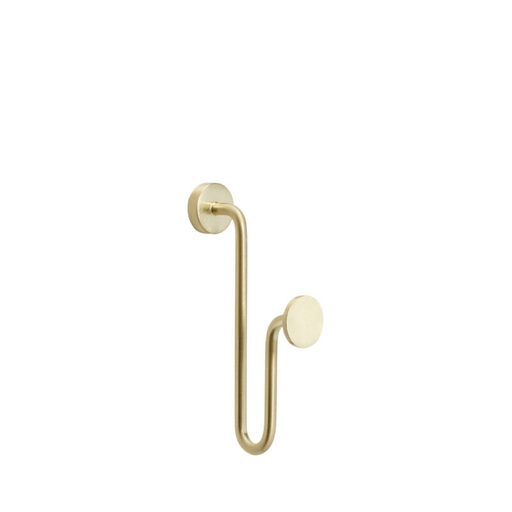
Why this choice suits this profile: Its brass finish and compact size make it easy to fit into a carefully styled décor, whether in a hallway, bedroom or bathroom.
Its dimensions of 7 × 2.5 × 13 cm are clearly stated, so you can check its size before arranging a row of decorative hooks.
Iron construction with polished brass finish and a swivelling hook, as the model name suggests.
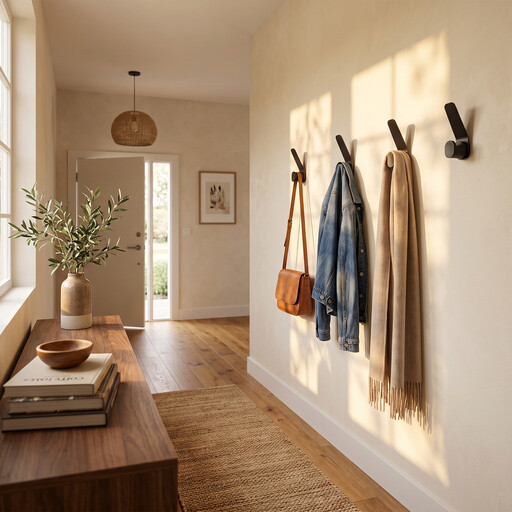
Why this choice suits this profile: These eight double wall-mounted hooks are designed to organise coats, bags, towels and accessories in a family hallway or a busy room.
Fixing with screws and wall plugs allows you to choose an anchor suitable for your wall type. The product page states a capacity of up to 11 lb per hook, approximately 5 kg, subject to correct installation.
Aluminium with a protective finish, double hook, anti-slip groove and a back pad designed to protect the wall.
We've put together a comprehensive, real-time selection of products that meet these demanding criteria, while complying with European safety regulations.
With an adhesive hook, don't hang anything on it immediately after fitting if the instructions recommend a waiting period. For a screwed model, use wall plugs suitable for your wall type and make sure the support is perfectly level.
Avoid exceeding the stated weight capacity and check the screws regularly, especially in a hallway where coats are taken off in a hurry. Clean metal surfaces with a soft cloth. For wood, avoid abrasive products and don't use too much water.
Yes, some models are designed for humid environments, but check the relevant information on the product page. Smooth, clean, dry tiles will generally be more suitable than wallpaper or textured paint. Avoid direct and prolonged exposure to water, unless the manufacturer states otherwise.
Follow the method specified by the manufacturer. With a stretchable strip, pull it slowly in the direction indicated, without pulling the hook towards you. If the surface is fragile or old, no method can guarantee no damage at all: testing it first is the best precaution.
A wall-mounted coat rack with several hooks, fixed with suitable screws and wall plugs, will be better for regular family use. Check the spacing between the pegs, the weight each hook can support and the capacity of the wall, rather than relying solely on the number of hanging points.