
Livraison le jour même ou le lendemain

Qualité garantie

Débloquez vos offres de bienvenue: Livraison GRATUITE | Jusqu'à -80 % | 30 jours d'essai gratuits à JoyPlus
Téléchargez l'application
A wall hook may seem harmless enough… until it falls off under the weight of a coat, pulls away a chunk of paint, or proves unsuitable for the surface you've chosen. Whether it's for a hallway, bathroom, kitchen or balcony, the right model is chosen less for its looks than for the weight it needs to support, the type of wall and the fixing method.
Marketing claims also deserve careful scrutiny. The phrase "no drilling required" doesn't mean the hook is suitable for every wall. Similarly, a maximum load rating only applies if the surface, installation and weight distribution follow the manufacturer's recommendations.
Adhesive hooks that require no drilling are handy for tenants and small installations. However, they demand a smooth, clean, dry and non-porous surface. Textured paint, wallpaper, bare wood, brick or an uneven wall can significantly reduce adhesion.
A suction cup hook follows the same logic: it works best on glass, smooth tiles, metal or acrylic. Even slightly uneven ceramic tiles can prevent the suction cup from creating a proper seal.
The stated capacity doesn't always reflect the demands of daily life. A bag hung abruptly exerts far more force than a lightweight towel. For hooks intended for coats, bags or fragile items, allow a safety margin and make sure the support is sturdy enough.
On a plasterboard partition, the weight must also be suited to the structure. Some systems, like picture hangers designed for plasterboard, fix directly into the board. They don't necessarily replace a fixing into a stud when supporting a heavy load or one subject to repeated movement.
A metal hook can be very sturdy, but its angles or finish may snag fabrics. In a bathroom, humidity also accelerates the deterioration of materials that aren't designed for it. For an outdoor wall hook, check its resistance to water, UV rays and temperature fluctuations.
For keys, tea towels or small accessories, a moderate capacity is sufficient. For coats, bags or school rucksacks, choose a mechanical fixing or a hook whose maximum load is clearly documented. In a family hallway, a wall coat rack must also withstand repeated use and forward pulling forces.
Metal, wood, plastic and composite materials all offer different properties. Check for rounded edges, corrosion protection and the spacing between hooks. To organise a hallway, a multi-hook coat rack can free up space while avoiding concentrating the strain on a single point.
Decorative hooks can perfectly complement your interior design, but their appearance shouldn't make you forget the essentials: supported weight, and the type of screws and wall plugs supplied.

Why this choice suits this profile: This compact wall organiser fits neatly into a hallway or corridor. Its purpose: to keep keys and a few small items together in one place.
Its function as a wall-mounted key holder is clearly intended for small accessories – there's no need to ask it to double as a coat hook.
Iron construction, black and white finish, stated size of 10.2 inches (approx. 25.9 cm), and integrated hooks for the hallway, corridor or kitchen.
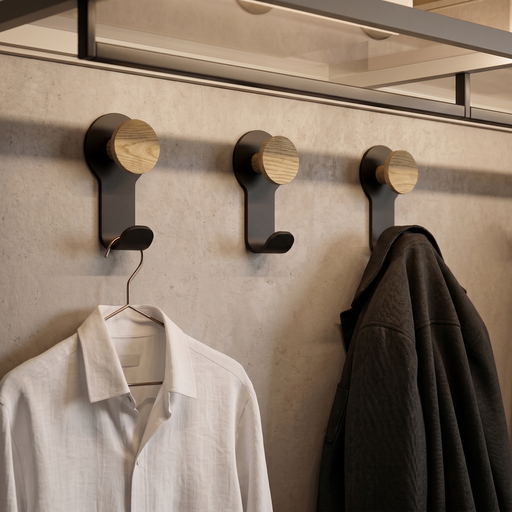
Why this choice suits this profile: The combination of FSC-certified wood and lacquered aluminium is aimed at interiors where a wall coat rack needs to contribute as much to the décor as to storage.
Installation is described as requiring drilling, wall plugs and screws – the fixing method is perfectly clear, unlike an adhesive hook presented as universal.
Set of 8 double hooks, grey back pads to protect the wall, and a stated load of 11 lbs (approx. 5 kg) per hook.
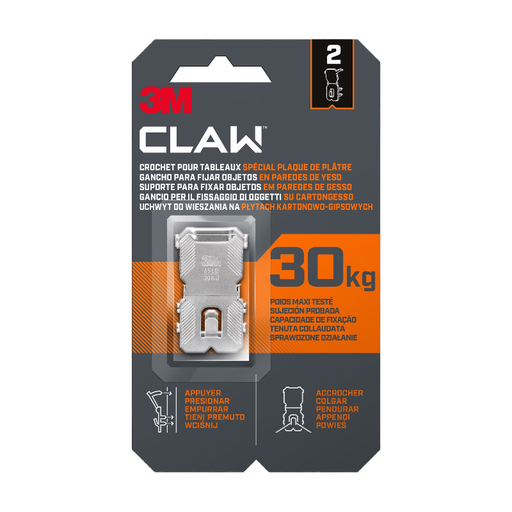
Why this choice suits this profile: This system is designed for those who want to hang a mirror, frame or heavy decoration on a plasterboard partition without using an adhesive fixing.
It is specifically designed for plasterboard and its stated capacity reaches 30 kg. This limit must not be exceeded, nor should the product be used on another surface without checking.
Two hardened steel hooks, installation by simple thumb pressure and no tools required according to the manufacturer.
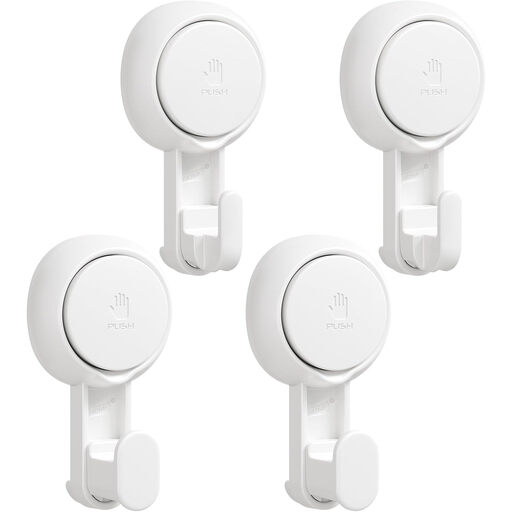
Why this choice suits this profile: This set is suitable for towels, flannels and shower accessories, provided the room has smooth, non-porous surfaces.
Compatible and incompatible surfaces are clearly stated: it should not be installed on a porous or textured wall, uneven paintwork or wallpaper.
Set of 4 hooks, 360-degree rotation and a stated maximum load of 11 lbs (approx. 5 kg) per hook.
We've put together a comprehensive, real-time updated list of products that fully meet these strict selection criteria and European safety regulations.
For an outdoor wall hook, inspect the adhesive carefully after heavy rain, a frost spell or a period of hot weather. For ceiling hooks, also check the nature of the support and the weight being hung: a plant, a garland or a light fitting don't put the same strain on the fixing.
This is generally not recommended unless the manufacturer explicitly states otherwise. When removing the adhesive, you risk tearing the top layer of the wallpaper. A smooth, clean and stable surface offers far more predictable installation conditions.
For a frame or mirror, use a system designed for plasterboard and respect its maximum load. For a very heavy item, locate a stud or choose a suitable mechanical fixing with wall plugs that match the thickness of the board.
It all depends on the surface, humidity, temperature and the weight hung. Careful installation can extend its holding time, but replace the hook or strip as soon as any lifting appears. The absence of holes doesn't mean you can skip regular checks.