
Livraison le jour même ou le lendemain

Qualité garantie

Débloquez vos offres de bienvenue: Livraison GRATUITE | Jusqu'à -80 % | 30 jours d'essai gratuits à JoyPlus
Téléchargez l'application
A wall-mounted coat rack can easily free up space in a hallway, bedroom or utility room. But choosing hooks purely for their looks or their stated weight capacity can sometimes lead to nasty surprises: fixings that come away from the wall, damaged plaster or a misunderstood maximum load.
Before you place your order, three mistakes crop up time and again:
On tiles, glass, metal or a perfectly smooth painted surface, an adhesive wall hook can work well for light items: keys, tea towels, small towels or accessories. Clean and dry the area thoroughly, then respect the waiting time stated by the manufacturer before hanging anything on it.
On a plasterboard wall, picture hooks with metal claws offer another solution. They press directly into the board and are designed to hold frames or mirrors, within the stated weight limit. For a long-lasting installation, a wall plug suited to the thickness and type of board is often the safest choice.
Brick, concrete or stone walls generally require drilling and appropriate wall plugs. Before you get the drill out, also check that no electrical cables or pipes are hidden behind the area.
A wet coat, a full bag or a saucepan puts far more strain on a hook than a hat or a bunch of keys. To choose strong wall hooks, check:
The stated load applies to use under specific conditions. It doesn’t remove the need for correct installation or for regularly checking the screws, wall plugs or adhesive strips.
In a bathroom or on a balcony, choose a finish that resists moisture and corrosion. In a hallway, wood, metal or a combination of the two can turn simple storage hooks into a real decorative feature.
Rounded edges also reduce the risk of snagging clothes. In a kitchen, a rack that fixes under a shelf can free up worktop space without needing another hole in the wall. On a painted wall, always check the manufacturer’s restrictions regarding wallpaper, porous surfaces and delicate paints.
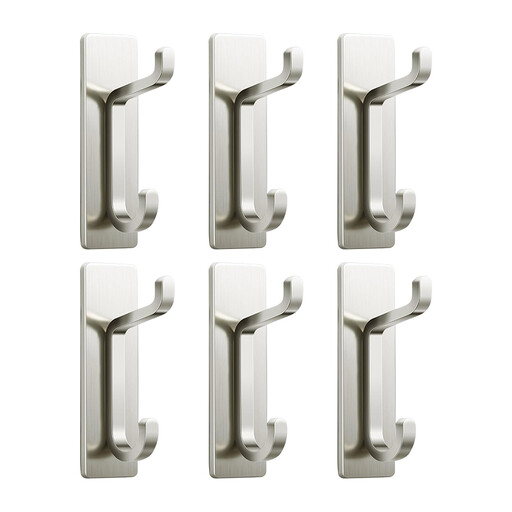
Why this choice suits this profile: This pack of six hooks is ideal for tenants and anyone who wants to organise their hallway without getting the drill out. The stainless steel finish blends in easily in a kitchen or bathroom.
The multi-pack means you don’t have to buy several lots for small items. However, keep these hooks to compatible surfaces and the loads stated in the instructions.
Adhesive fitting with no nails or screws, silver finish and six pieces in the pack.
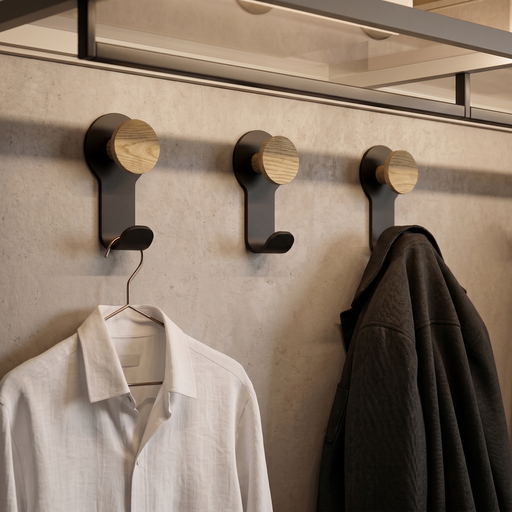
Why this choice suits this profile: This set combines FSC-certified wood with varnished aluminium alloy in an elegant brown and black duo. It’s aimed at those who want to co-ordinate their hooks in the hallway, bedroom, bathroom or corridor.
The product page states two hooks per bracket and a stated capacity of 11 lb per hook. Even so, the screws and wall plugs must be chosen according to your wall type.
Rounded edges, grey back plate to protect the wall and double hooks for coats, bags or towels.
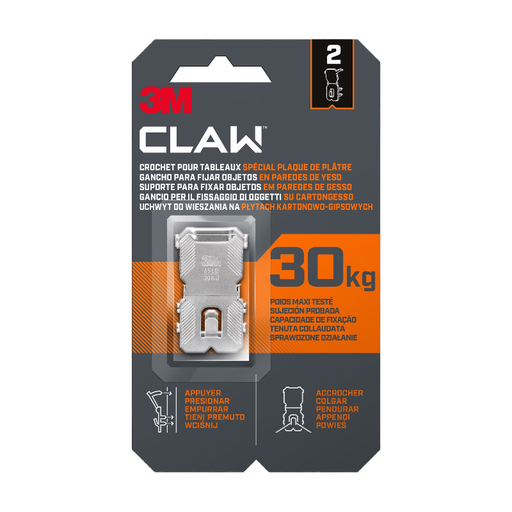
Why this choice suits this profile: This solution is for those who want to hang pictures, mirrors or heavy decorations on a plasterboard partition wall without using an adhesive hook.
The stated capacity reaches 30 kg and installation is done by simply pressing into place, with no tools required. This solution is designed for plasterboard: its compatibility should not be extended to brick or concrete.
Hardened steel claws, tool-free installation and intended use for heavy items on plasterboard.
We’ve put together a comprehensive list, updated in real time, of products that meet these demanding selection criteria and European safety standards.
A decorative wall key hook is fine for light items, while a mechanically fixed double hook will be better suited to winter clothing. For outdoor use, look for clear compatibility with ultraviolet rays, moisture and temperature changes. Some transparent hooks are designed for smooth surfaces and limited loads, such as decorations or small wreaths.
This is generally not recommended: removing the strip risks tearing the decorative layer. Smooth, clean, non-porous surfaces offer more reliable conditions for fitting. Always check the list of authorised surfaces in the instructions for the model you choose.
For a light item, a hook specifically designed for plasterboard may be sufficient. For a heavy load, choose a fixing whose capacity and type match the thickness of the board. Metal claws like those in the 3M CLAW range are designed for plasterboard, but each load must remain within the manufacturer’s guidelines.
Avoid exceeding the stated load, distribute items evenly and check the stability of the installation regularly. Clean with a soft, slightly damp cloth, then dry any metal parts exposed to water. For adhesive models, never reuse a strip that has already been removed: replace it with a compatible refill if the manufacturer offers one.