
Livraison le jour même ou le lendemain

Qualité garantie

Débloquez vos offres de bienvenue: Livraison GRATUITE | Jusqu'à -80 % | 30 jours d'essai gratuits à JoyPlus
Téléchargez l'application
In a cluttered hallway, a cramped bathroom or a poorly organised kitchen, wall hooks offer a simple solution for hanging coats, towels, bags, keys and accessories. But a rushed purchase can quickly lead to a fixing that peels off, a support that’s incompatible with your wall, or a weight capacity that’s been wildly overestimated.
Before choosing a wall hook or storage hook, three pitfalls deserve your attention.
A no-drill wall hook isn’t suitable for every surface. Adhesive hooks and suction cup models work best on smooth, clean, dry and non-porous surfaces. Wallpaper, textured walls, flaking paint, brick or uneven tiles can significantly reduce their grip.
The phrase “damage-free” should therefore be taken with caution. The result depends on the surface, how you prepare the wall, the setting time, and the removal method specified by the manufacturer.
The stated capacity usually applies under very specific conditions. It doesn’t guarantee that your wall, paintwork or tiles will bear the same load. A damp coat, a full bag or several towels also exert far more strain than a lightweight item.
For a wall-mounted coat hook or a fixing intended for heavy items, check the type of wall and use suitable wall plugs when drilling is necessary.
A hook placed behind a door needs enough clearance to avoid rubbing. In a bathroom, it must resist moisture. In a family hallway, the number of hooks and the strength of the fixing often matter more than appearance.
A decorative model might be perfect for keys or small accessories, but become impractical with bags or thick jackets.
Check the maximum weight stated by the manufacturer and keep a safety margin. For regular use, it’s best not to operate constantly at the stated limit. A hook rated for 2.2 kg will, for example, suit towels, utensils or small bags, but not a heavy load suspended above a walkway.
For a suction cup rated at 11 lb, roughly 5 kg, the actual load capacity still depends on the flatness, seal and condition of the surface. Check its grip before each important use.
In a small bathroom, a compact or swivelling hook makes moving around easier. For a family, a wall-mounted coat rack with several hooks stops all the jackets piling onto a single peg.
Stainless steel works well in damp rooms when properly maintained. Wood adds a warm touch, but should be cleaned with a slightly damp cloth, without abrasive products. Plastics and TPE components can be practical for suction cups, provided you avoid excessive heat and direct sunlight.

Why this choice suits this profile: This pack of four suction cup hooks is ideal for anyone wanting to organise a bathroom or kitchen quickly without drilling. The 360° swivelling hook lets you adjust the hanging direction.
The product page specifies compatible surfaces and excludes porous, uneven or wallpaper-covered walls. This helps you avoid installing it on an unsuitable surface.
Four units, tool-free installation and a stated load of up to 11 lb per hook on a smooth, non-porous surface.
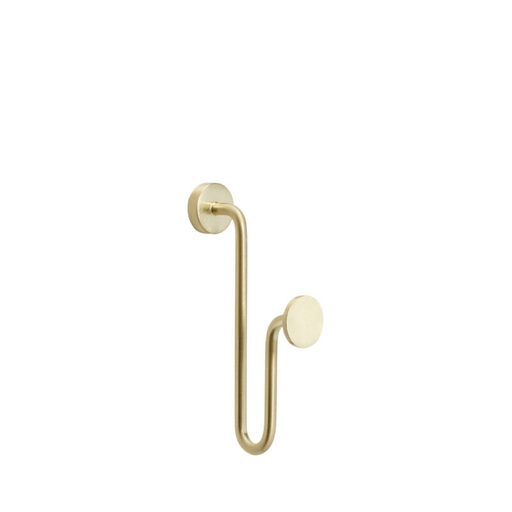
Why this choice suits this profile: Its brass finish and dimensions of 7 × 2.5 × 13 cm fit easily into a hallway, bedroom or bathroom where the accessory plays a full part in the décor.
Its dimensions and material are clearly stated. However, you’ll need to plan for a suitable wall fixing, as the product page doesn’t present this model as an adhesive hook.
An iron construction with a brass finish, a compact design and a swivelling hook to change the hanging direction.
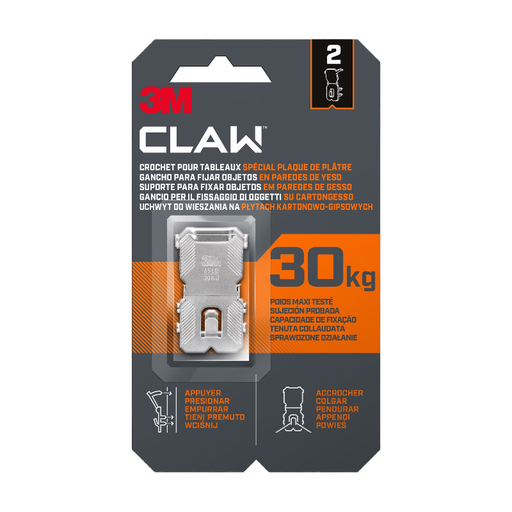
Why this choice suits this profile: This system is designed for users who want to hang frames, mirrors or heavy decorations on plasterboard without getting out the drill.
The target surface – plasterboard – is clearly stated. This makes it impossible to mistake it for a universal solution for concrete, tiles or painted walls.
Two metal hooks and a stated load of up to 30 kg, with installation by pressing the claws into the plasterboard.
We’ve put together a comprehensive, real-time updated list of products that fully meet these strict selection criteria and European safety regulations.
Go for an adhesive hook or a suction cup if the surface is smooth, dry and non-porous. Check the manufacturer’s restrictions regarding wallpaper, textured walls and fragile paintwork. To minimise marks, remove the hook by following the recommended method carefully.
No. They mainly stick to smooth, sealed tiles. Wide grout lines, raised patterns, porous tiles or uneven surfaces can prevent the suction cup from creating enough grip. In that case, a suitable mechanical fixing will often be more appropriate.
The duration depends on the quality of the surface, humidity, temperature, load and the manufacturer’s instructions. Check the support regularly and replace the adhesive strip as soon as it shows signs of peeling. For a heavy load or a permanent installation, a screwed fixing is generally the best choice.