
Livraison le jour même ou le lendemain

Qualité garantie

Débloquez vos offres de bienvenue: Livraison GRATUITE | Jusqu'à -80 % | 30 jours d'essai gratuits à JoyPlus
Téléchargez l'application
A simple wall hook can transform a blank wall into a smart storage space or a personal art gallery. But be warned, choosing the wrong model is a recipe for disaster: the picture frame crashing to the floor, the coat tearing a chunk out of the wall, or the adhesive leaving a permanent mark. To help you avoid these mishaps, our guide separates fact from fiction and helps you find the perfect mount, cutting through misleading marketing claims.
Before you pull out your credit card, here are the three pitfalls to avoid at all costs:
To avoid making a mistake, two parameters must be checked before any purchase. They are the guarantee of your installation's safety and longevity.
Identifying the nature of your wall is a non-negotiable step.
Once the wall type is identified, estimate the weight of the object to be hung to choose the most suitable mounting method.
Rather than an endless list, here are three solutions we recommend, each designed for a specific use.
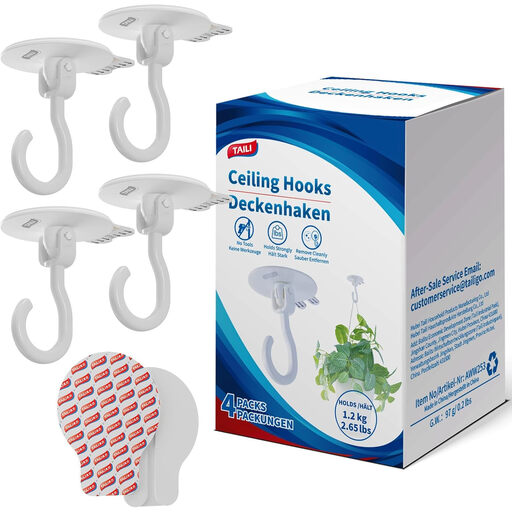
Why we chose it: The perfect solution for renters or anyone who refuses to drill a single hole. Designed for smooth surfaces (tile, glass, non-textured painted walls), these hooks allow you to hang light decorations, string lights, or kitchen utensils without taking out the drill.
It tackles the problem of adhesives damaging walls with a patented strip, designed for clean removal without residue or paint chipping on compatible surfaces.
Its 2-in-1 design, which pivots 180° and rotates 360°, allows it to be used on both walls and ceilings. Tool-free installation and trace-free removal are guaranteed.
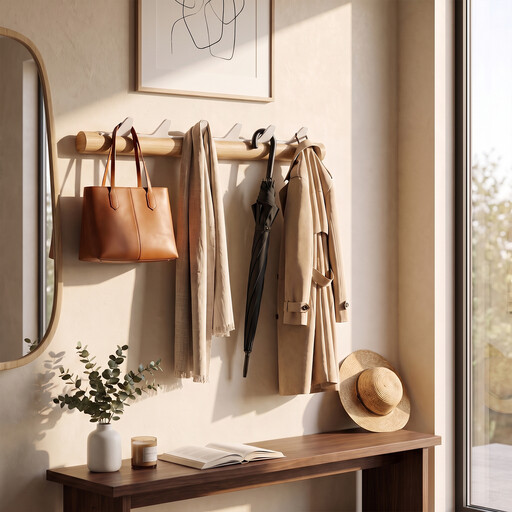
Why we chose it: This wall-mounted coat rack perfectly combines design and durability. It's the ideal solution for an entryway, bedroom, or bathroom, organising the space while adding a warm decorative touch with its blend of wood and metal.
Unlike entry-level coat racks, this model uses FSC-certified solid wood and aluminium alloy hooks. Its load capacity (up to 30 kg total) is not an empty promise: it's secured by a solid, screw-in wall mount.
Its design is award-winning (Silver Muse Design Award, French Design Award 2023). The smooth, rounded edges are gentle on clothing. Made with durable and water-resistant materials.
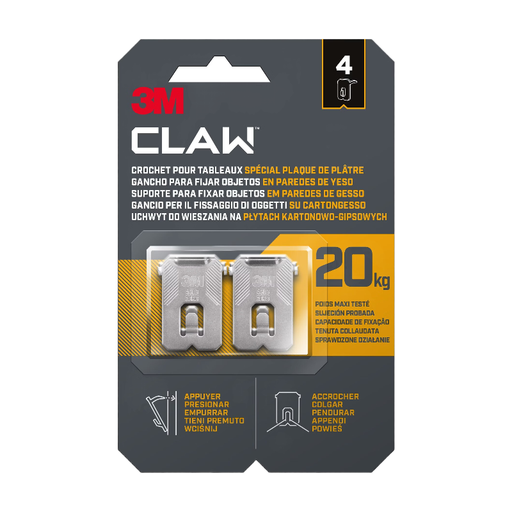
Why we chose it: This is THE solution for hanging heavy objects (large mirrors, bulky frames) on drywall without having to find a stud or struggle with complex anchors. It's simple, effective, and solves a very common problem.
It ends the headache of mounting on drywall. No more drilling: its hardened steel claws lock securely into the plasterboard. The result: a high, reliable load capacity without damaging the wall.
Installs with no tools, just a push of your thumb. Each hook holds up to 20 kg. No screws, nails, or stud finder needed.
Whether you're organising an entryway, optimising a kitchen, or simply dressing up your walls, there's a solution for every project. Explore our full selection to find the perfect wall mount for you.
For a damage-free installation, choose adhesive hooks from reputable brands or suction cup systems for very smooth surfaces (tile, glass). Read the instructions carefully: the surface must be clean, dry, and non-granular. Respect the adhesive's curing time before hanging anything and never exceed the stated maximum weight. To remove it, follow the manufacturer's instructions (often by pulling the tab downwards) to avoid tearing off the paint.
It all depends on the weight. For a very light object (under 1 kg), a good adhesive hook may suffice. For loads between 1 and 7 kg, a special drywall hook with needles or one that screws into a self-drilling anchor is an excellent option. For heavier objects (up to 20-30 kg), claw-style systems like the 3M CLAW range or expansion anchors (like Molly bolts), which require a special setting tool, are the safest solutions.
The capacity varies enormously: from a few hundred grams to over 5 kg for the strongest models. Be aware that this maximum weight is only valid under ideal conditions. As a precaution, always allow for a safety margin: only load the hook to 50% or 70% of its advertised capacity, especially if the suspended object is valuable or if the room's temperature and humidity fluctuate.