
Livraison le jour même ou le lendemain

Qualité garantie

Débloquez vos offres de bienvenue: Livraison GRATUITE | Jusqu'à -80 % | 30 jours d'essai gratuits à JoyPlus
Téléchargez l'application
A wall hook can sometimes free up space in a hallway, bathroom or kitchen. But it’s important to choose the right one. A rushed purchase could leave you with a fixing that comes unstuck, clothes that slip off or holes in the wrong place. To make the right choice, look beyond the design and consider the surface, the load and the fixing method.
The capacity shown on the packaging usually applies under specific conditions: a smooth surface, correct installation, evenly distributed weight and a suitable environment. So an adhesive wall hook rated for a few kilograms may not be suitable for a heavy coat, a full bag or a damp plant.
To avoid any nasty surprises, estimate the weight of the item and leave a safety margin. A hook for a towel won’t be subject to the same strain as a coat hook holding several jackets.
Porous, dusty, textured or uneven surfaces can significantly reduce adhesion. Wallpaper, brick, flaking paint and rough walls are often unsuitable for adhesive hooks that don’t require drilling. A suction cup, meanwhile, needs a perfectly smooth, non-porous surface.
Before fitting anything, check the manufacturer’s recommendations. A fixing designed for tiles may fail on a painted partition wall or an older wall.
A decorative wall hook also needs to suit its intended use. A small hook is handy for keys or accessories, while a wall-mounted coat rack with several hooks is more practical for a family. For hanging bunting or a small plant from the ceiling, an adjustable ceiling hook may be more versatile than a fixed model.
Check the load capacity per hook, not just the capacity of the whole set. As a guide, 2.6 pounds is about 1.18 kg, while 11 pounds is nearly 5 kg. These figures assume correct installation and should not be exceeded.
For coats, bags or tools, the strength of the wall matters just as much. A hook fixed to a lightweight partition wall won’t perform like one screwed into a wall stud or suitable masonry.
Leaving enough space between hooks stops clothes from overlapping. Rounded edges help protect fabrics, while a double hook gives you more storage without needing extra fixings. In a narrow hallway, also measure the depth so that bags and jackets don’t obstruct the walkway.
For a storage hook in the garage or utility room, check the diameter of the item you want to hang. A clamp hook designed for handles measuring 18 to 32 mm may not fit every broom or tool.
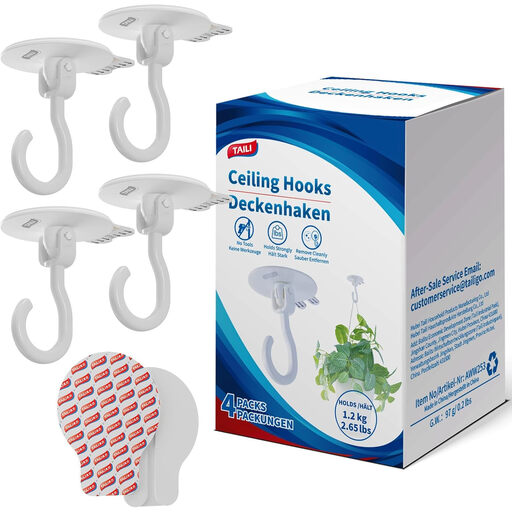
Why it suits this type of shopper : This pack is ideal if you want to quickly fit hooks in a hallway or kitchen, or hang small decorations, without a drill or screws.
The stated capacity of 1.18 kg per hook is clearly indicated. However, the surface must be smooth, dry and clean: wallpaper and textured walls are unsuitable.
A pack of 4 with adhesive strips included, and a hook that adjusts through 180° vertically and 360° horizontally. Suitable for walls or ceilings.
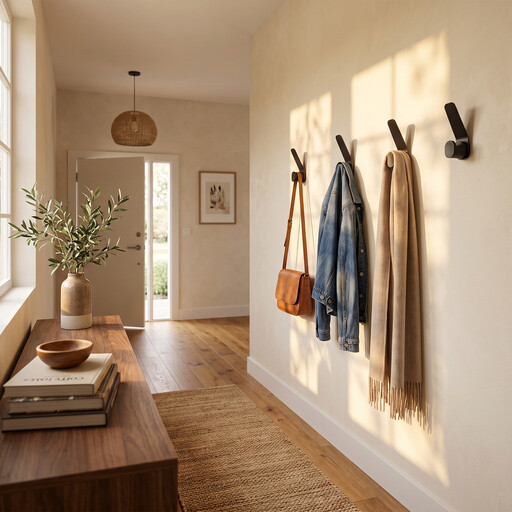
Why it suits this type of shopper : Combining wood and metal, this design works just as well in a hallway as in a bedroom or bathroom, where the coat hook is part of the décor.
Screws and wall plugs are a better choice for coats and bags used regularly than a simple adhesive fixing. Make sure the wall plugs are suitable for your wall.
Each double hook is stated to hold up to 5 kg, with rounded edges and a grey backing pad to protect the wall.
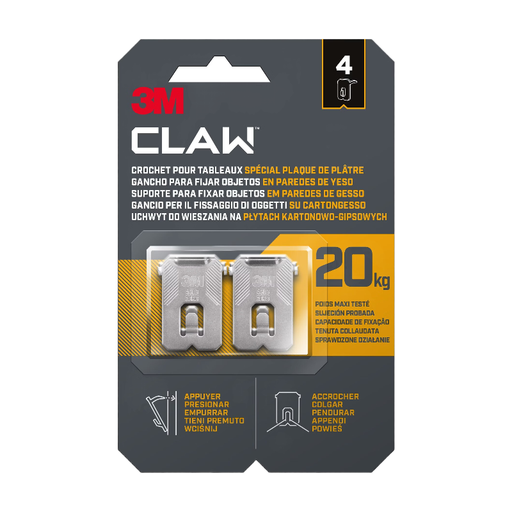
Why it suits this type of shopper : This is a good option if you want to hang pictures, mirrors or relatively heavy decorations on compatible plasterboard.
This isn’t a simple adhesive hook: its steel claws grip the plasterboard. However, the surface must be suitable for the intended use.
Stated capacity of up to 20 kg. Installs with a simple push, without screws or extra tools, following the product instructions.
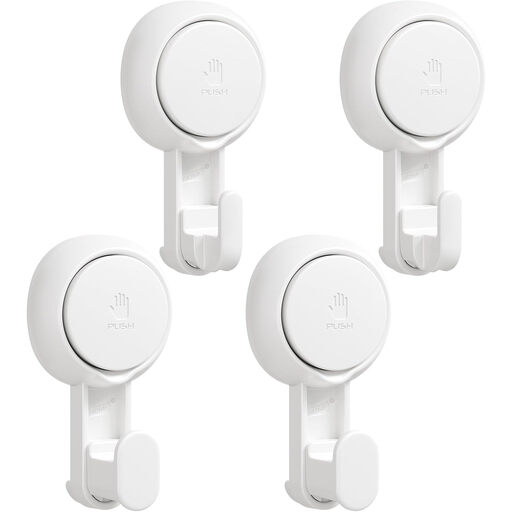
Why it suits this type of shopper : This suction hook can easily be repositioned on a smooth surface. It’s suitable for towels, sponges and shower accessories.
Only use it on smooth, dry, non-porous surfaces. Press the suction cup firmly into place and check it’s secure before each use.
Stated capacity of up to 5 kg per hook, an adjustable 360° design and removal without drilling or glue.
We’ve brought together a comprehensive, regularly updated selection of products that meet these demanding criteria and European safety standards.
An adhesive hook or suction cup may be suitable if the wall is smooth, clean and compatible. Check the stated load capacity and how to remove it. No adhesive solution can guarantee a mark-free finish on delicate paint or wallpaper.
It depends on the quality of the surface, humidity, temperature and the weight being hung. Avoid direct heat, persistent condensation and loads close to the stated limit. Regular checks can help you spot the start of any peeling before the item falls.
Yes, as long as you choose a material and fixing that can cope with moisture. A suction cup works on smooth tiles or glass, while a screw-mounted model needs to be properly protected and secured. For a towel hook, leave enough room for the fabric to dry without getting in the way of using the room.