
Livraison le jour même ou le lendemain

Qualité garantie

Débloquez vos offres de bienvenue: Livraison GRATUITE | Jusqu'à -80 % | 30 jours d'essai gratuits à JoyPlus
Téléchargez l'application
Choosing the right wall hook? It seems simple enough. Yet, between promises of "extra-strong" adhesion that fail under the weight of a single tea towel and purely decorative designer models, the choice can quickly become a headache. A bad hook can not only damage your walls but also your most precious belongings. This guide is here to demystify the process and help you find a hook that provides a secure hold perfectly suited to your needs.
Before you check out, let's review the classic mistakes that lead straight to disappointment.
To avoid making a mistake, two parameters must be examined closely. They are the guarantee of a successful installation.
This is the absolute starting point. The type of hook must be perfectly compatible with your wall material.
Don't blindly trust the number on the packaging.
To illustrate these criteria in practice, here is our selection of hooks, each meeting a specific need.
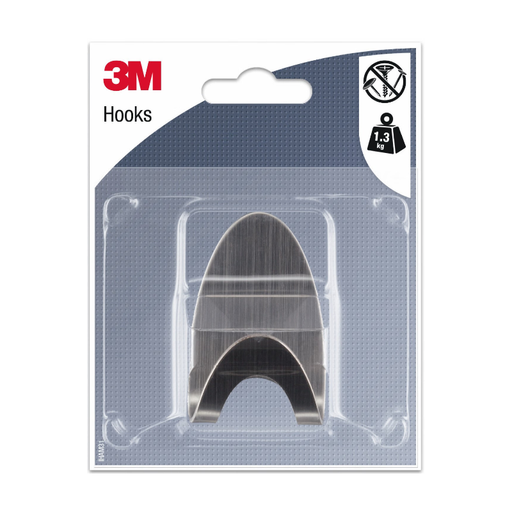
Why we love it: Perfect for anyone seeking a no-drill hook solution that is effective, reversible, and discreet. Ideal for organizing an entryway, kitchen, or bathroom without fear of leaving marks on moving day.
It doesn't claim to be universal. Its technical sheet is clear about its compatibility (painted surfaces, tile), which avoids the trap of the "all-terrain" adhesive that always ends up failing on an unsuitable surface.
Ultra-simple installation and clean, residue-free removal. Its 1.3 kg capacity is realistic and perfectly calibrated for light, everyday use.
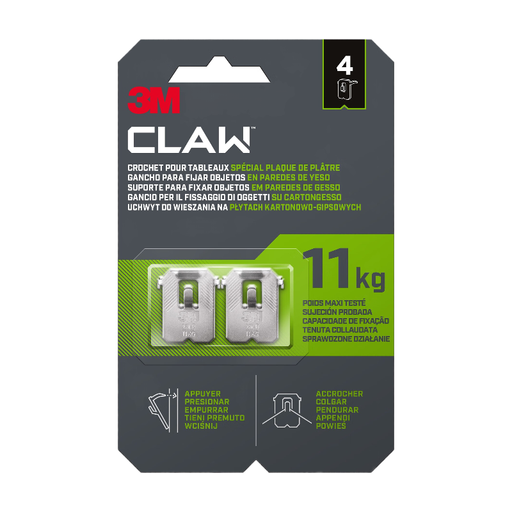
Why we love it: The solution for anyone who wants to hang a heavy mirror, a piece of art, or imposing decor on drywall without having to probe the wall for a stud. It is THE ultimate drywall hook solution.
It directly tackles the maximum load trap. Made of hardened steel, it anchors securely into the drywall to deliver on its 11 kg promise, where a conventional hook would have already failed.
Provides a heavy-duty hold on drywall without any complex tools. A simple push of the thumb is all it takes to install.
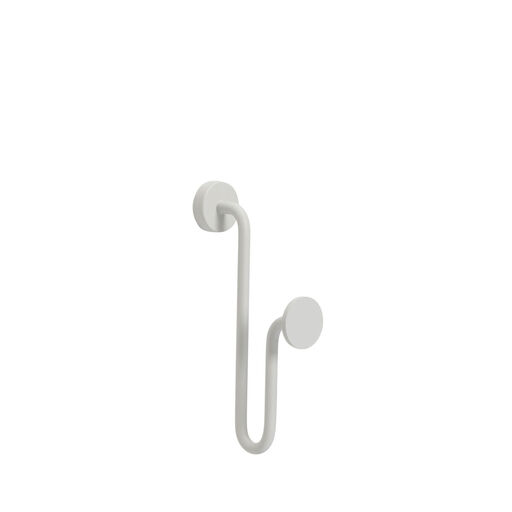
Why we love it: For all those who see a wall hook as, first and foremost, a decorative object. Its clean, graphic design brings a resolutely contemporary touch to an entryway, bedroom, or bathroom.
It doesn't sacrifice strength for style. Made of iron, this designer hook is solid. Once properly screwed in, it will easily hold clothes, towels, or small bags.
Combines strong aesthetics with durable construction. It can be used alone as a statement piece or arranged in a wall composition for a highly personal effect.
For more demanding uses, like organizing a garage or workshop, even more specialized solutions exist. We have selected a range of products that emphasize robustness and functionality.
For most quality models, the technique is simple: heat the base of the hook with a hairdryer for 20 to 30 seconds to soften the adhesive. Then, gently pull the tab (if one exists) or use dental floss, sliding it between the hook and the wall to gently "saw" through the adhesive. Above all, never pull the hook directly toward you, as this could rip off the paint.
A standard wall anchor (like a Molly bolt) expands behind the drywall to create a very strong anchor point, but it requires drilling and a special tool (an expansion tool). In contrast, a drywall hook like the 3M CLAW is designed to be pushed directly into the wall without drilling. Its steel claws grip the drywall, allowing for a much faster installation for already substantial loads.
Absolutely, provided you check two key points: its material and its mounting system. A designer hook made of solid metal, secured with screws and anchors appropriate for your wall, will be just as reliable as a purely utilitarian model. Be wary of lightweight plastic models or those that rely solely on adhesive for objects over 2 kg: disappointment is almost guaranteed.