
Livraison le jour même ou le lendemain

Qualité garantie

Débloquez vos offres de bienvenue: Livraison GRATUITE | Jusqu'à -80 % | 30 jours d'essai gratuits à JoyPlus
Téléchargez l'application
At first glance, a wall hook seems simple. In reality, the wrong choice can quickly turn into a nightmare. A coat crashing to the floor, a permanent mark on a freshly painted wall, an adhesive that gives up in a humid bathroom... Sound familiar? To prevent your next purchase from ending in disappointment, here are the common pitfalls to avoid.
The first classic trap: falling for a designer wall hook without looking under the hood. As attractive as some models are, they're often made with low-quality materials or flimsy fittings that can barely hold more than a scarf. Another pitfall is the tempting promise of "drill-free" hooks. A poor-quality adhesive hook not only risks falling off at the slightest disturbance but can also strip paint or leave behind impossible-to-remove residue—the exact opposite of what you want.
To avoid these traps, here are the essential points to check before you buy. They will make all the difference in your hook's lifespan and performance.
This is the starting point. The mounting system depends on both your wall type and what you plan to hang on it.
Where you install your hook is crucial for choosing the right material.
Be careful—the maximum weight advertised by the manufacturer is often achieved under perfect lab conditions. For an adhesive hook, this performance is only valid on a pristine, smooth, and dry surface. In the real world, give yourself a safety margin: choose a hook with a stated capacity at least 30% to 50% higher than the weight you actually plan to hang. Finally, for a multiple coat hook, double-check whether the indicated load applies to each individual hook or to the entire rack. The difference is significant!
Forget endless lists. We've selected products that solve specific use cases to help you find the perfect solution.
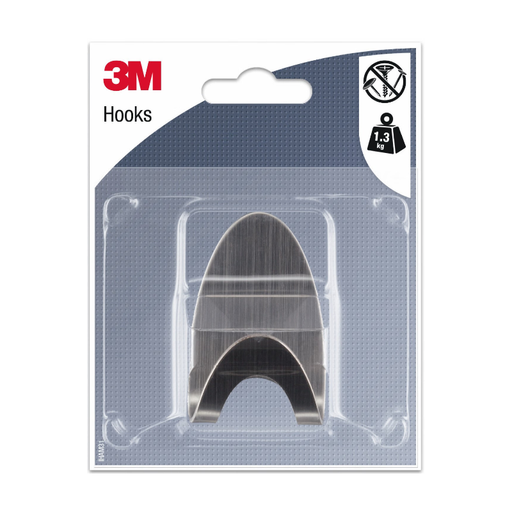
Why we chose it: This is the ultimate peace-of-mind solution for organising your space without risking your security deposit. Perfect for keys in the entryway, dish towels in the kitchen, or other stray accessories.
It solves the problem of adhesives that ruin walls. The 3M Command technology is specifically designed for damage-free removal from most smooth, painted surfaces. No more move-out inspection anxiety!
A tool-free installation that takes 30 seconds and a proven weight capacity of 1.3 kg, more than enough for everyday needs—all without touching a drill.
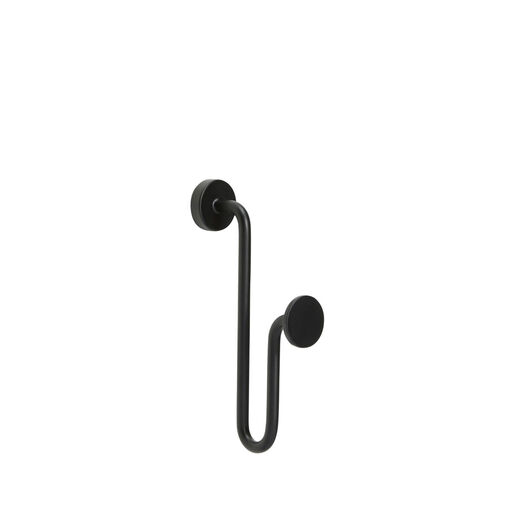
Why we chose it: For anyone who believes a hook can also be a decorative object. With its clean, graphic design, it’s not just a simple hanger but a true wall sculpture that adds character to the room.
It avoids the "designer hook" trap of looking good but breaking easily. Designed from iron as a screw-in hook, it combines a bold aesthetic with a robust mount. It won't bend under the weight of a bath towel or a coat.
Its sturdy iron construction and minimalist style allow it to be installed alone as a centerpiece or in a series to create a wall composition that is as practical as it is beautiful.
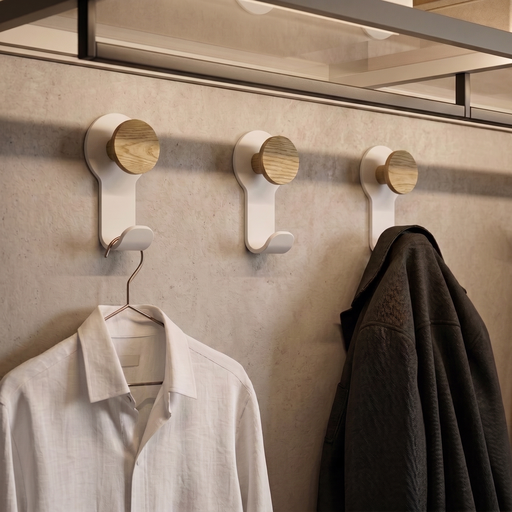
Why we chose it: This is the solution for those who need massive storage capacity and unbeatable reliability. Ideal for a cluttered family entryway, garage, or laundry room where coats, bags, and accessories pile up.
It solves the problem of hooks that buckle under weight. Each dual hook, made of aluminium alloy, mounts securely to the wall with a screw and can hold up to 5 kg. This is a truly sturdy coat hook solution.
The dual-peg design (one wood, one metal) optimises space by doubling the storage capacity on a single mounting point. The bonus: a rubber bumper on the back protects the wall from impacts.
Explore our full selection of products that meet our quality criteria and current standards.
For adhesives designed for clean removal (like the 3M Command line), the secret is to never pull the hook towards you. Instead, grab the exposed tab and stretch it very slowly straight down, flat against the wall. It can stretch up to 30 cm before the hook detaches cleanly, leaving no trace. For other adhesives, a helpful trick is to warm the base with a hairdryer to soften the glue before attempting a gentle removal.
A suction cup hook can be incredibly effective, but only under one condition: it must be placed on a perfectly smooth, clean, and non-porous surface (glass, high-gloss tile). The slightest texture, a grout line between tiles, or a slightly porous surface will ruin the suction effect, and the hook will inevitably fall. For peace of mind in a shower, a bathroom hook with an adhesive made for humid environments remains a much safer bet.
To hang heavy winter coats, full bags, or multiple garments, only a screw-in hook offers foolproof reliability. Ultimately, the maximum load depends less on the hook itself and more on the quality of its installation. Screwed into drywall with a standard anchor, it will hold about 5 to 10 kg. To support heavier loads, you must find a wooden stud behind the wall or use heavy-duty expanding anchors.