
Livraison le jour même ou le lendemain

Qualité garantie

Débloquez vos offres de bienvenue: Livraison GRATUITE | Jusqu'à -80 % | 30 jours d'essai gratuits à JoyPlus
Téléchargez l'application
Finding the right wall hook might seem simple, but it's often a real headache. Between the promises of ultra-strong adhesives that end up ripping off paint and designer models that buckle under the weight of a single towel, it's easy to make the wrong choice. Yet the goal is clear: a practical storage solution that complements your interior and, above all, spares you any nasty surprises, whether you're a renter or a homeowner.
Before you decide, watch out for these common pitfalls:
To avoid these pitfalls, it's best to focus on a few objective technical features.
Analysing a wall hook is about more than just its appearance. Two or three technical parameters determine 90% of its performance and your long-term satisfaction.
Your choice will depend on the type of wall, the object to be hung, and whether you are a renter or homeowner.
The adhesive hook (or no-drill hook): This is the go-to solution for those who want to avoid making holes. Ideal for smooth surfaces (tile, glass, varnished wood, painted walls), it's perfect for kitchens, entryways, or as a bathroom hook for light towels. For clean removal, opt for technologies with a stretch-release tab, which allows you to detach the mount without leaving a trace. Proper surface preparation (cleaning with isopropyl alcohol) and respecting the setting time before applying weight (often one hour) are essential.
The screw-in hook: When strength is the priority, nothing beats a mechanical fastening. Essential for heavy items like coats, loaded backpacks, or garden tools, the screw-in hook offers absolute peace of mind. It requires a drill and, depending on the wall (drywall, brick, concrete), a suitable anchor, but it guarantees a durable hold.
This is the most important piece of information. Expressed in grams (g) or kilograms (kg), it must be clearly indicated by the manufacturer.
The installation location dictates the material to choose. A bathroom hook must be moisture-resistant. High-quality plastic, stainless steel, or models with a satin nickel finish are excellent choices to prevent rust. For a designer hook in an entryway, materials like brass or painted metal can add a decorative touch, provided their mounting is appropriate for the weight they will support.
Rather than an impersonal list, we've matched specific solutions to real-world needs.
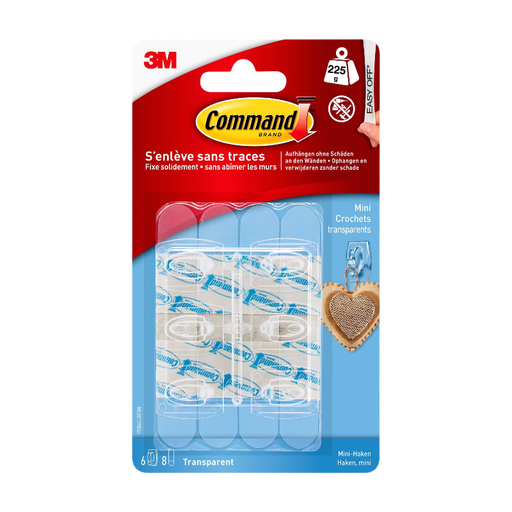
Why we chose it: Because it lets you organise your space without leaving a single trace. Ideal for discreetly hanging keys, light decorations, or cables.
It bypasses the risk of damaged walls thanks to 3M's clean-removal adhesive technology. Unlike generic adhesives, the strip stretches for a residue-free removal that won't damage paint.
The transparent hook design makes it nearly invisible, preserving the room's aesthetic. Its 225g capacity is perfectly calibrated for reliable, lightweight use.
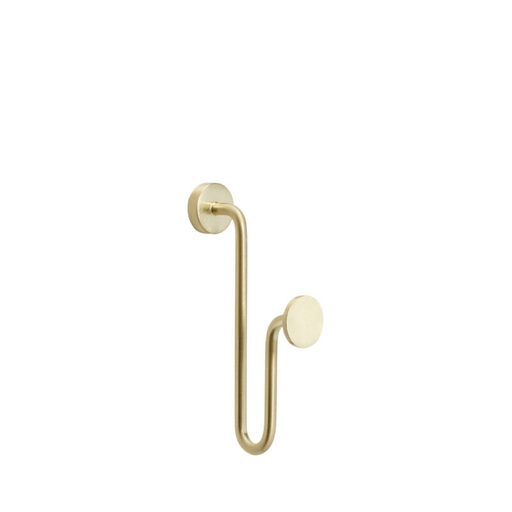
Why we chose it: Because a hook can also be a beautiful object. Its brass finish adds a touch of elegance and warmth to an entryway, bedroom, or kitchen.
Here, the design doesn't sacrifice strength. Made of iron with a brass plating, it's intended for screw-in mounting, ensuring a reliable hold for everyday items (keys, small bags, utensils).
Its swivelling design is both stylish and practical. The polished brass finish makes it a true designer hook that enhances your wall decor.
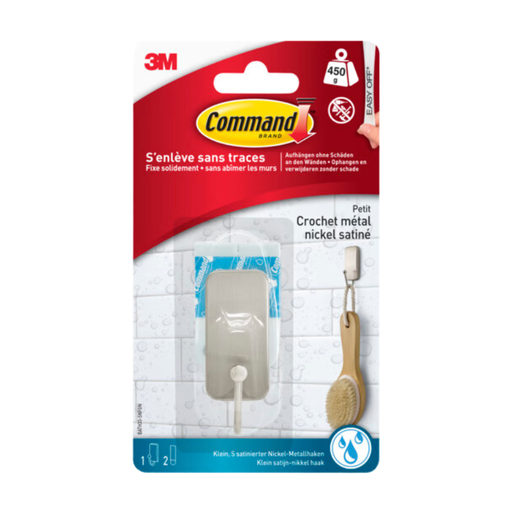
Why we chose it: The ideal solution for the bathroom or shower, where suction cups and standard adhesives consistently fail due to humidity.
It is specifically designed for wet environments. It uses water-resistant adhesive strips and a rustproof satin nickel finish metal hook, putting an end to unexpected falls.
It provides a durable hold on surfaces like tile, glass, or fibreglass, even inside a shower stall. It's an incredibly effective no-drill bathroom hook.
We have curated a full range of products that meet strict quality criteria.
For models with a stretch-release tab (like those from the Command brand), the secret is to pull the tab very slowly downwards, parallel to the wall. Never pull the hook towards you, as this could rip off the paint. For other types of adhesives, gently heating the base with a hairdryer can help soften the glue, allowing it to be peeled off more easily, sometimes with the help of dental floss.
This is generally not recommended. Most adhesives, even those designed for clean removal, are likely to tear the wallpaper when you remove them. Some manufacturers may indicate compatibility with smooth, non-vinyl wallpapers, but the risk remains. On this type of surface, a small nail or a discreet screw-in hook is a safer, albeit permanent, alternative.
When installed correctly on a clean, suitable surface and within the weight limit, a good quality adhesive hook can last for several years. Its longevity can be affected by extreme temperature variations, direct sunlight, or constant humidity (unless it is specifically designed for it).