
Livraison le jour même ou le lendemain

Qualité garantie

Débloquez vos offres de bienvenue: Livraison GRATUITE | Jusqu'à -80 % | 30 jours d'essai gratuits à JoyPlus
Téléchargez l'application
Hanging a picture frame, a towel, or a tool seems simple... until the hook gives way or rips off a chunk of paint. Choosing the right wall hook isn't just about aesthetics; it's about striking the perfect balance between strength, preserving your walls, and the item you plan to hang. As a Product Expert at Joybuy, my role is to help you cut through the noise and find the ideal solution while avoiding the most common pitfalls.
Before you decide, watch out for these three common mistakes that can lead to buyer's remorse:
To avoid these setbacks, focus on two key factors that will determine your hook's performance.
Your choice will mainly depend on your wall type and whether you are willing (or able) to drill.
The Adhesive Hook (or No-Drill Hook): This is the go-to solution for renters and anyone who wants a reversible installation. Modern technologies, like stretch-release strips, allow for clean removal. It's the perfect solution for lightweight items like tea towels, keys, or small decorations. For maximum discretion, a transparent hook is an excellent option. Note: for optimal performance, the surface must be perfectly clean, dry, and smooth. It's often recommended to wait at least one hour after application before hanging anything.
The Screw-In Hook: When the load is heavy or use is frequent, nothing beats the reliability of a mechanical fixture. Ideal for coats, backpacks, or garden tools, a screw-in hook provides lasting peace of mind. It anchors securely into the wall (with an anchor appropriate for the material: drywall, brick, concrete) and serves as a heavy-duty wall coat rack.
The material influences both style and durability.
The maximum supported load is a non-negotiable detail. As a rule of thumb, always choose a hook with a capacity at least 50% greater than the weight of the object you plan to hang.
Instead of searching for a one-size-fits-all model, it's better to choose a hook that's perfectly suited for each situation.
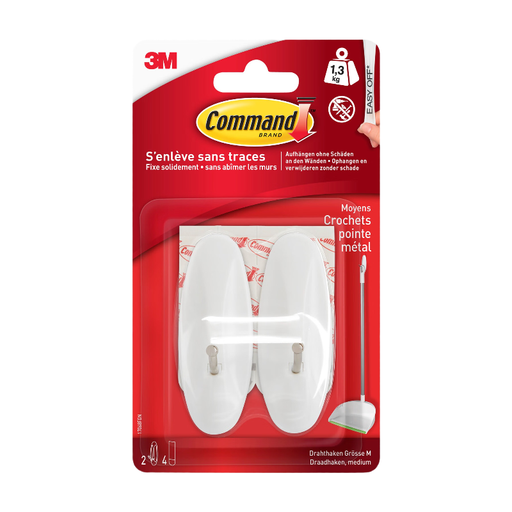
Why we chose it: This is the perfect solution for those who can't or don't want to drill. It's ideal for hanging medium-weight items like dish towels, oven mitts, or a light bag in an entryway or kitchen.
3M's stretch-release adhesive technology is designed for clean removal from many smooth surfaces (painted walls, tile, varnished wood), preventing paint damage as long as you follow the instructions carefully.
Tool-free installation and damage-free removal, allowing you to reorganise your space without leaving a trace.
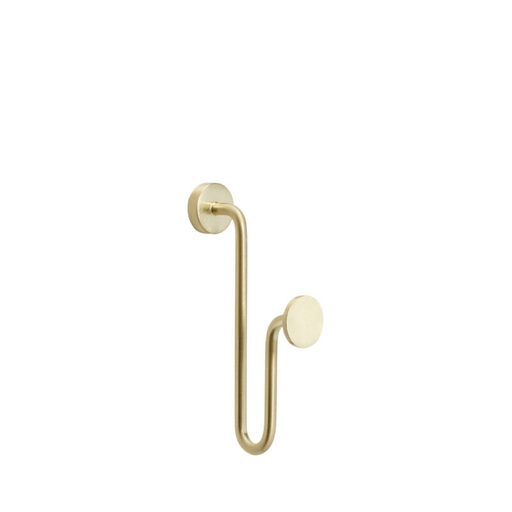
Why we chose it: For those who believe a hook should also be a decorative accessory. Its polished brass finish adds a touch of elegance and warmth to an entryway, bedroom, or bathroom.
As a screw-in hook, it makes no false promises. It embraces its permanent installation to offer superior aesthetics and durability, bypassing the reliability issues of adhesives.
A sleek, brass-plated iron design that combines function with form, turning a utilitarian object into a true decorative accent.
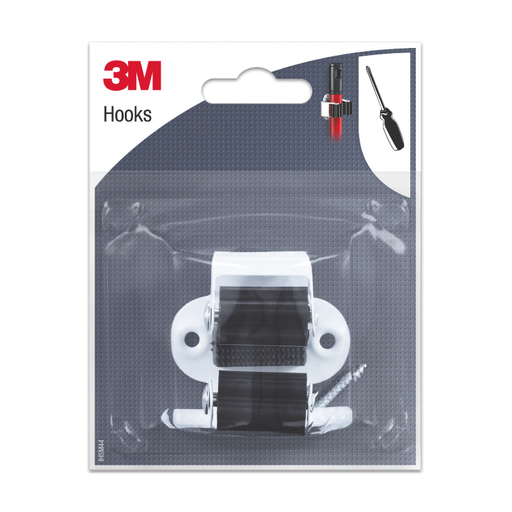
Why we chose it: Specifically designed to store long-handled tools (brooms, rakes, shovels) in a garage, laundry room, or garden shed. Its "gripper" design firmly holds handles from 18 to 32 mm in diameter.
It sidesteps the underestimated load capacity trap by relying on a screw-in mount—the only truly reliable method for heavy, frequently handled items. An adhesive could never guarantee this level of security.
A specialised, robust storage solution that frees up floor space and impeccably organizes long-handled tools.
For more specific needs, like outfitting a workshop, we've selected products that meet our standards for quality and safety.
It's a risky move. Most manufacturers of adhesive hooks advise against it, as the adhesive can bond too strongly to the paper and tear it upon removal. The risk is even greater with textured or vinyl wallpapers. If you value your wall, it's wiser not to risk it unless the product explicitly states it is compatible.
The lifespan varies significantly depending on the adhesive's quality, the environment (humidity, temperature changes), and whether installation instructions were followed. A reputable brand's hook, applied to a clean, smooth surface and holding a load well below its limit, can last for several years. For valuable items, periodically checking the bond is a wise precaution.
For models with a stretch-release tab (like those from the Command brand), the secret is to pull the tab very slowly, straight down along the wall, and not towards yourself. Pulling too quickly or at the wrong angle can break the tab or damage the surface. For other types of adhesives, gently heating the hook's base with a hairdryer can help soften the glue before you carefully try to peel it off.