
Livraison le jour même ou le lendemain

Qualité garantie

Débloquez vos offres de bienvenue: Livraison GRATUITE | Jusqu'à -80 % | 30 jours d'essai gratuits à JoyPlus
Téléchargez l'application
A cluttered entryway, damp towels that won't dry in the bathroom, or a lack of storage in the bedroom: a simple wall hook can solve many problems. Yet, choosing the right one is another challenge entirely. Between promises of ultra-strong mounting and attractive designs, it's easy to end up with an unsuitable product that damages your walls or your clothes.
I'm the Head of Product Recommendations at Joybuy, and my mission is to help you make an informed decision. Let's skip the marketing jargon and focus on what really matters. Here are the most common pitfalls and our expert advice on how to avoid them and make the right choice.
To avoid these pitfalls, two main criteria should guide your decision: the mounting type and the material.
The choice of mounting depends on your wall type, the items you plan to hang, and your living situation (owner or renter).
The material influences the style, but more importantly, the longevity of your installation.
To illustrate these criteria, here are a few models that meet specific needs and avoid the classic pitfalls.
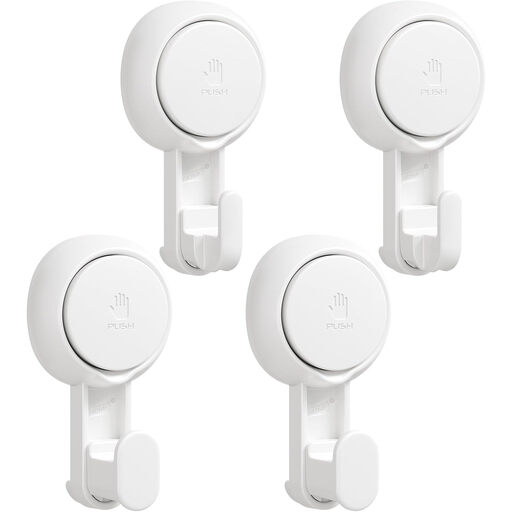
Why we chose it: Ideal for those who want an effective, drill-free solution, especially on tile or in a shower cabin. The installation is instant and reversible, perfect for leaving no trace behind when you move out.
This hook uses a patented vacuum suction technology, which is far more reliable than a simple suction cup. A firm press creates a strong seal, confirmed by an audible "puff" sound that verifies its grip. It's designed to resist water and humidity, avoiding the pitfall of a falling hook.
1-second, tool-free installation, supports up to 5 kg per hook, and can be repositioned at will. The hook rotates 360°, making placement easy.
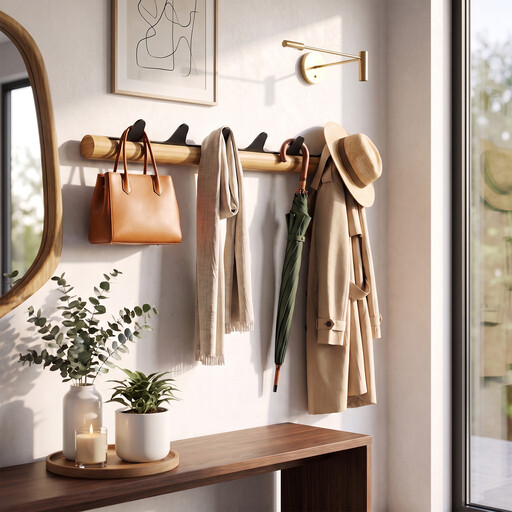
Why we chose it: A family entryway demands robustness and capacity. This model combines a wooden bar and metal hooks to handle coats, school bags, and accessories without buckling.
It relies on solid screw-in mounting, the only method that can guarantee a high load capacity (up to 30 kg). The materials are high-quality: FSC-certified solid rubberwood and aluminium alloy, avoiding the pitfalls of rust and warping.
High load capacity and 6 sturdy hooks. The wood is protected by a varnish, and the hook edges are rounded to prevent damage to clothing.
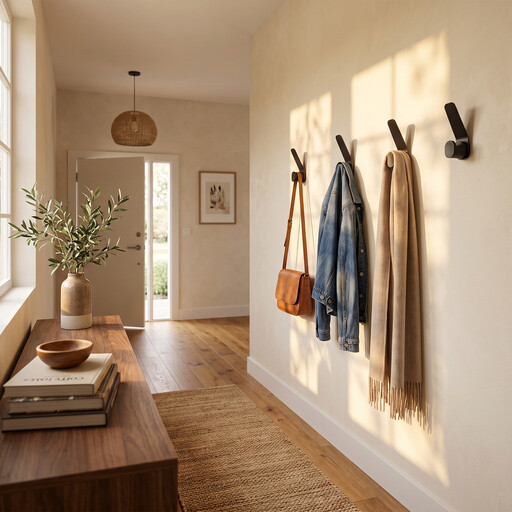
Why we chose it: For those seeking a storage solution that doubles as a decorative element. This set of individual hooks allows you to create a personalised wall arrangement that is both functional and aesthetic.
This model, a German Design Award winner, proves that design can be functional. The edges are rounded, and a groove prevents items from slipping off. It sidesteps the "all style, no substance" trap. The aluminium is durable and rust-resistant.
Minimalist, award-winning design, great layout flexibility, and a dual-hook design that maximises storage space. Each hook supports up to 5 kg.
We've compiled a complete list of products that meet our quality requirements and current safety standards.
What's the difference in holding power between an adhesive hook and a suction cup hook? A quality adhesive hook uses a bonding strip designed to chemically adhere to a prepared (clean and dry) surface. It is versatile and works on many substrates (paint, wood, tile). A suction cup hook works by mechanical suction and only holds on perfectly smooth, non-porous surfaces like glass or glossy tile. Vacuum-powered models are more reliable but remain best suited for the bathroom.
How do I install a wall hook on a plasterboard wall? For a secure mount in plasterboard (drywall), it is essential to use specialised plasterboard anchors, such as self-drilling anchors or expansion anchors (like Molly bolts). They expand behind the board to distribute the load and prevent it from tearing out of the wall. Never screw directly into plaster, especially for a coat rack.
Is a wooden hook suitable for a bathroom? Yes, provided the wood is properly protected. Look for models made of solid wood (like bamboo, teak, or rubberwood) that have received a water-repellent treatment, such as a marine varnish or a protective oil. Without this protection, the wood is at risk of swelling, staining, or developing mould from contact with moisture.