
Livraison le jour même ou le lendemain

Qualité garantie

Débloquez vos offres de bienvenue: Livraison GRATUITE | Jusqu'à -80 % | 30 jours d'essai gratuits à JoyPlus
Téléchargez l'application
Choosing the right wall hook? It seems like child's play. In reality, it's often a real struggle. Who hasn't felt the frustration of a hook peeling off in the middle of the night, stubborn adhesive residue on a freshly painted wall, or worse, a picture frame crashing to the floor? The market is saturated with promises, but not all fasteners are created equal.
Watch out for the two most common pitfalls:
This guide is here to help you avoid these traps and focus on the criteria that truly matter for a durable fastener that fits your needs.
Before you check out, there are three criteria to scrutinize. Ignoring them almost guarantees a purchase you'll regret.
Make no mistake: the listed weight capacity is a benchmark, not an absolute guarantee. The real-world performance of a wall hook depends 50% on the hook itself and 50% on the surface it's applied to.
For a heavy-duty hook, always check the manufacturer's recommendations for compatible wall types.
Choosing the right installation method is crucial to ensure both the safety of your items and the integrity of your walls.
A hook isn't just a piece of plastic or metal; its composition determines its resistance to the elements.
Instead of a random list, we've selected targeted solutions for specific needs. Find the hook that's made for you.
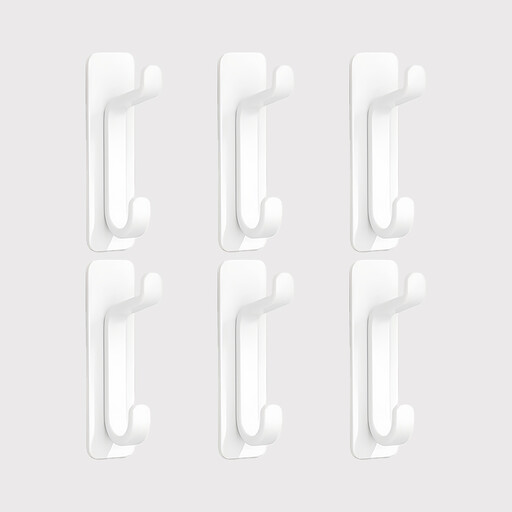
Why we love it: Ideal for organizing a kitchen, entryway, or bathroom without risking your security deposit. The no-drill wall mounting solution is perfect for hanging everyday items (keys, towels, small utensils) on smooth surfaces.
The adhesive is designed to be removed without leaving residue or damaging smooth, non-porous surfaces, thus avoiding the problem of walls being ruined by low-grade glues.
The pack of six stainless steel hooks offers a cost-effective and stylish solution for outfitting multiple rooms. The minimalist design fits in anywhere.
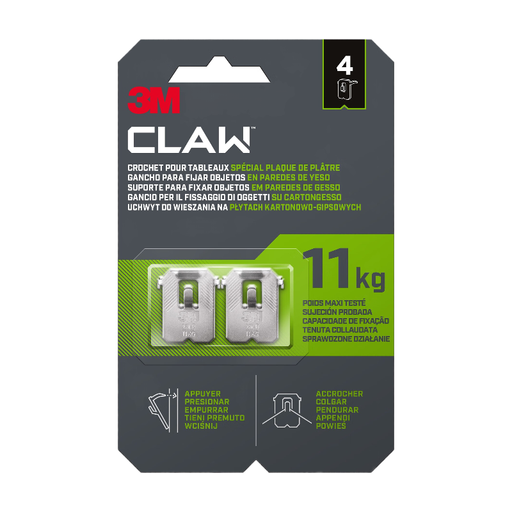
Why we love it: For anyone who wants to hang a heavy mirror, a large picture hanger, or decor weighing up to 11 kg (25 lbs) on drywall (plasterboard) without taking out the drill or searching for a stud.
It doesn't fall for the false promise of adhesives. This is a mechanical solution that anchors securely into drywall with a simple push, where an adhesive would fail miserably.
Tool-free installation in seconds. Its hardened steel design ensures a firm and reliable hold for decor projects requiring a heavy-duty hook.
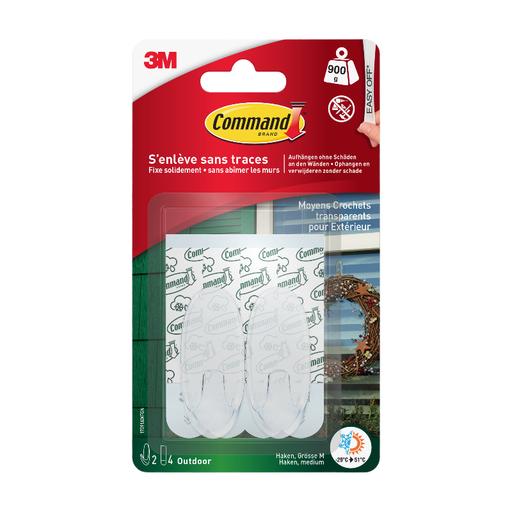
Why we love it: Perfect for hanging string lights, wreaths, or seasonal decorations on windows, PVC doors, or other smooth outdoor surfaces. A truly durable outdoor hook.
It uses adhesive strips formulated to resist water, UV rays, and extreme temperatures (from -29°C to 51°C / -20°F to 125°F), where an indoor adhesive would throw in the towel.
Its transparency makes it virtually invisible on glass, preserving the aesthetic of your decor. It removes cleanly without a trace once the holidays are over.
Whether you're organizing a workshop, a garage, or hanging unusual items, there's a fastening solution for every need.
The secret is surface preparation. It must be perfectly clean, dry, and smooth. Clean it with isopropyl alcohol (70% rubbing alcohol) rather than a household cleaner, which can leave a greasy film. Press firmly on the hook for at least 30 seconds, and then—this is the crucial step—wait at least one hour (or follow the manufacturer's instructions) before hanging anything on it.
The hook itself is often reusable, but the adhesive strip is single-use. Brands like Command sell refill strips, allowing you to move your hooks without having to buy a whole new product. Just make sure to buy the refill that matches the size and type of your hook (indoor, outdoor, bathroom).
A classic hook (screw-in) requires a wall anchor to grip into drywall because the material is crumbly. A special drywall hook, like the 3M CLAW, is designed with steel claws that push in and lock directly into the plasterboard, requiring no anchor or drilling. It combines impressive strength with deceptively simple installation.