
Livraison le jour même ou le lendemain

Qualité garantie

Débloquez vos offres de bienvenue: Livraison GRATUITE | Jusqu'à -80 % | 30 jours d'essai gratuits à JoyPlus
Téléchargez l'application
Finding the right wall hook? It seems like a simple task, but it often turns into a real headache. Between the promise of a "drill-free" solution that rips off half your paint upon removal, a wall coat rack that collapses under the weight of a single jacket, or that designer model that rusts in the bathroom after three weeks, nasty surprises are all too common.
The goal isn't just to hang an object, but to do it right: reliably, beautifully, and, most importantly, without regrets. This guide is here to help you navigate the options and avoid the common pitfalls, ensuring your next purchase is finally the right one.
Before you fall for a particular design, there are two technical points to check. They are your guarantee of durability, safety, and a successful installation.
This is the first and most critical decision. It depends on your wall type, the weight you need to support, and whether or not you're willing to break out the drill.
The Adhesive Hook (or Drill-Free Hook): The dream solution for renters and anyone who refuses to make holes. Modern technologies, like those in the famous Command hooks, provide a powerful grip and damage-free removal on smooth surfaces (painted walls, tile, glass...). The secret to a successful installation? Flawless surface preparation: it must be perfectly clean, dry, and smooth. This is the perfect option for a kitchen hook holding lightweight utensils or for small decorative items.
The Screw-In Hook: The ultimate choice for strength and long-term reliability. Essential for a wall-mounted coat rack that needs to support several heavy winter coats, or for hanging valuable objects. This requires a drill and anchors suitable for your wall (drywall, brick, concrete...). While it's more effort to install, it guarantees absolute peace of mind regarding the load capacity.
Aesthetics are nice, but performance is better. And performance depends on two things: the weight the hook can actually support and the materials it's made from.
Load Capacity: Be careful, the maximum weight indicated by the manufacturer is a lab-tested value, obtained under perfect conditions. To avoid disaster, play it safe: always allow for a margin. Does your object weigh 2?kg? Choose a hook that supports at least 3?kg. For a heavy picture hook, caution is your best friend.
The Material: This is a critical point, especially in utility rooms. For a bathroom hook, bet on stainless steel, treated aluminium, or ABS plastic to say goodbye to rust. For a designer coat hook in the entryway, materials like brass, solid wood, or brushed metal will combine style with strength.
To help you find the model that's right for you, here are a few solutions that meet very specific needs.
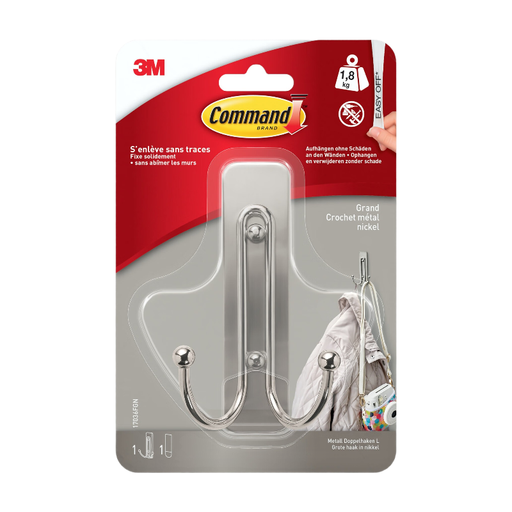
Why we chose it: Ideal for organising your space without making a single hole and risking your security deposit. Its satin nickel finish blends into most decors.
Its patented adhesive technology allows for 100% clean removal, leaving no residue behind. No more cheap adhesives that strip paint or leave impossible-to-remove gunk.
It holds up to 1.8 kg, making it highly versatile for a light coat, towels, or bags. The hook is infinitely reusable with new strips.
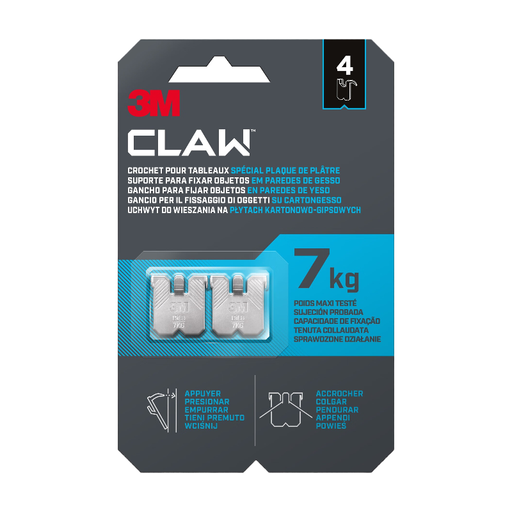
Why we chose it: The genius solution for hanging heavy items (mirrors, large frames...) on drywall without needing to find a stud or break out the drill.
It eliminates the risk of an adhesive hook failing under the weight. Its hardened steel claws lock securely into drywall with a simple push of your thumb, leaving only a tiny pinhole.
A tool-free installation for an impressive weight capacity of 7 kg per hook. It's the fastest, strongest solution for large-scale wall decor.
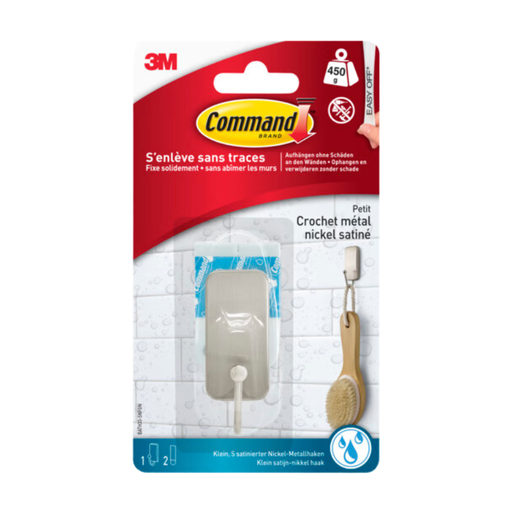
Why we chose it: Specially designed for bathrooms, showers, and other high-moisture areas where classic hooks throw in the towel. Perfect for bathrobes, towels, and shower squeegees.
It combines water-resistant adhesive strips with a rust-blocking satin nickel finish. No more hooks peeling off due to steam.
It sticks securely to tile, glass, or fibreglass. A finally reliable alternative to suction cups that inevitably fall off after a couple of days.
Explore our full selection of products that meet our demanding selection criteria.
For models with a stretch-release strip (like Command), the one thing you should never do is pull the hook towards you. Hold the hook firmly and pull the tab very slowly straight down, parallel to the wall, until the hook releases on its own. For other adhesives, using a hairdryer on low heat on the base of the hook can soften the adhesive and make removal much easier.
It's a maximum value, obtained in a lab under ideal conditions. In the real world, the wall's texture, cleanliness, temperature, or humidity can reduce this performance. The rule of thumb: choose a wall hook with a weight capacity at least 50% higher than your object's weight. Safety first!
Absolutely not! A standard hook is not designed for damp rooms. The constant humidity will cause metal to rust and will eventually weaken the adhesive, leading to failure. Always look for labels like "for bathrooms" or "water-resistant". These models are designed with materials and adhesives that can withstand these extreme conditions.