
Livraison le jour même ou le lendemain

Qualité garantie

Débloquez vos offres de bienvenue: Livraison GRATUITE | Jusqu'à -80 % | 30 jours d'essai gratuits à JoyPlus
Téléchargez l'application
The secret to a well-organised home? Storage solutions that are as simple as they are effective. The wall hook is one of those discreet but essential accessories for organising coats, bags, towels, or keys. Yet, finding the right model is often more complex than it seems. Between marketing promises and the reality of daily use, it's easy to end up with a wall hook that damages your walls or gives way under the weight of a single jacket.
As a product expert for the editorial team, I'm here to help you make an informed choice. This guide breaks down the common pitfalls and gives you the keys to selecting a storage solution that is functional, durable, and perfectly suited to your home's interior.
Before you even start comparing models, let's review the most common disappointments to help you avoid a bad investment.
To avoid these pitfalls, focus on three essential criteria that will ensure you make a smart purchase.
This is the first and most crucial decision. It depends on your wall type, your status (homeowner or renter), and the weight of the items you plan to hang.
The maximum load capacity stated by the manufacturer is crucial information—never underestimate it.
The material doesn't just influence the look of your hook, but more importantly, its durability.
Here is our selection of models that meet specific needs, in line with the criteria we've just discussed.
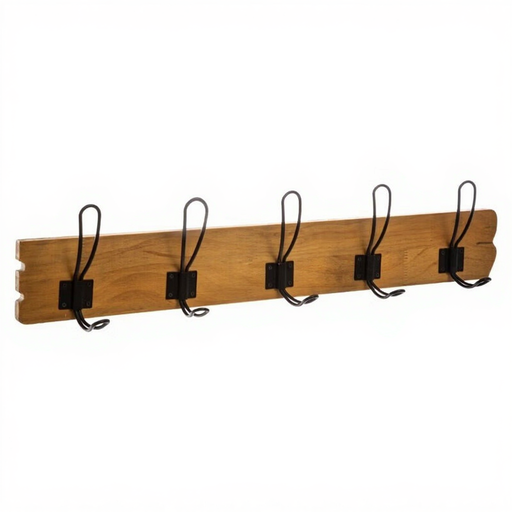
Why we chose it: This coat rack is built for busy hallways. With its pine structure and cast iron double hooks, it offers a complete storage solution for the whole family's coats, bags, and scarves.
It directly addresses the problem of overestimated load capacity. Its robust design and screw-in wall mounting are engineered to support significant weight, a far cry from the empty promises of lighter solutions.
5 double hooks for optimal storage capacity. Raw and durable materials (pine and cast iron).
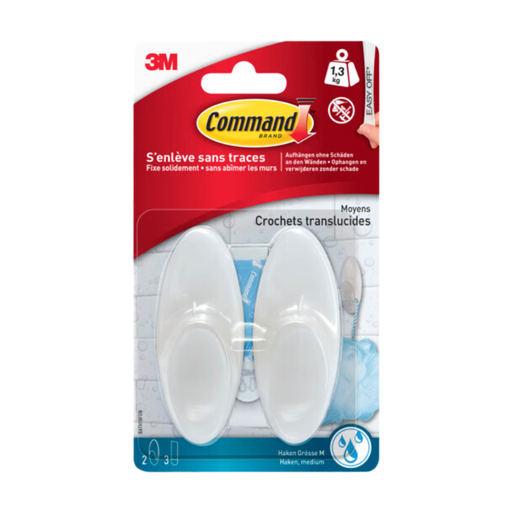
Why we chose it: For those who can't (or don't want to) drill into their walls, this adhesive hook is THE trusted solution. Capable of holding up to 1.3 kg, it is water-resistant and removes without a trace, making it perfect for the kitchen or bathroom.
It avoids the pitfall of adhesives that don't live up to their promises. 3M's Command technology is renowned for its reliability and its ability to be removed without damaging surfaces, even in humid environments.
Tool-free installation and damage-free removal. Its water resistance makes it extremely versatile.
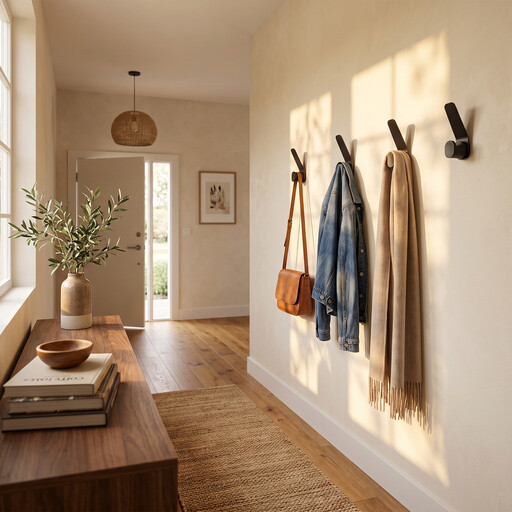
Why we chose it: Combining aesthetics and functionality, these minimalist aluminium hooks are award-winning (German Design Award 2022). Sold as a set, they allow you to create a custom wall arrangement that is as stylish as it is personal.
It avoids the pitfall of using an unsuitable material. The high-quality aluminium is water- and rust-resistant, making it just as suitable for an entryway as it is for a bathroom, all while cementing its status as a designer hook.
Award-winning design and modularity. The dual-hook system optimises space, and the freedom to arrange them as you wish offers maximum decorative flexibility.
Discover our complete and updated selection of products that meet our strict selection criteria.
1. How do I install a no-drill hook so that it actually stays up? The secret is surface preparation. The surface must be perfectly clean, dry, and smooth. Clean the area with isopropyl alcohol (or rubbing alcohol) and let it dry completely. Then, press firmly on the hook for at least 30 seconds. Most importantly, respect the curing time recommended by the manufacturer (often one hour) before hanging anything on it.
2. What is the difference in weight capacity between an adhesive hook and a screw-in hook? The difference is significant. A standard adhesive hook typically supports between 225?g and 2?kg. High-performance models can reach 3 to 4?kg. In contrast, a wall-mounted hook that is properly screwed into a solid wall with the appropriate wall plugs can support 10?kg, 15?kg, or even more, depending on the model and the quality of the installation.
3. Can any wall hook be used in a bathroom? Absolutely not. You must avoid materials that are susceptible to moisture. Steer clear of untreated wood or MDF, which can swell or grow mould. Opt for materials like stainless steel, aluminium, plastic, or corrosion-resistant treated brass. Always check that the product is labelled as "water-resistant" or "suitable for humid environments."