
当日/次日达

品质保障

开启新人专享福利: 全场免邮 | 低至 2 折 | 免费试用 30 天 JoyPlus 会员
下载 Joybuy
Choosing a wall hook? It seems simple enough. In reality, it's often the start of a headache: a mount that gives way, an adhesive that peels off paint, a coat rack that rusts in record time... Do these nightmare scenarios sound familiar? To help you avoid future disappointments, our guide breaks down the common pitfalls and the essential criteria to consider before you buy.
Faced with overcrowded shelves and tempting marketing claims, it's easy to make the wrong choice. Here are the most common mistakes that will cost you time, money... and a piece of your wall.
no-drill wall mount should be effective, but it must also be removable without a trace.coat hook may look sturdy, but it will eventually rust in a damp entryway. Likewise, low-grade plastic will become brittle over time, especially if exposed to sunlight or placed as a kitchen hook near a heat source.To avoid falling into these traps, carefully examine a few technical details that make all the difference between a good hook and a bad one.
The maximum load advertised by the manufacturer is a guideline, not an absolute guarantee. It actually depends on two crucial factors: the mounting type and the nature of your wall.
adhesive hook: Compatibility with your surface is non-negotiable (smooth tile, painted walls, varnished wood, etc.). A porous or textured surface will ruin the adhesion. Our advice: always allow for a wide safety margin and never load the hook to its theoretical limit.The "drill or stick" dilemma depends on the object you want to hang, as well as the constraints of your home.
Drill-free wall mounting is a renter's best friend and ideal for anyone who wants a reversible solution. Modern technologies, like adhesive strips that remove cleanly, provide an excellent hold for light to medium-weight objects, with the guarantee of a damage-free removal.designer coat rack in a family entryway. It's the guarantee of absolute peace of mind and rock-solid durability.The material isn't just a matter of style. It directly determines the hook's resistance to its environment and, therefore, its lifespan.
bathroom hook or kitchen hook: Bet on stainless steel, brass, aluminium, or high-quality plastic to eliminate any risk of corrosion.coat hook or rack: Iron, steel, or solid wood are reliable choices for their robustness. Just make sure the finish (paint, varnish, plating) is high-quality to withstand daily scuffs and bumps.Forget endless lists. We've matched specific solutions to well-defined user profiles.
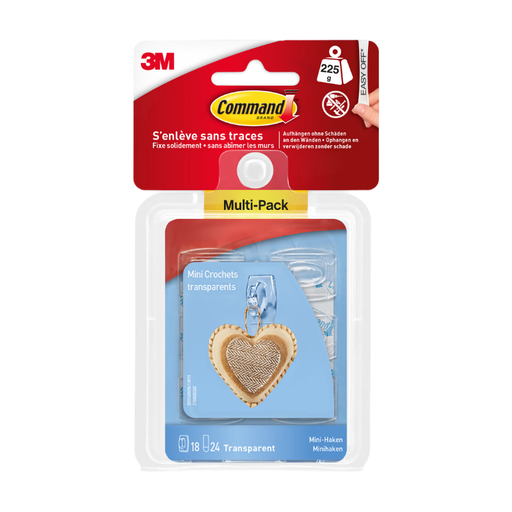
The Verdict: The dream solution for renters and decor fans who love to switch things up with the seasons. Perfect for hanging string lights, a calendar, or party decorations without any long-term commitment.
It eliminates the risk of destructive adhesives thanks to its technology, designed for a 100% clean removal with no residue or paint damage.
Absolute discretion thanks to its transparent design and the promise of a removal without a single trace on smooth surfaces.
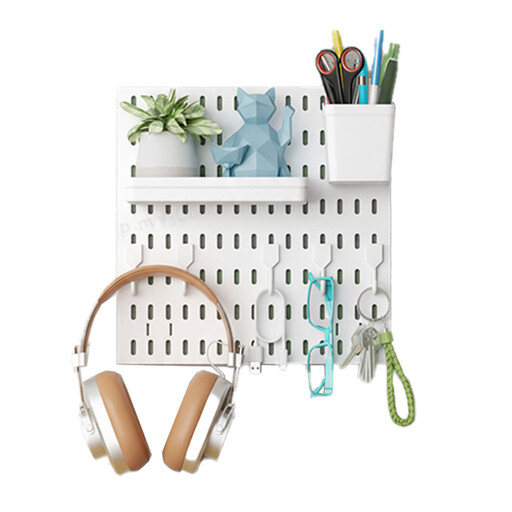
The Verdict: Much more than a simple hook, this is a complete ecosystem. This `wall organizer` is perfect for an office, workshop, or kitchen. It allows you to arrange shelves and hooks as you please, all without taking out the drill.
It bypasses the pitfall of localized overload by distributing weight over a large adhesive surface. Its modularity naturally encourages you to spread items out rather than concentrating everything on a single point.
Total flexibility and a zero-drill installation for 100% personalized storage.
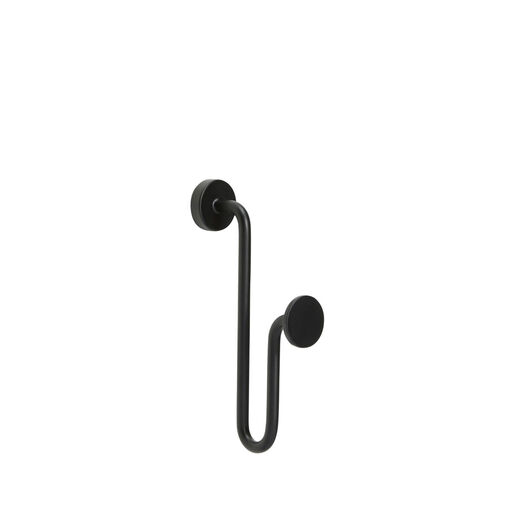
The Verdict: For those who see a coat rack as a decorative object in its own right. This black iron model combines a graphic, modern design with rock-solid durability. Ideal for making a style statement in an entryway, bedroom, or even a bathroom.
It skips adhesives and their uncertainties by relying entirely on a screw-in mount. Its solid iron construction protects it from the pitfall of low-grade materials that bend or rust.
A sculptural and contemporary design, combined with a high load capacity (provided it is installed correctly).
Explore our full selection of products that meet our quality criteria and current safety standards.
adhesive hook without leaving a trace?For adhesives specifically designed for clean removal (like Command strips), simply pull the tab gently downwards, parallel to the wall. For others, the trick is to heat the area with a hairdryer to soften the adhesive. Then, slide a piece of dental floss behind the hook and gently "saw" through the adhesive. A wipe with isopropyl alcohol on a cloth will remove any remaining residue.
wall hook really hold 5 kg?Yes, but it all depends on the hook and the wall. A screw-in model, securely fastened with the right anchor in a load-bearing wall, will hold 5 kg (approx. 11 lbs) without a problem, and often much more. For an adhesive hook, this performance is more theoretical: it's only achievable on a perfectly smooth, clean, non-porous surface under ideal temperature and humidity conditions. As a precaution, always choose a hook with an advertised maximum load that is at least double the actual weight you plan to hang.
bathroom hook?The ambient humidity in a bathroom is metal's worst enemy. To prevent rust, always opt for water-resistant materials: stainless steel, brass, or aluminium. High-quality plastic is also an excellent alternative. If you fall for an iron or steel model, make sure it has a high-performance surface treatment (e.g., epoxy paint, quality chrome plating).