
Livraison le jour même ou le lendemain

Qualité garantie

Débloquez vos offres de bienvenue: Livraison GRATUITE | Jusqu'à -80 % | 30 jours d'essai gratuits à JoyPlus
Téléchargez l'application
Fixing a television, mirror or shelf sounds simple… until the day the bracket comes loose, the wall cracks or the item doesn’t match the advertised dimensions. Wall-fixing solutions vary considerably depending on the weight they need to support, the type of surface and the installation method.
Before you buy a TV wall mount, a picture hook or adhesive fixing strips, there are three pitfalls worth looking out for.
A maximum load capacity doesn’t mean a product will work on every wall. A bracket that can support several dozen kilos needs to be fitted to a compatible surface, using suitable screws and wall plugs. You should also take into account the weight of the item, any accessories and any movement it may be subject to.
For a heavy-duty fixing rated up to 100 kg, always check the technical specifications, anchoring method and type of wall. A product listing may state a load capacity of 100 kg, while the detailed specifications give a lower limit. If the information conflicts, always go by the most precise technical data.
Adhesive strips and self-adhesive hooks are mainly designed for indoor surfaces that are smooth, clean, dry and sound. Fresh paint, wallpaper, porous walls or dusty surfaces can significantly reduce their grip.
A no-drill picture hanger is easy to remove, but it’s no substitute for a mechanical fixing when it comes to a television, a loaded shelf or a heavy mirror.
Hooks for plasterboard walls aren’t the same as those designed for concrete or solid brick. Depending on the weight to be supported, you may need a wall plug designed for plasterboard, a claw hook or a fixing screwed directly into a stud.
Before installing a television, identify the load-bearing structure before drilling. A bracket designed only for concrete or solid wood shouldn’t be fitted to a hollow partition wall without first checking that it’s compatible.
Don’t just look at the number of kilos on the packaging. Check how the weight is distributed, how many fixing points there are and whether the product has a locking mechanism. With a TV wall mount, the television’s weight must be below the stated maximum load, with a sensible safety margin.
VESA compatibility matters too. It refers to the spacing between the mounting holes on the back of the screen, for example 400 × 400 mm or 600 × 600 mm.
A fixed model keeps the gap between the wall and screen to a minimum, but leaves less room to reach the cables. Measure the width of the mounting area, the available depth and the height at which you’d like to install the screen.
For storage, also check the load capacity of each hook, the spacing between panels and how easy it is to access your tools. A wall-mounted pegboard is a natural fit for a workshop or garage, while a wall-mounted key holder is better suited to an entrance hall or corridor.
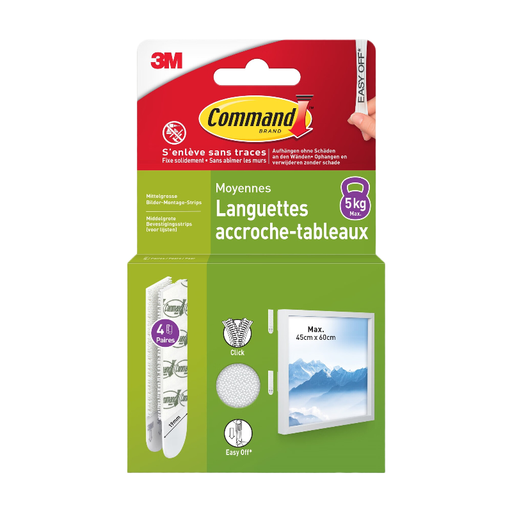
Why it suits this type of user : These strips are suitable for picture frames and lightweight items in homes where you want to avoid putting lots of holes in the walls. They’re rated to hold up to 5.4 kg, provided you follow the instructions and use them on a recommended surface.
The load limit and surfaces to avoid are clearly specified. Clean the surface, press the strips on firmly and wait for the recommended time before hanging your item.
No nails or screws needed, easy removal by stretching the tab, and a discreet design for picture frames and small decorative items.
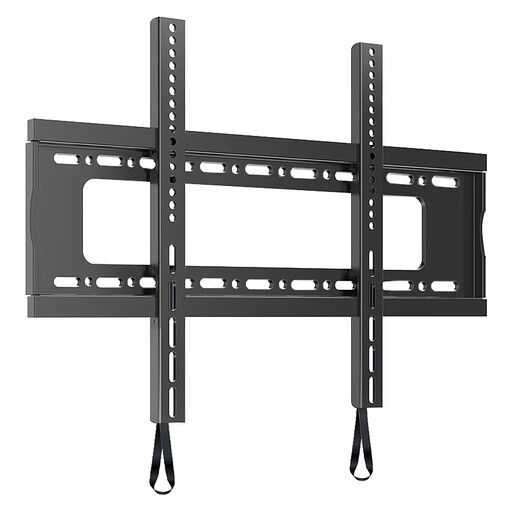
Why it suits this type of user : This fixed mount is designed for large screens and discreet installations on load-bearing walls. Its technical specifications state a maximum load of 85 kg, a 2.8 mm steel frame and VESA compatibility up to 600 × 600 mm.
The instructions specify that it should only be installed on solid concrete, solid brick or load-bearing wood. They also require you to tighten the safety screws and have two people carry out the installation.
A 660 × 218 mm mounting plate, a stated profile of 28 mm and a lower locking mechanism to secure the screen once installed.
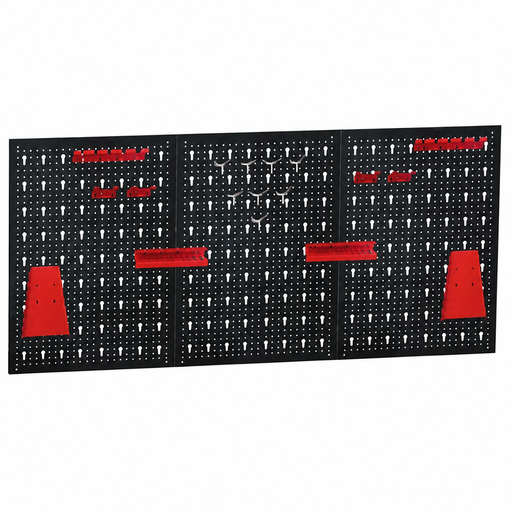
Why it suits this type of user : This wall-mounted pegboard is designed for workshops, garages and DIY areas where tools need to be visible and easy to reach. According to the product information provided, the set includes three panels and 17 hooks.
It gives you a dedicated storage structure, rather than separate hooks whose load capacity and spacing can be difficult to assess. However, the panel’s wall fixings must be suitable for the type of surface.
A 120 × 60 cm format, metal construction and 17 hooks to organise your tools to suit your needs.
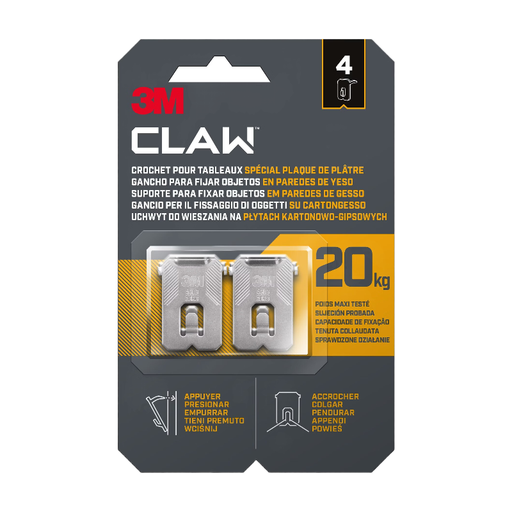
Why it suits this type of user : This wall hook is designed for plasterboard and for picture frames, mirrors or decorative items that need a more secure fixing than a simple adhesive strip.
Its hardened steel claws are designed to penetrate plasterboard without tools. The stated load capacity doesn’t remove the need to check the condition of the wall, make sure the hook is correctly fitted and weigh the item you plan to hang.
Push it into place with your thumb: no screws or extra wall plugs needed, thanks to a hardened metal hook designed for plasterboard walls.
We’ve put together a comprehensive selection, updated in real time, of products that meet these strict criteria and European safety regulations.
Not with just any model. A mount designed for concrete or solid brick won’t automatically be suitable for plasterboard. Check the instructions, locate the studs and choose a system specifically compatible with your partition wall. For a large screen, it may be best to have a professional install it.
The wait time varies by product. Some strips need to be pressed on firmly, then left for a while before you hang anything from them. Follow the instructions, don’t exceed the stated load limit and avoid damp, dusty or freshly painted walls.
No. A suction cup works on a smooth, non-porous, clean surface, such as some tiles or glass. It’s much less suitable for textured walls, untreated wood or uneven paint. In a bathroom or kitchen, check regularly that it’s still firmly attached and that the suspended item isn’t too heavy.