
Livraison le jour même ou le lendemain

Qualité garantie

Débloquez vos offres de bienvenue: Livraison GRATUITE | Jusqu'à -80 % | 30 jours d'essai gratuits à JoyPlus
Téléchargez l'application
Is your desk buried under piles of paper, with invoices going astray and important documents vanishing? A wall file organizer seems like the perfect solution to free up space and regain control. However, the wrong choice can quickly turn this potential ally into a new source of frustration.
Before you buy, it's best to know the most common pitfalls. Some models, which look very appealing in photos, turn out to be a real letdown in practice. To avoid regretting your purchase, here are the points you absolutely must check.
To avoid falling into the trap, focus on a few concrete criteria. They are your best guide for judging a product on its merits, far beyond the marketing hype.
The longevity of your wall organizer depends primarily on its composition. The metal mesh organizer (mesh) is a safe bet, valued for its sturdiness and industrial look. The detail that makes all the difference? A powder coating treatment. This finish kills two birds with one stone: it protects against rust and scratches. Conversely, low-grade metal will bend easily and show signs of corrosion at the slightest humidity.
Its main mission: to tame the A4 format. That's the absolute basic. Make sure the internal width of the compartments is well over 21?cm to slide in sheets, folders, and slim binders without creasing them. The height of the slots also matters: low for direct access, higher to better hold documents. Finally, estimate your volume needs: a simple wall-mounted mail sorter is enough for an entryway, but to manage several files, a model with 5, 6, or even 16 tiers will be necessary.
The wall file organizer isn't always the be-all and end-all. Depending on your space and the type of documents you need to classify, other solutions exist and are sometimes more suitable.
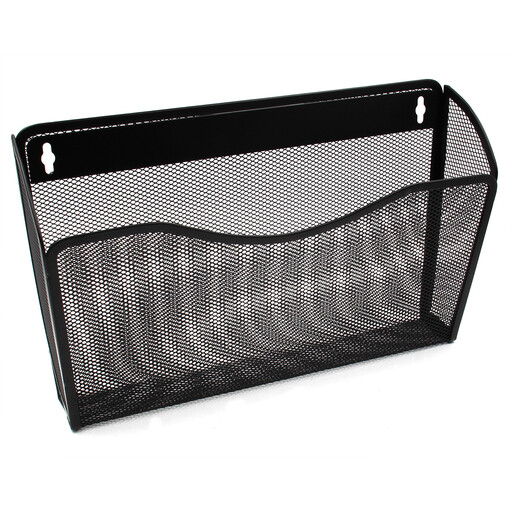
Why we chose it: Perfect for a specific use: as a mail sorter in an entryway, or to keep the current project file within reach. Its compact size is an ally for small spaces.
Its metal construction with a powder-coated finish gives it excellent rigidity. Say goodbye to the risk of it warping under the weight of a few magazines.
Simple and effective design for a single purpose. A4-compatible landscape format. Quick installation with included hardware.
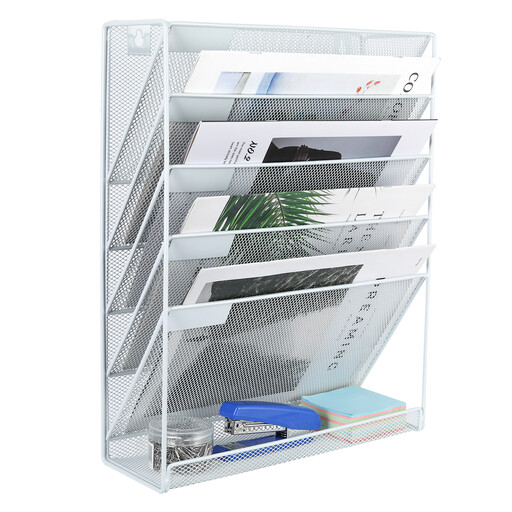
Why we chose it: The perfect solution for remote workers or students juggling multiple projects. Its six tiers allow for impeccable sorting, while the bottom tray holds pens and small supplies. Its key asset: its versatility, as it can be placed on a desk or mounted on the wall.
It checks all the ergonomic boxes: label holders to find what you need at a glance and a hybrid design that evolves with your workspace.
Six filing compartments plus a storage tray. Sturdy metal construction. Dual-use: place on a desk or mount on the wall.
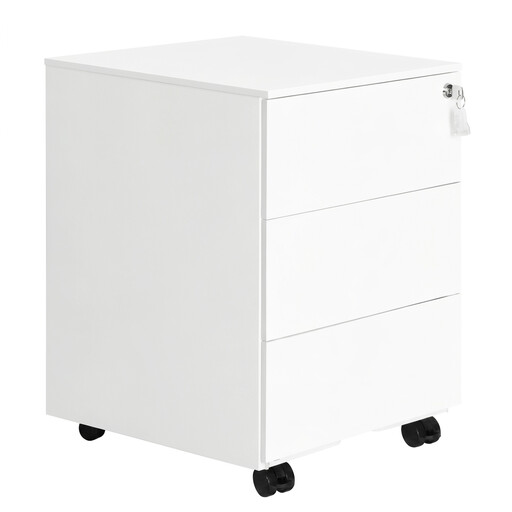
Why we chose it: The perfect alternative to wall storage for those who dread drilling or need flexibility. This mobile cabinet offers enclosed, key-locked storage, all on casters for total mobility.
It eliminates the constraints of wall storage. Its steel structure handles heavy loads (up to 15 kg per drawer) and keeps your documents safe from dust and prying eyes.
Total mobility thanks to its casters (two with brakes), security with a central lock, and large capacity. The bonus? It comes fully assembled, ready to use out of the box.
We've selected a full range of products that meet our quality criteria and will help you organize your space.
Safety first! Use the provided hardware, but check that it's suitable for your wall type (drywall, brick, concrete). If in doubt, a quick trip to the hardware store is necessary to find the right wall anchors. Also, remember to distribute the weight evenly in the compartments and never exceed the maximum load capacity indicated by the manufacturer.
The metal mesh organizer is the choice for sturdiness and a professional look, ideal for an office. Plastic, on the other hand, offers lightness and color, perfect for portable use or for school supplies. The choice will depend on the intensity of your use and the aesthetic you're looking for.
Generally, no. Most are designed for thin documents like sheets, folders, or magazines. For large lever-arch binders, you need to be careful: double-check the depth and height of each compartment in the product's technical specifications. There are reinforced models specifically designed to support more weight and volume, but they are less common.