
Livraison le jour même ou le lendemain

Qualité garantie

Débloquez vos offres de bienvenue: Livraison GRATUITE | Jusqu'à -80 % | 30 jours d'essai gratuits à JoyPlus
Téléchargez l'application
Sometimes, a single piece of wall décor is all it takes to transform a living room, bedroom or home office—without embarking on major renovations. However, it is important to avoid unpleasant surprises caused by unclear dimensions, overly flattering photos or materials described too casually. An item may look substantial in an image yet appear tiny above a sofa. Likewise, a sticker presented as “removable” may leave marks depending on the paint and how long it remains in place.
Here are the key points to check before choosing your living room wall décor, bedroom wall décor or an element of indoor wall art.
Lifestyle images often show spacious rooms and furniture with flattering proportions. To avoid disappointment when your order arrives, check the exact dimensions in centimetres and compare them with those of your wall. A 20 × 80 cm piece will create a very different impression from a 50 × 70 cm painting.
You can also mark out its outline with masking tape before placing your order. This simple trick gives you a much more accurate sense of how much space it will occupy above a bed, console table or TV unit.
A wall sticker and a metal sculpture obviously cannot be mounted in the same way. Heavier models, such as certain cast-iron or MDF decorations, require fixings suited to the type of wall: plaster, concrete, brick or hollow partition.
Product descriptions sometimes specify that mounting hardware is not included. In that case, you will need to provide suitable wall plugs and screws. For items weighing more than one kilogram, check regularly that the installation remains secure, and avoid positioning the piece above a play area or walkway.
Repositionable wall stickers are practical in a child’s bedroom or a rented property, but how easily they can be removed depends greatly on the surface. Fresh, matt, powdery or already flaking paint may come away with the adhesive. Test the sticker first in an inconspicuous area, then remove it slowly by pulling it parallel to the wall rather than straight out.
For a balanced composition, wall décor can measure between half and two-thirds of the width of the furniture beneath it. This is not a hard-and-fast rule, but it is a useful guideline for preventing a small piece from getting lost above a large sofa.
Consider the orientation, too. A vertical piece, such as a 50 × 100 cm decoration, naturally draws the eye upwards. A horizontal model will usually sit more comfortably above a sideboard, headboard or along a hallway wall.
Decorative paintings may combine canvas, polyester, glass, MDF or a polystyrene frame. Glass protects the image but calls for greater care during handling. Wood and MDF bring warmth to a room, while steel or cast iron work particularly well in modern wall décor.
To protect the surfaces, use a soft, dry cloth whenever possible. Avoid water and abrasive products on wood, painted metal, printed surfaces and jute elements. In a kitchen, keep decorations away from grease splashes and persistent steam.
For any suspended item, choose fixings compatible with the wall substrate. A product intended for indoor use should not be installed outdoors or in a very humid room unless the manufacturer states otherwise.
Small decorative elements and fragile pieces should be kept out of reach of children under 3 years old. An acrylic plaque on a stand, for example, should be placed on a stable surface and handled with care.
The suggestions below are based on the dimensions, materials, intended uses and information available in the product descriptions. They do not guarantee a specific decorative result: the final appearance will depend in particular on your wall, lighting and existing furniture.
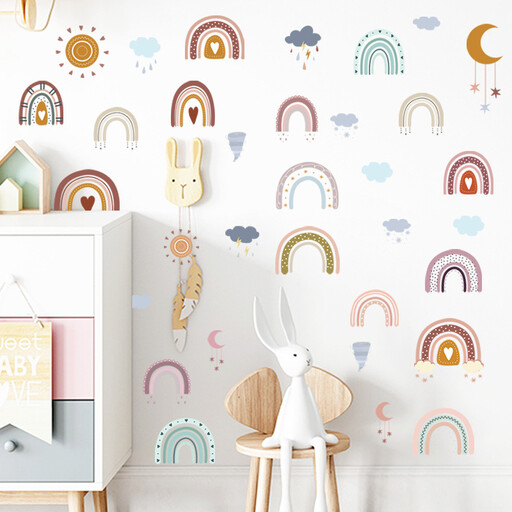
Why this choice suits this profile: A lightweight way to personalise a child’s bedroom or rented home, with no frame or hanging system required.
The adhesive format eliminates the need for heavy-duty mounting. Even so, test the adhesion on a small area before applying the full set.
Rainbow motif, stated suitability for a child’s bedroom and the flexibility to create a personalised arrangement.
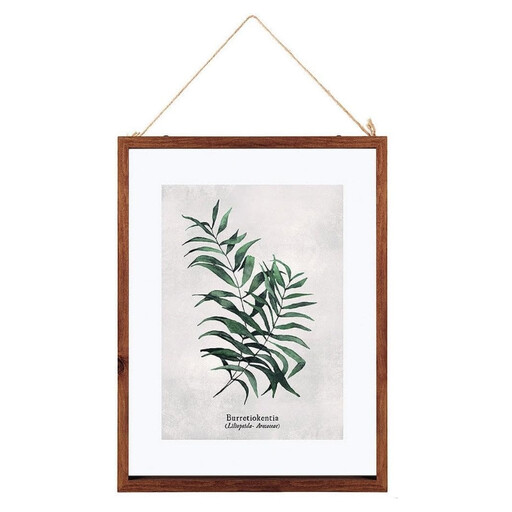
Why this choice suits this profile: Measuring 38 × 48 cm and featuring a frame with a glass front, this model is well suited to a living room, bedroom or home office where a structured look is desired.
The frame size and material are clearly specified, making it easier to compare the piece with your available space and plan its care.
Leaf print, naturally finished frame, protective glass and a product described as ready to hang.
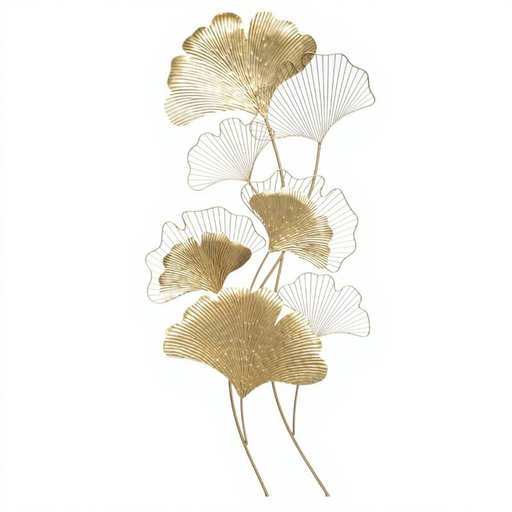
Why this choice suits this profile: Its vertical form and steel construction make it a natural fit for a large living room, hallway or office wall when you want a piece that commands attention.
The product description states a weight of 1.7 kg and indoor use: plan for suitable mounting rather than relying on a single nail.
Steel construction, an approximately 2 cm profile, a ginkgo branch motif and partial transparency that allows the wall colour to show through.
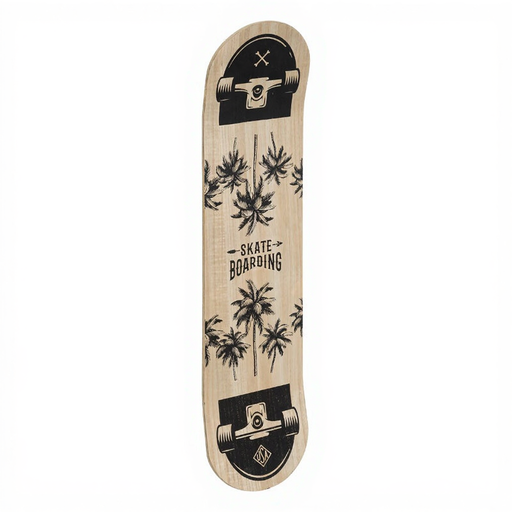
Why this choice suits this profile: This decorative poplar-and-steel board brings an urban touch to a bedroom, playroom or living space.
The product description clearly distinguishes decorative use from sporting use: this item is not designed to be ridden as a skateboard.
Poplar-and-steel construction, dimensions of 20 × 2 × 80 cm and a silhouette suited to vertical installation.
For floral décor, leaf prints, painted bouquets and botanical motifs work particularly well with light-coloured walls and natural materials. In a living room, a framed canvas or metal piece can serve as a focal point above the sofa.
Bohemian wall décor often embraces soft colours, organic shapes, wood and botanical motifs. In a child’s bedroom, stickers make it easy to refresh the atmosphere without filling the wall with holes. Floral designs decorated with butterflies and birds, such as the Watercolor Flowers stickers, are available on their product page.
For modern wall décor, start by measuring the available space and avoid combining too many competing patterns. A single vertical metal piece or a carefully spaced gallery wall will often look more elegant than an overcrowded arrangement.
Adhesives are best suited to very lightweight objects and smooth, clean, dry surfaces. For a painting or sculpture, use fixings designed for your wall material. Always check the supported weight and follow the installation instructions carefully.
Choose a well-proportioned format, a vertical orientation or a composition made up of several small pieces. Light colours and understated patterns can reduce the sense of visual clutter. A 38 × 48 cm painting or a sticker with clearly defined contours will generally be easier to integrate than a large, deeply projecting piece.
A soft, dry cloth is usually all you need to remove dust from these pieces. Keep MDF, wood and jute away from moisture. For painted metal, avoid abrasive products and check the mounting points regularly to reduce the risk of the item falling.