
Livraison le jour même ou le lendemain

Qualité garantie

Débloquez vos offres de bienvenue: Livraison GRATUITE | Jusqu'à -80 % | 30 jours d'essai gratuits à JoyPlus
Téléchargez l'application
A successful wall display isn’t just about a nice style you’ve spotted in a photo. The actual dimensions, weight, fixing system and compatibility with your wall all play a decisive role in the final result. Whether you’re putting together a gallery wall in the living room, a bedroom decoration or fitting out a professional space, the same mistakes keep cropping up.
A frame described as compact can end up taking up a fair amount of space once it’s installed. Take the time to distinguish between the image dimensions, the external dimensions and the depth of the product. A frame designed for a 50 × 70 cm image can, for example, be bulkier once the framing itself is taken into account.
Before you order, measure:
A fixing that works on a plasterboard partition won’t necessarily be suitable for a concrete wall or a tiled surface. Also remember to take the total weight into account: this includes the glass, the backboard and any decorative elements.
For photo frames to hang, check for the presence of hooks, their position and the different installation methods available. If the fixing hardware isn’t supplied, choose it according to the type of wall and the load specified by the manufacturer.
Glass, Perspex, wood, MDF and plastic don’t all demand the same care day to day. Glossy surfaces show up fingerprints more, while a wooden frame may need more delicate cleaning. For a self-adhesive mirror mosaic, preparing the surface is just as important: dust, moisture and flaky paint can all compromise adhesion.
For a standard photo, the 30 × 40 cm photo frame is a particularly handy size, whether used on its own or as part of a layout. Some models can be installed either horizontally or vertically, making it easier to adapt them to the room.
A large 50 × 70 cm frame is better suited to a poster, a large-format photograph, a certificate or an illustration. In a gallery wall, mix up the sizes while keeping a common alignment or a regular spacing of 5 to 10 cm.
Glass protects a photo effectively from dust, but it adds weight and can create reflections. Perspex is generally lighter, but it needs to be cleaned with a soft cloth to minimise the risk of scratches.
Also remember to check:
A self-adhesive decoration must be applied to a clean, dry, smooth and grease-free surface. Textured, damp or freshly painted walls can reduce the adhesive’s hold. For a DIY decorative mirror project, first test it on a small area and plan the layout before peeling off the protective film.
Glass tiles may have finished edges, but they remain fragile and must be handled with care. Be especially careful during transport, storage and any cutting.
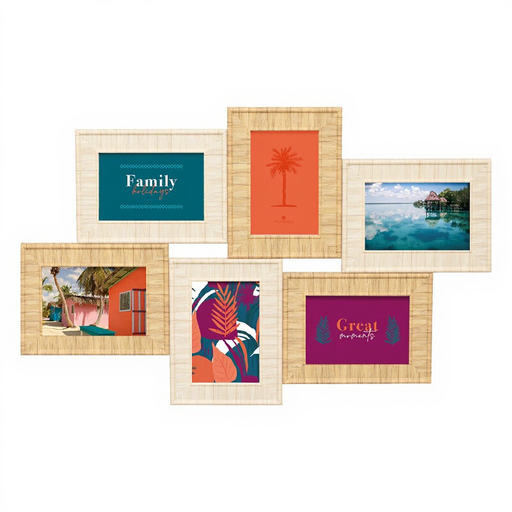
Why it suits this profile: This frame holds six 10 × 15 cm photos in a single structure. A simple solution for creating a collage without having to buy several frames separately.
The external dimensions of 64.5 × 41 × 2 cm are stated, as is the weight of 1.26 kg. You simply need to choose a fixing suitable for your wall.
Six slots, clear glass, vertical or horizontal installation and cleaning with a dry cloth.
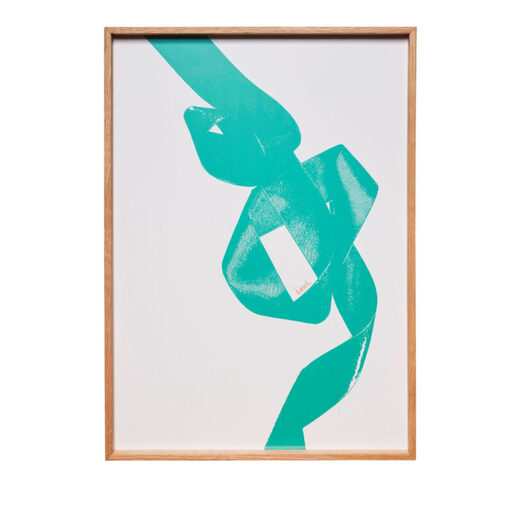
Why it suits this profile: Its 50 × 70 cm image size and natural wood finish fit perfectly into a carefully styled décor, whether in an office, bedroom or hallway.
The external dimensions of 52 × 5 × 72 cm and the weight of 5 kg are clearly stated. So make sure you choose a fixing that can handle this load.
FSC-certified oak wood, Perspex front, 5 cm depth and reversible design.
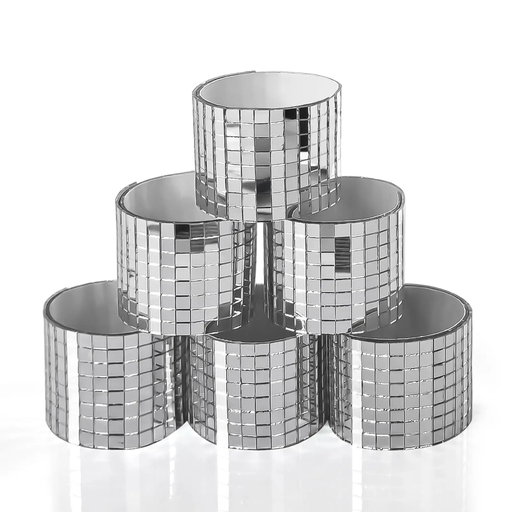
Why it suits this profile: The six rolls total 2,364 pieces, giving you plenty of scope for creative projects: mirror frames, stage sets, display cabinets or wall photo collages.
The roll format lets you adjust the quantity to your project. However, the surface must be perfectly smooth, dry and clean before application.
Glass mirror, smoothed edges, self-adhesive backing and numerous possibilities for interior or event decoration.
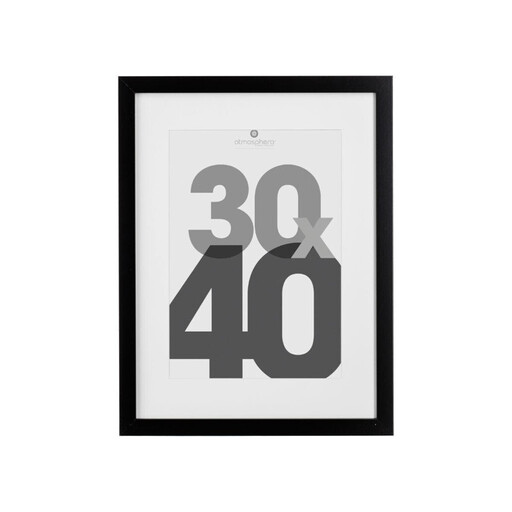
Why it suits this profile: Its common size makes it easy to combine several together to create a harmonious arrangement at home.
The product states a size of 30 × 40 cm, a visible area of 20 × 29 cm and installation possible in both orientations.
Sleek black finish, protective glass, mount and metal hooks on the back.
We’ve put together a comprehensive list, updated in real time, of products that meet these demanding selection criteria and European safety standards.
Lightly mark your reference points in pencil before drilling or sticking. For a gallery wall, first lay the frames out on the floor to check the spacing and overall balance. You can also temporarily fix a sheet of paper to the wall in the dimensions of each product to get an idea of how it will look.
Dust the frames with a dry or microfibre cloth. Avoid abrasive products on wood, Perspex and mirror surfaces. In a public-access establishment, regularly check the stability of hanging items and the condition of any adhesives.
Start by defining a focal point: a large frame or a collage made up of several photos, for example. Then limit the number of colours and keep the spacing regular. Frames with the same finish will give a tidy look; different sizes will add more rhythm.
It all depends on the surface: concrete, brick, plasterboard or wood. Check the weight of the frame and the maximum load the wall plug or hook can support. For a 5 kg model, such as a large wooden frame, you must choose a fixing suitable for the type of wall.
That depends on both the adhesive and the surface. Applying them to a painted wall can pull off the finish or leave residue. Gently warm the adhesive, then remove it gradually without putting too much pressure on the glass. Test it in an inconspicuous area before covering a large surface.