
Livraison le jour même ou le lendemain

Qualité garantie

Débloquez vos offres de bienvenue: Livraison GRATUITE | Jusqu'à -80 % | 30 jours d'essai gratuits à JoyPlus
Téléchargez l'application
A blank wall is a blank canvas—a fantastic opportunity to express your style and personality. Yet, choosing the right wall decor can quickly become a headache. Between the flattering photos in online shops and the reality of the product once unboxed, disappointment is often just around the corner. The goal: to find the piece that will elevate your interior without becoming a source of buyer's remorse.
This guide is here to help you see things more clearly and sidestep the most common traps.
Before you pull out your credit card, let's review the classic mistakes that turn an impulse buy into a major hassle.
To avoid these disappointments, a few technical criteria should be scrutinised. This is your guarantee of a successful and lasting purchase.
The choice of material defines not only the style but also the longevity and maintenance of your item.
Don't trust your eyes alone. Take out your tape measure and precisely measure the available space on your wall. Then, compare these measurements with those indicated on the product page.
Keep the two-thirds rule in mind: a piece of art should ideally occupy about two-thirds of the width of the furniture it hangs above (sofa, sideboard, console table).
Regarding mounting, always check two points on the product page:
To illustrate how these criteria apply in practice, here are a few products that check all the boxes, suited for different styles and needs.
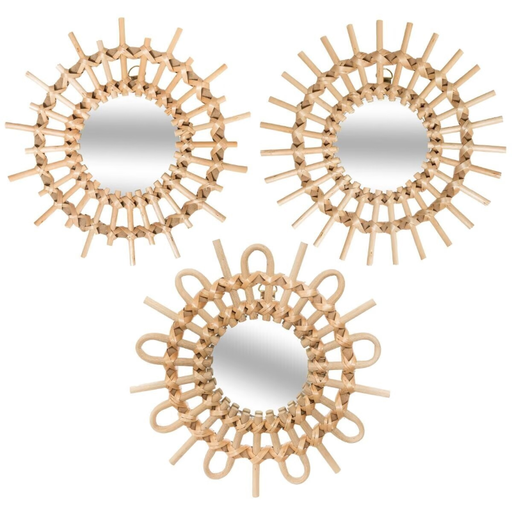
Why it's a great choice: Perfect for embracing the boho-chic trend. The rattan brings a natural, warm texture. The trio format allows for a creative and personalised wall composition, while visually enlarging the space thanks to the mirrors.
The material is authentic rattan, not a cheap plastic imitation. Its feather-light weight (0.63 kg for all three) eliminates any installation headaches.
Adds light and natural texture; the modular composition adapts to any wall.
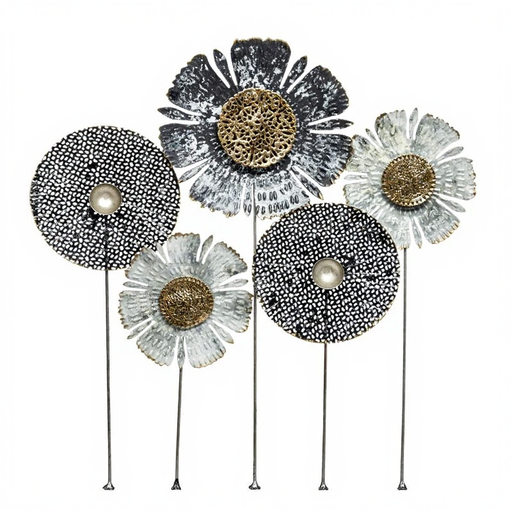
Why it's a great choice: For those seeking a statement piece that is both sculptural and modern. The openwork, raised metal design creates a play of light and shadow that energises a plain wall. Perfect for a contemporary or industrial-inspired interior.
Made of wrought iron, it offers the sturdiness expected from a metal piece and avoids the disappointing material trap. Its square dimensions (50x50 cm) make it a medium-sized piece that's easy to place without risking a scaling error.
Its sculptural effect and openwork design use the wall as a backdrop; durable material.

Why it's a great choice: The perfect solution for decorating a child's room or playroom. The wall decal is easy to apply, requires no tools, and can be removed without leaving a trace—a major plus for renters or for updating decor as tastes change.
It completely bypasses the complex installation trap. The "Peel and Stick" technology is user-friendly for everyone. There's no unfulfilled promise of "premium" material here: its purpose is purely decorative and practical.
Instant installation with no tools or drilling; a fun and repositionable design, ideal for spaces that evolve quickly.
Discover our full selection of products that meet our quality and safety criteria.
How do I hang heavy wall decor on a drywall wall? For an object weighing over 5?kg on a plasterboard wall (drywall), using expansion anchors (like Molly bolts) is essential. They anchor themselves by expanding behind the board to better distribute the load. Always check the maximum weight supported by the anchor (indicated on the packaging) and make sure it is well above the weight of your object.
What's the difference between a wall decal and wallpaper? A wall decal is a self-adhesive decorative design, often of a limited size, intended to create a focal point on part of a wall. It is generally easy to apply and remove. Wallpaper, on the other hand, is sold in rolls and is meant to cover one or more entire walls. Its installation is more involved and requires significant preparation (applying paste, smoothing, etc.).
How do I clean a metal wall decoration? For most metal pieces, regular dusting with a soft, dry cloth or a feather duster is sufficient. Most importantly, never use water, chemical products, or abrasive sponges: you could scratch the surface, damage the finish, or cause rust to form.