
Livraison le jour même ou le lendemain

Qualité garantie

Débloquez vos offres de bienvenue: Livraison GRATUITE | Jusqu'à -80 % | 30 jours d'essai gratuits à JoyPlus
Téléchargez l'application
Giving a room a makeover shouldn't require major renovations or a huge budget. The wall decal has emerged as a clever solution for personalising your space in an instant. But be warned: behind the promise of easy, affordable decor lie a few pitfalls that can quickly turn your dream into a disaster?— an adhesive that peels off paint, colours that clash with the website photo, or an application process that becomes a complete headache.
As a product expert at Joybuy, my job is to help you make the right choice. This guide covers the essential points to check before you click "Buy," ensuring your next wall sticker will elevate your home's decor—with no nasty surprises.
Before you fall for a design, it's wise to be aware of the most common problems that can ruin the experience.
To avoid these pitfalls, simply check a few key details on the product page.
Most wall decals are made of vinyl (or PVC). It's prized for its durability and moisture resistance, making it a versatile material for any room, including kitchens and bathrooms. Paper-based models, while more affordable, are also much more fragile.
The finish is crucial for the final look. A matte finish is often preferable, as it absorbs light and makes the design look as if it were painted directly on the wall. A glossy finish, on the other hand, can give away the "sticker" look under certain lighting.
This is the most critical factor. Look for terms like "removable wall decal" or "repositionable, residue-free adhesive." A high-quality glue allows you to peel the decal off cleanly, even after several months or years. When in doubt, it's best to be cautious: test a small piece of the decal on an inconspicuous area of your wall (behind a piece of furniture, for example) before committing.
Decals come as pre-cut sheets (ideal for designs like flower or animal decals) or in rolls of peel-and-stick wallpaper. Pre-cut elements are generally easier for beginners to apply. For larger formats, make sure the instructions are clear and, if possible, have a second person help you to avoid creases and bubbles.
Because every decor project is unique, here is our selection of decals that tick all the right boxes, suited for different uses and styles.

Why we chose it: Perfect for creating a magical atmosphere in a child's bedroom or playroom. The separate elements allow for a custom layout and easy application, even for the least handy parents.
Its vinyl is designed to peel off without leaving any residue. This makes it perfect for updating the decor as your child grows, without the risk of damaging the wall.
Playful and colourful design that sparks the imagination; simple and quick to apply.
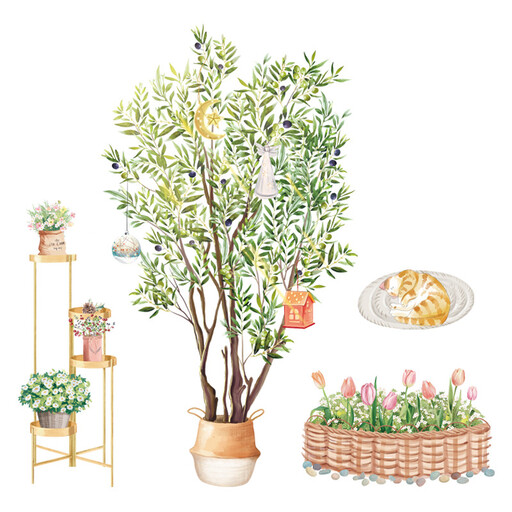
Why we chose it: Ideal for adding a touch of nature to a living room (living room decal) or entryway, without the maintenance of real plants. Its modern design fits in with any style.
Its adhesive is clearly specified as removable—a non-negotiable feature for temporary decor in a rental. This guarantees damage-free removal.
Trendy and calming botanical design; easy to reposition slightly during application for perfect alignment.

Why we chose it: The watercolour effect adds an artistic and poetic touch, perfect for a bedroom or living room. This type of flower decal transforms a blank wall into a delicate mural.
The print quality is designed to reproduce the transparency of watercolour, avoiding the pixelated look or garish colours found on low-quality stickers.
Artistic and sophisticated look; removable adhesive makes application easy and protects the surface.
We've selected a full range of products for you that meet our standards for quality and safety.
The best precaution is to choose a product marketed as "removable without residue" and made from high-quality vinyl. Before the final application, stick a small piece of the decal in an inconspicuous area (e.g., behind a piece of furniture) and leave it for 24 hours. Then, gently peel it off to check the condition of the surface.
Generally, no. Most decals are for single use only. While they can be peeled off and reapplied a few times immediately after application to adjust the alignment, their adhesive power weakens with each handling. Once removed after several months, it's highly unlikely to stick properly to another surface.
Wall decals adhere best to smooth, clean, and dry surfaces. This includes painted walls (provided you let the paint cure for at least three weeks), glass, smooth tiles, metal, and lacquered furniture. Avoid applying them to textured, grainy, or freshly painted walls, or to embossed wallpaper, as the adhesion won't be optimal and removal could be difficult.