To serve with coffee or tea
If you’re looking for a thin, crisp treat to put on the table after a meal, thin waffles could fit the bill. Auchan lists Bourdon and Pâtisserie des Flandres products as options to enjoy with hot drinks or desserts.


To serve with coffee or share as a dessert, look for thin waffles. If you’d rather serve a soft, individual waffle, consider Liège-style waffles. “Digestive” refers here to cereal biscuits, not a type of waffle or a promise of digestive benefits. Before you shop, check the ingredients, allergens and how much you plan to serve.
If you’re looking for a thin, crisp treat to put on the table after a meal, thin waffles could fit the bill. Auchan lists Bourdon and Pâtisserie des Flandres products as options to enjoy with hot drinks or desserts.
If you’d rather serve an individual waffle, look at Liège-style varieties with pearl sugar, plain or topped, depending on the product. Carrefour and E.Leclerc include these options in their ranges.
If ingredients or allergens matter to your guests, compare the labels on the specific packs. The name “Digestive” tells you neither what a waffle contains nor whether it has any effect on digestion.
First decide what you’ll serve after the meal: a small, crisp waffle, a soft waffle or a cereal biscuit. Then check the pack that matches your choice.
| Criteria | What to check | Who is it for? |
|---|---|---|
| Texture and serving occasion | The product description: thin, Liège-style, filled or topped waffle. | When I’m finishing a meal over coffee, I mainly look for a texture that suits how I plan to serve it. Around 40% of consumers prioritise texture and the occasion they’ll enjoy it. |
| Ingredients and allergens | The ingredients list and allergens for the exact pack, including those in any topping. | When I’m hosting guests with dietary requirements, I need to be able to choose based on the recipe I’m actually buying. Ingredients and allergens come first for around 30% of consumers. |
| Sugars and fats | The nutritional information per 100 g, then the amount you plan to serve. | If other treats are already on the menu, I want to take the waffle portion into account as part of the dessert. For around 20% of consumers, sugars and fats are the top priority. |
| Pack size | The net weight and number of pieces shown for the product you’ve chosen. | When several people are sitting down to eat, I need enough pieces for the planned serving. Around 10% of consumers prioritise choosing a pack size that suits the number of guests. |
Carrefour categorises McVitie’s Digestive biscuits as crunchy biscuits. The name doesn’t describe a waffle or prove that the biscuits aid digestion.
If you want waffles for dessert, check the product description rather than relying on the word “Digestive”.
This phrase tells you about the recipe, not how much sugar or fat you’ll consume. Auchan’s product listing for Pâtisserie des Flandres thin waffles includes butter in the ingredients list.
To compare two products, read their nutritional information on the same basis, per 100 g, then take the portion you’ll serve into account.
A topped waffle and one without a topping won’t necessarily have the same ingredients or allergens. Recipes can also vary from one brand to another.
Before serving guests with an allergy, check the ingredients list and allergen information on the pack you’ve bought.
Carrefour lists, among other products, a 500 g pack of Liège waffles with sugar under this brand.
Auchan lists a 380 g pack of thin, all-butter waffles.
Auchan describes a 250 g product of thin, all-butter waffles made with vergeoise sugar, intended to be enjoyed with coffee, tea or dessert.
ALDI France lists waffles under this brand and describes them as soft inside and slightly crisp on the outside.
Carrefour lists this brand’s cereal Digestive biscuits in its crunchy biscuits category.
This filled wafer can be enjoyed with a hot drink after a meal. It’s a wafer, so it’s different from the all-butter thin waffles and Liège-style waffles mentioned above.
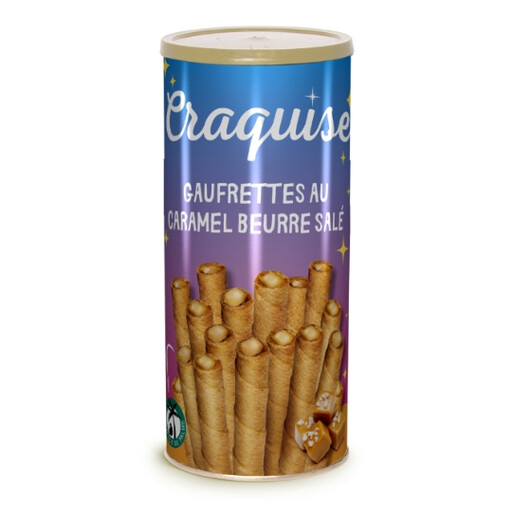 Image unavailable
These wafers are filled with salted butter caramel and make a crisp option to serve with a hot drink. The pack weighs 135 g; check how many pieces it contains if you’re planning to share it. For palm oil information, refer to the ingredients list on the pack, as the product descriptions give conflicting information on this point. Check the allergens before serving, too.
Not in the product mentioned here: Carrefour categorises McVitie’s Digestive cereal products as crunchy biscuits. The name also doesn’t mean they aid digestion. If you want waffles for a Sunday meal, check the product description on the pack.
Check the ingredients and allergen information on the specific pack you plan to serve, including any topping. For example, the ingredients list Auchan publishes for Pâtisserie des Flandres thin waffles includes wheat flour, butter and eggs; it doesn’t describe every other recipe.
Start by choosing between the texture of a thin waffle, a Liège-style waffle and, if that’s what you’re after, a Digestive biscuit. Then compare the number of pieces, ingredients and nutritional values per 100 g, and consider how much you’ll serve alongside the rest of the dessert.