Fans of thin waffles with coffee
You’d like to serve a thin waffle with an espresso or filter coffee, rather than choosing a filled recipe. The pure butter options featured by Auchan and Carrefour are examples of this type of product.


To enjoy with a coffee, choose a thin waffle if you’re after a small biscuit-style treat, or a Liège waffle or pearl sugar waffle if you’d prefer something more substantial. An organic or gluten-free recipe meets a different dietary or ingredient preference: check the ingredients, allergens, sugars per 100 g and pack size for the specific product before choosing.
You’d like to serve a thin waffle with an espresso or filter coffee, rather than choosing a filled recipe. The pure butter options featured by Auchan and Carrefour are examples of this type of product.
You’d prefer a Liège waffle or pearl sugar waffle to enjoy on its own. Carrefour, for example, features Liège waffles with sugar and Bonne Maman pearl sugar waffles.
You choose based on the ingredients or a specific feature, such as an organic or gluten-free recipe. Check each product individually: these claims alone don’t tell you how much sugar it contains.
For your morning coffee, start by deciding what type of waffle you’d like, then check the ingredients and pack size of the product you’re considering.
| What to consider | What to check | Who it matters to |
|---|---|---|
| Texture and indulgence | Look for terms such as ‘thin’, ‘Liège’, ‘pearl sugar’ or ‘filled’ to find the recipe you’re after. | If I just want a small waffle with my coffee, I won’t choose the same size as I would for a more indulgent breakfast. Around 36% of consumers put texture and the pleasure of eating it at the heart of their choice. |
| Ingredients | Read the ingredients and allergen information, then compare sugars and fat per 100 g in particular. | When a particular recipe feature matters to me, I need to check the exact product rather than relying on its name alone. Ingredients or dietary suitability would be the top priority for around 29% of consumers. |
| Pack size and storage | Check the number of waffles, the packaging and the instructions for storing them after opening. | For coffee on the go, I look for a pack that’s easy to carry; at home, I also check how to reseal it. Convenience would come first for around 21% of consumers. |
| How many to share | Compare the net weight and number of waffles with how often you eat them. | If several people have waffles for breakfast, I look for a quantity that suits us without opening a pack that’s too large for our needs. Around 14% of consumers would put this consideration first. |
This describes the recipe, but isn’t enough to tell you about its nutritional values.
Start by choosing the texture you want, then compare the sugars, saturated fatty acids and portion size on the packaging of the products you’re considering.
These claims relate to different criteria. A waffle with one of these claims doesn’t necessarily contain less sugar than another.
Check the feature that matters to you separately, then look at the ‘of which sugars’ line in the nutritional information per 100 g.
Depending on the recipe, ingredients such as wheat, milk or eggs may be present; some products also carry precautionary ‘may contain’ warnings.
If you need to avoid an ingredient, read the information on the packaging of the product you’re buying, including any ‘may contain’ warnings, rather than judging by appearance.
Worth a look if you’re searching for thin, pure butter waffles to serve with coffee.
Pure butter waffles to consider if you’re looking for a biscuit-style waffle.
A brand to consider when comparing thin pure butter recipes with Liège waffles.
There are separate products to explore if you’re looking for an organic wholegrain recipe or a waffle labelled gluten-free.
An option for anyone looking for pearl sugar waffles to enjoy with coffee.
These two CRAQUISE products are crunchy wafers filled with salted butter caramel, and can be enjoyed as biscuits with a coffee. They aren’t presented as thin pure butter waffles or Liège waffles.
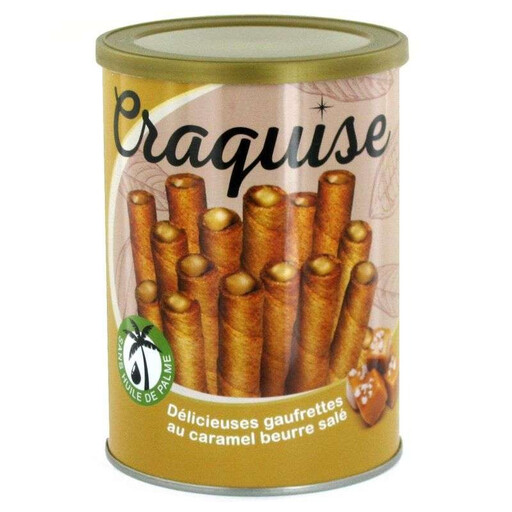 Image unavailable
Enjoy a filled, crunchy wafer with a coffee at home. The tin can be kept tightly closed after opening.
The product listing states 57.9 g of sugars per 100 g. It lists wheat, milk and soya, and warns that it may contain traces of tree nuts, peanuts, sesame and eggs; check the packaging if this information affects your choice.
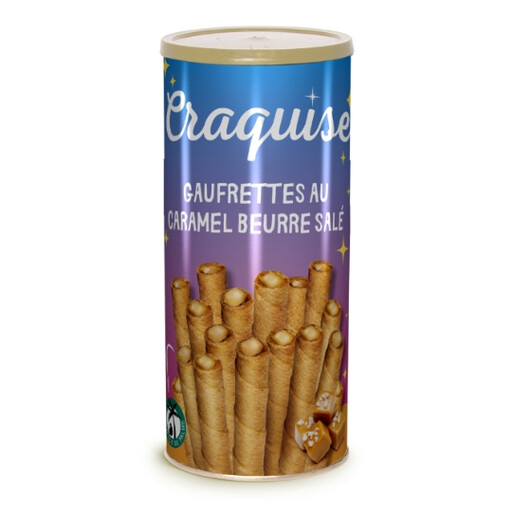 Image unavailable
A small pack of crunchy filled wafers to enjoy with a hot drink, with no preparation needed.
The product listing states 65.6 g of sugars per 100 g and recommends storing the wafers in an airtight container after opening. It includes a ‘no palm oil’ claim alongside an ingredients list that names palm oil: check the packaging before choosing on this basis. Wheat, milk and soya are listed, and it may contain traces of tree nuts, peanuts, sesame and eggs.
Start by choosing the recipe you’d like to enjoy: a thin waffle for a biscuit-style treat, or a Liège waffle or pearl sugar waffle for something more substantial. Then compare the portion size, ingredients and nutritional values of the options you’re interested in.
No. These claims alone don’t tell you how much sugar a product contains. To compare two recipes, check the ‘of which sugars’ line in the nutritional information, using the same 100 g basis for both.
Check the label on the product you buy. The DGCCRF states that allergenic ingredients must be highlighted and that nutritional information is given, among other ways, per 100 g. Also check for any ‘may contain’ warnings.
Follow the instructions on the relevant pack, as they vary by product. For its gluten-free waffle, Bjorg recommends storing it in a cool, dry place and resealing the packaging securely after opening.