For anyone making toast
If you want to choose your bread or brioche and decide how much to spread on it, look for a jar of spread. Compare the ingredients and nutritional information for the products you’re interested in.


For spreading on bread or brioche and choosing how much to serve, opt for a jar of spread. If you want something you can eat straight away, without any preparation, a filled wafer meets a different need: it isn’t a substitute for spread. In either case, check the product name, ingredients, allergens and nutritional information per 100 g.
If you want to choose your bread or brioche and decide how much to spread on it, look for a jar of spread. Compare the ingredients and nutritional information for the products you’re interested in.
A ready-to-eat portion means you don’t have to carry a jar and a utensil. Nutella describes B-ready as a filled wafer in an individual sachet, not as a spread.
When choosing between two products, compare the sugars, fat and salt per 100 g, and check the allergens listed on each pack. According to Santé publique France, displaying the Nutri-Score is voluntary: it can help you compare products, but doesn’t replace this information.
Choose this if: you want to spread it on the base of your choice and serve the amount you like.
Bear in mind: you’ll need something to spread it on and a utensil; it’s not a ready-to-eat portion.
Choose this if: you want something you can take with you and eat without preparing it. Nutella sells B-ready in this format.
The trade-off: you don’t get to choose the base or how much filling to spread.
| What to consider | What to check | Who is it for? |
|---|---|---|
| Product type | Read the product name: spread or filled wafer. Check the packaging of the product you’re choosing. | I don’t have bread or a utensil to hand, so I want something I can eat straight away. Around 42% of consumers put convenience first. |
| Spreading and portion size | Check that the product is a spread and look at the jar’s net weight. | For my toast, I prefer to choose the base and serve the amount myself. Around 33% of consumers put spreading first. |
| Ingredients | Compare the nutritional values per 100 g, and read the ingredients and highlighted allergens. | Before choosing a recipe, I want to check its sugar content and the ingredients that matter to me. Around 25% of consumers prioritise ingredients or allergens. |
A ready-to-eat wafer isn’t suitable for making toast, and you can’t choose how much spread to serve.
If you want something to spread, look for the product name “spread”. If you want a ready-to-eat portion, check what kind of snack it is and how it’s packaged.
Santé publique France says that displaying the Nutri-Score is voluntary. If the logo isn’t there, you should still check the nutritional information.
When it appears on packaging, use it as an additional guide when comparing similar products. Also check the values per 100 g and the ingredients list.
Article 1613 ter of the French General Tax Code applies to drinks and liquid preparations for drinks, not solid spreads.
When choosing a spread, look at its ingredients and nutritional information rather than this tax.
The recipes listed by E.Leclerc, Auchan and Carrefour differ. Depending on the product, the ingredients list or traces warning may also mention milk, soya or other nuts.
Read the ingredients and allergen information on the exact product you’re buying; don’t assume it’s the same as another recipe.
The brand sells both a spread and B-ready, which is described as a filled wafer.
The product listed by E.Leclerc is a hazelnut spread in a 200 g jar.
Auchan lists a milk chocolate and hazelnut Lindt spread in a 200 g jar.
The product listed by Carrefour is an organic hazelnut and chocolate spread in a 300 g jar.
This selection includes filled wafers to eat straight away and jars of spread for making toast. First decide what you want the product for, then check the format and label of the product you’re considering.
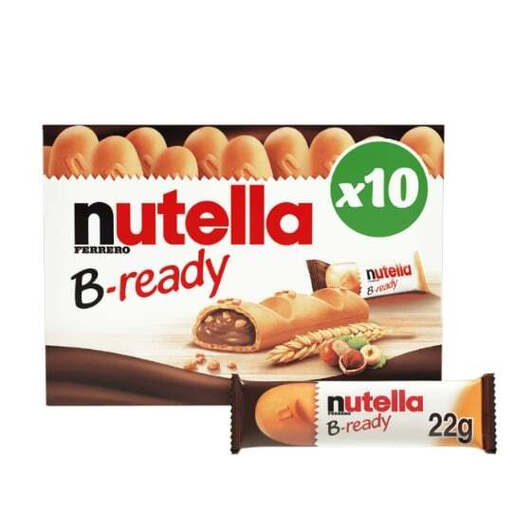 Image unavailable
For enjoying a filled wafer without making toast. T10 format, 220 g; this product isn’t a spread.
 Image unavailable
For spreading on bread or brioche and serving as much as you like. The 750 g jar requires something to spread it on and a utensil; it isn’t a ready-to-eat portion.
 Image unavailable
For making toast or crêpes and serving as much as you like. This 1 kg jar isn’t an individual ready-to-eat snack.
 Image unavailable
A large jar of spread for when you need this quantity. The 3 kg format needs to be served on a base; it isn’t an individual portion.
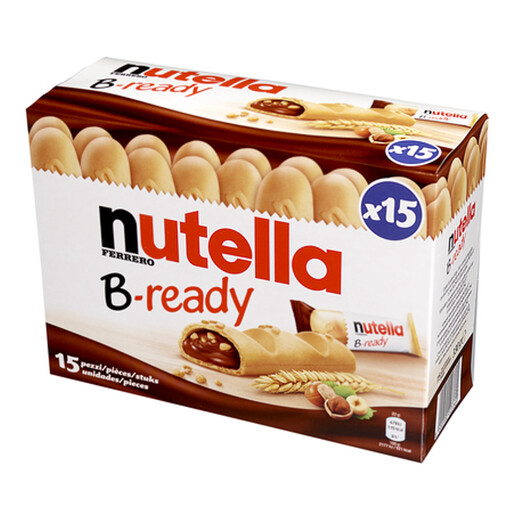 Image unavailable
For a filled snack you can eat without making toast. The pack weighs 330 g; if you need individually wrapped portions, check the number of biscuits and how they’re packaged before buying. These aren’t biscuits to spread.
No. Article 1613 ter of the French General Tax Code applies to drinks and liquid preparations for drinks, not solid spreads. To compare spreads, check their ingredients and nutritional values directly.
No. According to Santé publique France, displaying the Nutri-Score is voluntary. It is separate from the mandatory nutrition declaration for applicable prepacked foods, so its absence isn’t enough to conclude that a product doesn’t comply with labelling rules.
Start with the product name to see whether it’s a spread or something you can eat as it is. Then read the ingredients, highlighted allergens, net weight and nutritional information. To compare the sugars or fat in two products, use the values per 100 g.
Follow the instructions on the packaging of the product you’ve bought. Don’t assume that the storage instructions for one product apply to another recipe.