
Livraison le jour même ou le lendemain

Qualité garantie

Débloquez vos offres de bienvenue: Livraison GRATUITE | Jusqu'à -80 % | 30 jours d'essai gratuits à JoyPlus
Téléchargez l'application
Supermarket shelves are overflowing with drinks promising hydration, enjoyment, and a vitamin boost. Faced with this overwhelming selection, it's hard to know what to choose. A vitamin drink can be an interesting alternative to sodas, but not all are created equal. Some hide a much less impressive composition behind a healthy facade.
As the Head of Product Recommendations at Joybuy, my mission is to help you see things more clearly. Together, we'll break down the traps to avoid and the criteria to check to make an informed choice that's truly suited to your needs and daily life.
Marketers are increasingly clever when it comes to touting a product's benefits while hiding its drawbacks. Here are the two things to watch out for.
vitamin fruit juice can have a sugar content equivalent to a soda, far from the healthy daily alternative you were hoping for.healthy drink starts with a quality base (spring water, real fruit juice), not just a pile-up of additives.To make the right choice, there's one key habit: scrutinise the label, focusing on three key points.
First instinct: scan the ingredient list. Is the drink based on natural mineral water, like a vitamin-flavoured water, or fruit juice from concentrate?? The difference is significant.
Next, look at the nutritional information panel, at the "Carbohydrates, of which sugars" line. This will tell you the total amount of sugar per 100?ml. Below 5?g of sugar per 100?ml, a drink is generally considered low in sugar. Sugar-free versions, based on sweeteners, will logically show 0?g.
You'll most often find vitamin C and B-group vitamins (B3, B5, B6, B12). Brands often link these nutrients to functional claims. For example, vitamin C and vitamin B6 contribute to the normal function of the immune system, while other B vitamins can help reduce fatigue. An anti-fatigue drink will typically contain these kinds of vitamins. Be aware, these are not magic potions, but simply a helpful boost as part of a balanced diet.
For a truly light refreshing drink, the calorie count is the most direct indicator. A sugar-free vitamin water will be close to zero calories, while a juice-based multivitamin drink will typically range from 20 to 50 kcal per 100?ml.
To illustrate our point, here are a few products that tick the right boxes, each meeting a specific need.
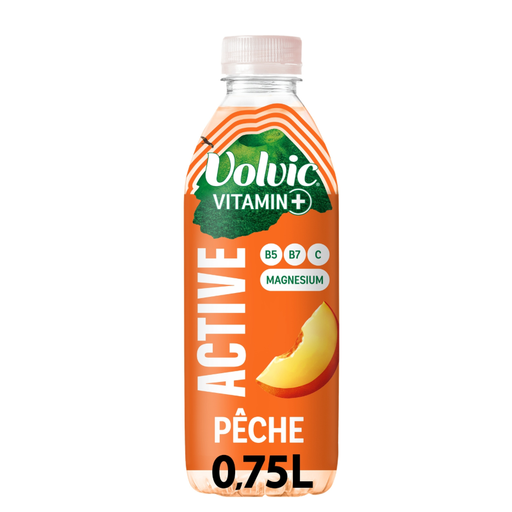
Why we chose it : Perfect for athletes or anyone who wants to hydrate with flavour every day, without sugar or calories. The base of natural Volvic mineral water is a true mark of quality.
It's completely transparent : the drink is sugar-free and almost zero-calorie (1 kcal/100 ml). It thus avoids the trap of the 'healthy-looking' product that's hiding sugars.
Its base of natural Volvic mineral water, enriched with vitamins (B5, B7, C) and magnesium, which contributes to a normal energy-yielding metabolism.
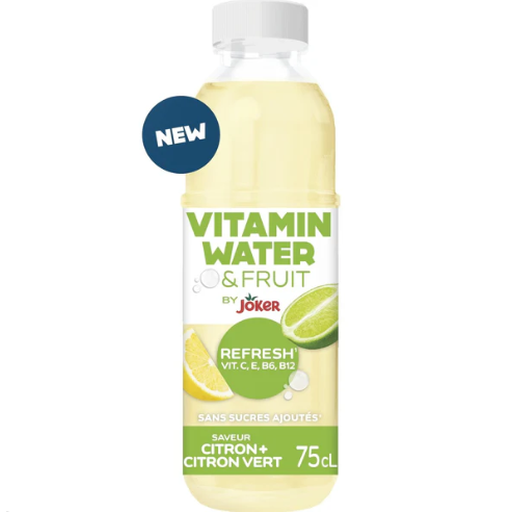
Why we chose it : For those who want the pleasure of real fruit taste, without the guilt of calories. The perfect compromise between a simple flavoured water and a classic fruit juice.
The "no added sugar" claim holds true : its low sugar content (2.9 g/100 ml) comes only from the fruit. No false pretences.
A high fruit content (20 %) for an authentic taste, a controlled calorie count (13 kcal/100 ml), and a cocktail of vitamins C, B6, B12, and folate.
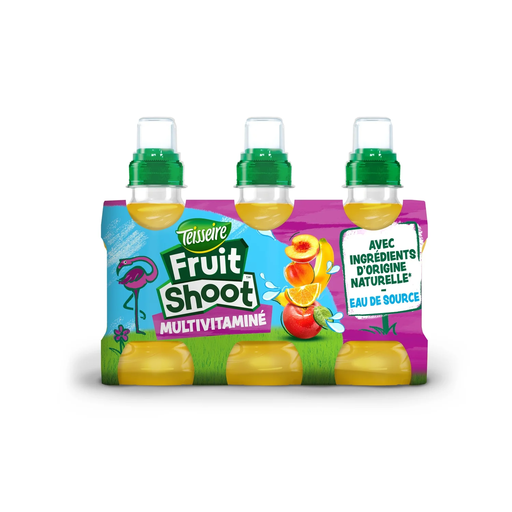
Why we chose it : Specially designed for children, its format is ultra-practical for outings, sports, or snack time. Its resealable sports cap is a real plus for avoiding spills, and its fruity taste is usually a crowd-pleaser.
Even though it contains sugar (5 g/100 ml), the composition is clear and the format of small 20 cl bottles makes it easy to control the portion a child drinks.
A practical and fun format, with no artificial colours or flavours, and a welcome boost of B-group vitamins (B3, B6, B8).
Discover our full selection of products that meet our selection criteria and current regulations.
Absolutely not. A multivitamin drink is a supplement and a source of enjoyable hydration. It will never replace the fibre, minerals, and nutritional richness of a varied and balanced diet, rich in fresh fruits and vegetables.
Some are, especially those designed specifically for them. The key habit is to always check the sugar content and the ingredient list. For occasional consumption, opt for formulas without artificial sweeteners and in single-serving portions.
Once opened, most vitamin drinks, especially those based on fruit juice, should be stored in the refrigerator. Consume them within 2 to 3 days. In any case, refer to the instructions on the product's packaging.