
Livraison le jour même ou le lendemain

Qualité garantie

Débloquez vos offres de bienvenue: Livraison GRATUITE | Jusqu'à -80 % | 30 jours d'essai gratuits à JoyPlus
Téléchargez l'application
Lack of sunshine, a limited diet, a preference for a plant-based formula or the need for an easy-to-adjust dose: there are plenty of reasons to look for a vitamin D food supplement. But with so much choice online, it is easy to feel overwhelmed. Between international units (IU) and micrograms, high-strength tablets and claims surrounding vitamin D3, choosing the right product is about more than simply looking at the price of the bottle.
Here are the key criteria to consider when comparing formulas and avoiding unsuitable purchases.
A vitamin D3 supplement providing 4000 IU delivers 100 µg per serving, which is considerably more than many daily formulas. This dosage may be suitable for a specific need, but it is not automatically right for everyone.
Remember to check:
For high-strength products, particularly 4000 IU vitamin D3, seek advice from a healthcare professional. This is especially important if you are taking medication, are pregnant, have kidney disease or have a condition affecting calcium levels.
Vitamin D3 can be made from lanolin, a substance derived from sheep’s wool, or from lichen. A lichen-based formula is more suitable for people looking for vegan vitamin D3 or a plant-based source. The term ‘vegetarian’ does not therefore necessarily mean ‘vegan’.
The label should also specify the excipients, allergens and storage conditions. A short ingredient list is not necessarily better, but it does make products easier to read and compare.
Vitamin D tablets are easy to store and fit neatly into a regular routine. Vitamin D drops offer greater flexibility, particularly for adults who want to adjust their intake by following the instructions on the packaging. Vitamin D gummies may be easier for children to accept, but they often contain sweeteners or glucose syrup.
The conversion is simple: 1 µg of vitamin D3 is equivalent to 40 IU. So, 25 µg corresponds to 1000 IU, while 50 µg corresponds to 2000 IU.
Do not focus solely on the number of tablets or gummies. A bottle of 120 gummies may provide 120 servings, while a bottle of 400 tablets may last for more than a year, depending on the recommended dosage.
Vitamin D3, also known as cholecalciferol, is the form used in the products featured here. To prioritise a plant-based option, look for an explicit statement such as ‘derived from lichen’ or ‘plant-based’. Liquid formats may contain a carrier oil, such as rapeseed oil or MCT coconut oil.
As vitamin D is fat-soluble, manufacturers generally recommend taking it with a meal. Always follow the instructions for the product you choose.
A calcium with vitamin D3 formula may be appealing if you want to combine these two nutrients in a single product. Some combinations also include magnesium and zinc, such as calcium magnesium zinc vitamin D3 formulas.
Vitamin K2 is often combined with D3. It is an additional ingredient to consider, but may not be recommended alongside certain anticoagulant medicines. Before combining several supplements, make sure they are appropriate for your needs and circumstances.
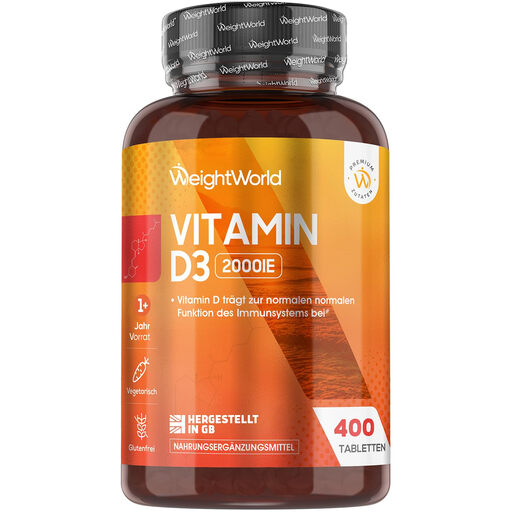
Why this choice suits this profile : A straightforward format, with one tablet a day, 400 servings and convenient storage to help you establish a regular routine.
The 2000 IU dosage is clearly stated, and the number of tablets makes it possible to calculate the cost per serving rather than relying solely on the price of the bottle.
Tablets providing 2000 IU, a source listed as lanolin, a gluten-free formula and suitability for vegetarians, according to the product information.
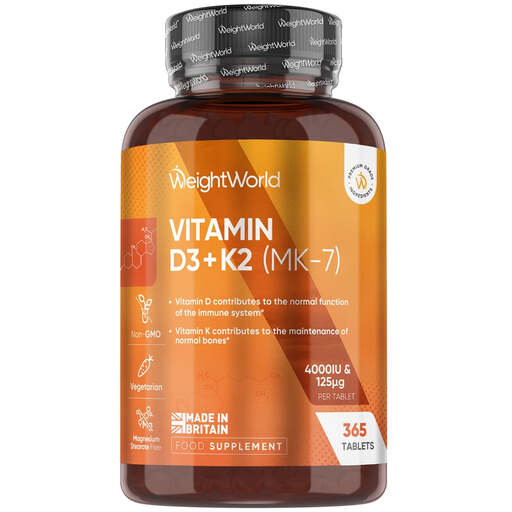
Why this choice suits this profile : This formula combines two nutrients in a single tablet and is aimed at people who prefer a well-organised, year-round routine.
The amounts are listed separately: 4000 IU of D3 and 125 µg of K2 MK-7 per tablet. However, this high dosage should be assessed in light of your individual circumstances.
365 tablets, a vegetarian formula, and no GMOs or magnesium stearate, according to the information provided.
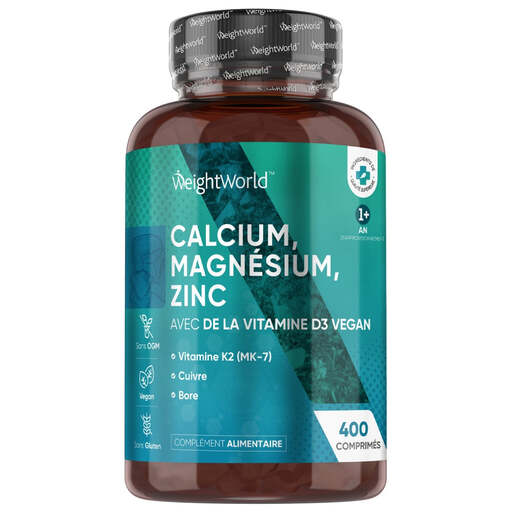
Why this choice suits this profile : A combined formula that brings several minerals and vitamins together in a single daily serving.
The product information gives the amounts of calcium, magnesium, zinc, plant-based D3 and K2 in detail. This allows you to identify any potential duplication with your other supplements.
Lichen-derived D3, a formula described as vegan and a bottle containing 400 tablets.
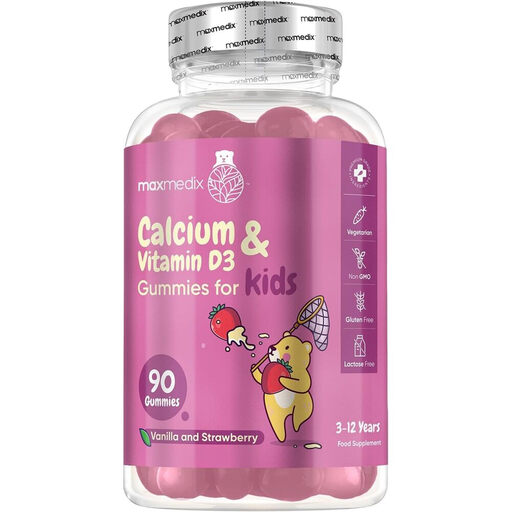
Why this choice suits this profile : The chewable format may make it easier for children aged 4 and over to take, under adult supervision.
The minimum age, serving of two gummies and content of 250 mg of calcium with 7.5 µg of D3 are clearly stated. The gummies must not be swallowed whole.
A pectin-based formula, free from gelatine and described as suitable for vegans, with calcium and vitamin D3.
We have put together a comprehensive, real-time selection of products that meet these strict criteria and the requirements of European safety regulations.
Vitamin D tablets are suitable for regular use and are easy to store. Gummies can be convenient for people who find tablets difficult to swallow, but check their sugar content and follow the recommended dose carefully. Drops make it easier to adjust the dosage, provided you use the dropper accurately.
It depends on the number of servings and the dosage. At one tablet a day, a bottle of 400 tablets will last for more than a year. Similarly, 120 gummies taken at one per day provide approximately four months’ use. Observe the best-before date, storage temperature and instructions shown on the packaging.
This is possible, but only after comparing the different labels. A liquid multivitamin formula may already contain vitamin D3, calcium, magnesium or vitamin K2. Combining several products without checking the quantities may result in exceeding the recommended intakes. If you are taking medication or have specific needs, seek advice from a healthcare professional.