
Livraison le jour même ou le lendemain

Qualité garantie

Débloquez vos offres de bienvenue: Livraison GRATUITE | Jusqu'à -80 % | 30 jours d'essai gratuits à JoyPlus
Téléchargez l'application
Dull complexion, temporary fatigue, an interest in an anti-dark-spot routine or the search for a vitamin C supplement: the products available in France address very different needs. A claim displayed on the packaging is therefore not enough to make the right choice.
The first distinction is straightforward: a supplement works through oral intake, while a vitamin C serum, cream or mask is applied directly to the skin. These two categories serve different purposes and are not interchangeable.
A product may display a high concentration without clearly specifying the form of vitamin C it contains. For supplements, check the amount provided per daily serving rather than looking only at the product’s total weight. For example, an effervescent vitamin C tablet may provide 1,000 mg per tablet, while another format offers a more moderate dose.
As a reference point, the European nutrient reference value is 80 mg per day for an adult. A 1,000 mg dose therefore represents 1,250% of that reference value. That does not necessarily mean it is suitable for everyone.
Claims such as “enhanced absorption”, “radiance-boosting” or “anti-dark-spot” should always be considered in context. For supplements, authorised claims in the European Union notably state that vitamin C contributes to the normal function of the immune system, the reduction of tiredness and fatigue, and normal energy-yielding metabolism. They do not constitute a promise of treatment.
For skincare products, results depend on the form of vitamin C, the formula as a whole, how consistently it is applied and how well the skin tolerates it. Results communicated by a brand reflect its own testing protocol and do not guarantee the same effect for every user.
Pure ascorbic acid is sensitive to air, light and oxidation. Derivatives such as ascorbyl glucoside or 3-O-ethyl ascorbic acid are often preferred to improve formula stability. However, they are not equivalent and should be distinguished on the label.
For supplements, effervescent tablets may contain polyols. Consumed in excess, these can have a laxative effect. For skincare products, the presence of alcohol, fragrance, essential oils or exfoliating acids deserves particular attention if your skin is sensitive.
Choose a vitamin C supplement with a clearly stated dose per serving, an easy-to-read ingredient list and a maximum recommended daily intake. The format also matters:
Follow the stated dosage, keep the product out of the reach of children and seek advice from a healthcare professional if you are pregnant, breastfeeding, taking medication or have any relevant medical history.
A vitamin C serum enables targeted application, while a cream generally offers greater comfort and hydration. Examine the form of vitamin C, its position in the INCI list and the complementary active ingredients:
To minimise the risk of reactions, patch-test the product on a small area, introduce it gradually and avoid applying it to irritated or damaged skin.
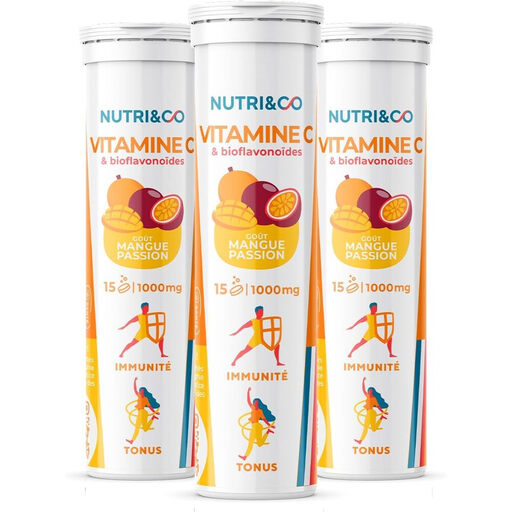
Why it is a good match: The three-tube pack is ideal for anyone looking to incorporate vitamin C into their routine with ease, offering a fruity flavour and 45 tablets in total.
The dose is stated per tablet: 1,000 mg of vitamin C. The presence of polyols is clearly disclosed, making it easier to anticipate digestive tolerance.
An effervescent format and vegan formula, free from gluten and lactose, with orange bioflavonoids and stevia-based sweetening, according to the product listing.
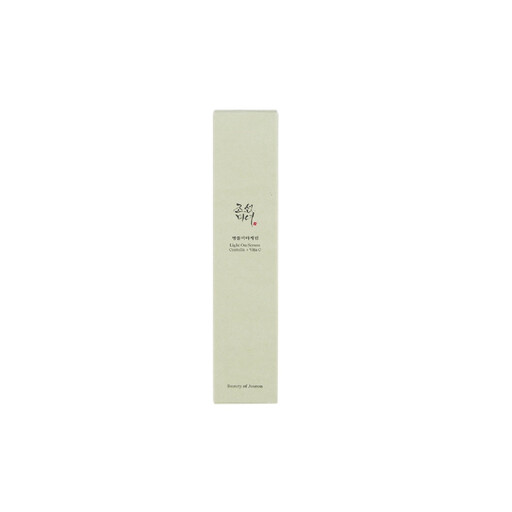
Why it is a good match: Its lightweight texture and combination with centella asiatica will appeal to anyone looking for a daily skincare product focused on radiance and comfort.
The product information specifies the derivative used—3-O-ethyl ascorbic acid—rather than leaving the form of vitamin C unclear.
A 30 ml size and a formula that includes glycerin, panthenol, centella asiatica and hydrolysed hyaluronic acid, among other ingredients.
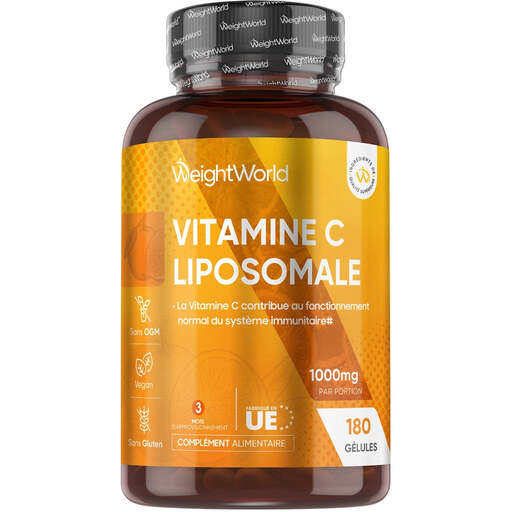
Why it is a good match: The large 180-capsule pack suits users who prefer a flavour-free format and want to space out their purchases.
The dose is given for 2 capsules rather than one, so this serving frequency should be factored into both your budget and your routine.
1,000 mg per serving of 2 capsules, sunflower phospholipids, rosehip extract, and a vegan, gluten-free formula, according to the product listing.
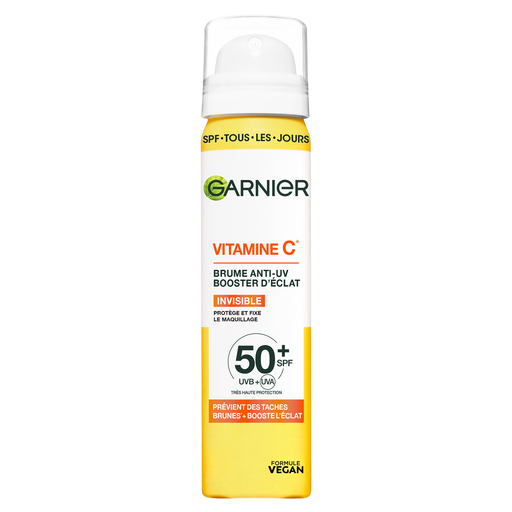
Why it is a good match: Its travel-friendly format can complement a daily routine, making it easier to top up your sun protection throughout the day.
The SPF 50+ rating is clearly indicated, but this mist should not be treated as a standalone anti-dark-spot product or as a substitute for generous sunscreen application.
Advertised UVA/UVB protection, a vitamin C derivative, hyaluronic acid and a 75 ml format. Flammable aerosol: follow the storage precautions.
We have brought together a regularly updated selection of products designed to meet different goals and selection criteria related to vitamin C.
Yes. These active ingredients are often combined in skincare formulas, particularly to revive radiance and improve the visible uniformity of the complexion. If your skin is prone to reacting, however, start by spacing out applications. Reading the INCI list and patch-testing on a small area are still recommended.
Follow the date shown on the packaging, along with the symbol indicating the period after opening. Close the bottle promptly, store it away from heat and light, and watch for any unusual changes in colour, scent or texture. Shelf life depends on the formula and packaging.
No. A serum, cream or mist containing vitamin C does not replace suitable sun protection. To limit UV exposure and the appearance of dark spots, apply SPF 50+ sunscreen in accordance with the manufacturer’s recommendations, reapply it regularly and follow appropriate sun-protection measures.