
Livraison le jour même ou le lendemain

Qualité garantie

Débloquez vos offres de bienvenue: Livraison GRATUITE | Jusqu'à -80 % | 30 jours d'essai gratuits à JoyPlus
Téléchargez l'application
Electric bikes and scooters are now a daily staple for many city dwellers. But to keep these journeys enjoyable, one piece of gear is non-negotiable: the helmet. The urban visor bike helmet is emerging as THE go-to solution, combining everyday protection and comfort. The problem is, with an overwhelming number of options, it's easy to get ripped off. As a product expert at Joybuy, my job is to decipher the technical specs for you and guide you to the model that truly fits your needs, away from all the marketing hype.
Before you pull out your credit card, let's review the common mistakes that can turn a promising purchase into a real headache.
To avoid falling into these traps, focus on a few objective technical points. It's your best guarantee for a successful and safe purchase.
First thing to do: look for the EN 1078 European standard label or marking. An EN 1078 certified protective helmet guarantees that the model has passed a series of tests validating its ability to absorb impacts when cycling, scootering, or skateboarding. This certification, found on a label inside the helmet or on its box, is your lifesaver. It is also mandatory for any helmet sold in Europe.
To be effective, a helmet must fit perfectly and feel like it's not even there. It shouldn't float around or squeeze your head. To achieve this, a good adjustable adult helmet should offer:
The main advantage of a visor helmet is its versatility. The visor protects you from wind, rain, insects, and the sun. For optimal comfort in any season, some models go a step further by offering removable ear covers. This accessory, as simple as it is incredibly effective, transforms your summer helmet into a shield against the winter cold. It then becomes perfect for daily use as an electric scooter helmet or for cycling, no matter the weather.
There's an ideal helmet for every use case. Here are a few models we've selected for their ability to meet specific needs while adhering to our strict quality and safety criteria.
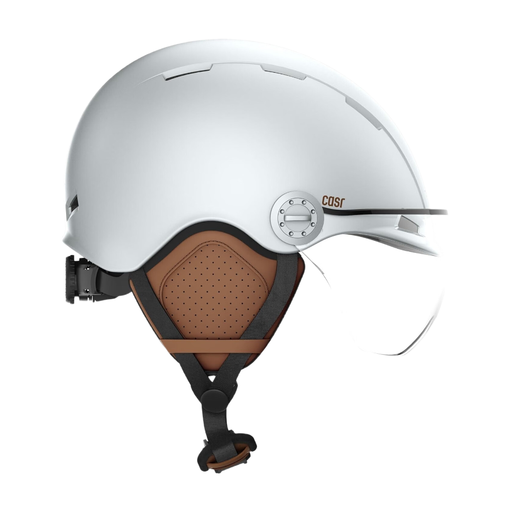
Who is it for? For those who ride all year round, rain or shine. Its modularity makes it a truly versatile helmet, suitable for all conditions.
With its genuinely protective visor and removable ear covers, it avoids the "gimmick" helmet trap, which becomes useless as soon as the weather turns.
4-season versatility thanks to its removable accessories. Comfort is guaranteed by a precise and effective rotary adjustment system.
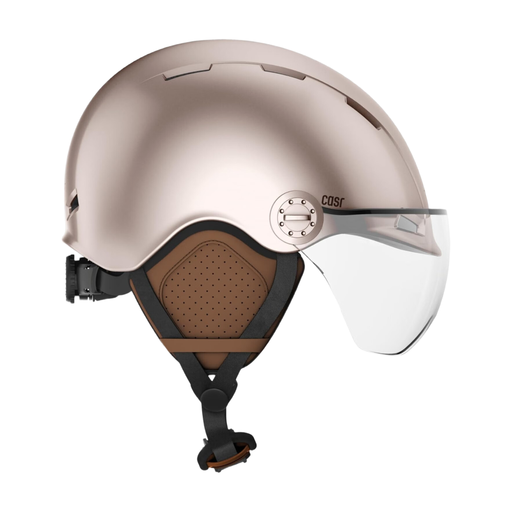
Who is it for? For those who see their helmet as a fashion accessory, an extension of their look. This model, often popular as a women's bike helmet, combines a statement look with uncompromised protection.
It shatters the myth that a stylish helmet is less safe. Its EN 1078 certification and robust construction are there to prove it.
A bold urban look with a metallic pink finish that also enhances visibility. Its In-Mold construction (fused shell and foam) ensures excellent durability.
Who is it for? Essential for those who leave early or come home late, especially when daylight is scarce in autumn and winter. Here, the absolute priority is active safety: being seen by everyone, all the time.
Unlike classic models, it doesn't just protect in the event of a fall. It integrates lighting for active safety, a real bonus that's often overlooked.
Its key feature: maximum visibility thanks to its integrated, rechargeable rear LED. Comfort is also a priority, with a well-designed chin pad and a breathable liner.
We've put together a complete selection of helmets that all meet our demanding specifications for safety and quality.
The golden rule is simple: a helmet must be replaced after any impact, even if no damage is visible to the naked eye. The internal foam structure (EPS), designed to absorb the impact, can be compromised and may no longer provide protection. Even without a crash, it's advisable to replace it every 3 to 5 years. Over time, the materials degrade due to UV exposure, sweat, and temperature changes.
Yes, the EN 1078 standard is suitable for use with electric scooters that are speed-limited to 25 km/h, which includes almost all models on the market. However, it is not sufficient for faster vehicles like "speed pedelecs" (electric bikes that can reach 45 km/h), which require a specific certification (NTA 8776).
To keep your visor pristine, avoid harsh chemicals and abrasive cloths. The safest and simplest method: a soft microfiber cloth, lukewarm water, and a drop of pH-neutral soap (or dish soap). Gently rinse with clean water using another clean cloth and let it air dry, away from any heat source.