Hosts planning a buffet for different tastes
If your guests have different preferences, make sure white and dark chocolate are clearly labelled on the table. A milk and white chocolate bar is not a substitute for an intense dark chocolate option.


Don’t automatically swap white chocolate for a high-cocoa dark chocolate bar: they suit different tastes and uses. For a village fête where preferences vary, serving a white chocolate option and a dark chocolate option separately lets guests choose for themselves. Check the allergens for each product before serving.
If your guests have different preferences, make sure white and dark chocolate are clearly labelled on the table. A milk and white chocolate bar is not a substitute for an intense dark chocolate option.
For a cocoa-focused tasting, look for a dark chocolate bar that states its cocoa percentage. The Lindt Excellence bar featured by Auchan contains 85% cocoa; it is not white chocolate.
For a white chocolate recipe, start with a bar labelled for baking or desserts. Then check the size, ingredients, allergens and storage instructions for the product you choose.
Start with how you plan to use it — for a tasting featuring different flavours or to make a dessert — then check the information on each wrapper before serving the chocolate.
| What matters | What to check | Who is it for? |
|---|---|---|
| Different tastes | Whether it is white, milk or dark chocolate; the cocoa percentage if you’re looking for an intense dark option. | When guests have different tastes, offering white and dark chocolate separately means they don’t have to settle for one flavour. Around 44% of consumers prioritise having this choice of flavour profiles. |
| White chocolate dessert | Whether it is labelled for baking or desserts, as well as the weight of the bar. | To make a white chocolate dessert, you need a bar suited to the recipe rather than dark chocolate intended for tasting. This is the top priority for around 33% of consumers. |
| Ingredients and allergens | The ingredients, allergen information and sugars per 100 g; the Nutri-Score, if shown on the product. | When serving a group, it’s important to know what’s in each bar before making it available. Around 23% of consumers put this check at the top of their list. |
A bar of dark chocolate with 85% cocoa and a white chocolate bar don’t meet the same needs. Make sure the label tells guests what they’re choosing.
Label white, milk and dark options separately, and don’t present a mixed milk and white chocolate bar as intense dark chocolate.
The rate set out in the Official Bulletin of Public Finances for this levy applies to non-alcoholic drinks containing added sugars, not chocolate bars.
To compare chocolate bars, look instead at the “of which sugars” line in the nutrition information, using the same 100 g basis.
The order published by Légifrance describes the Nutri-Score as a nutritional label recommended by the State, rather than something you can expect to see on every chocolate bar.
If it is shown, read it alongside the ingredients and nutritional values for the exact product. Don’t rely on it alone to decide whether the bar is suitable for your guests.
The white and mixed chocolate products mentioned by Auchan and Joybuy contain milk or other allergens, depending on the product. Precautionary statements about traces also vary from one bar to another.
Keep the wrappers available during serving, and use the allergen information for each specific product if you’re preparing labels.
These examples show how products can suit different uses. Check the details and allergen information for the bar and pack size you buy.
The Excellence range includes a dark chocolate bar for tasting, listed as containing 85% cocoa on the Auchan product page.
Auchan lists a Nestlé Dessert white chocolate baking bar in a 180 g pack.
The retailer lists a 180 g white chocolate dessert bar.
Carrefour lists an organic white chocolate bar.
E.Leclerc lists a multipack of 4 × 100 g ECO+ white chocolate bars.
For a tasting with separate flavour options, the selection below pairs a high-cocoa dark chocolate bar with a white chocolate bar for baking. Choose the one that suits your plans, or serve both with their respective wrappers.
 Image unavailable
Serve it as a dark chocolate option for guests who enjoy an intense cocoa flavour. The bar contains 85% cocoa and weighs 100 g; it isn’t suitable for a recipe that calls for white chocolate. Check the allergens on the wrapper before serving it to a group.
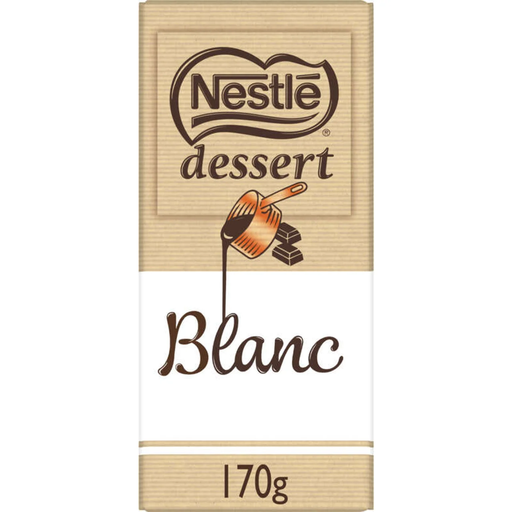 Image unavailable
Consider this for a dessert that calls for white chocolate, rather than for tasting intense dark chocolate. This baking bar weighs 170 g. Check the ingredients and allergens on the wrapper for this pack size before cooking with it or serving it.
No, not under the levy described in the rate set out in the Official Bulletin of Public Finances: this applies to non-alcoholic drinks containing added sugars. For a chocolate bar, check the amount of sugars listed in its nutrition information.
Don’t assume it will be shown: the order published by Légifrance describes it as a nutritional label recommended by the State. If the bar displays it, check the ingredients and nutritional values too.
Follow the storage instructions on each wrapper and find a place away from heat and moisture before serving. Keep the labels where guests can read them.
Display the information for each bar separately and leave its wrapper available for guests to check. Depending on the white and mixed chocolate products described by Auchan and Joybuy, allergens may include milk, soya, tree nuts, peanuts or cereals containing gluten. This information can vary between products and pack sizes.