
Livraison le jour même ou le lendemain

Qualité garantie

Débloquez vos offres de bienvenue: Livraison GRATUITE | Jusqu'à -80 % | 30 jours d'essai gratuits à JoyPlus
Téléchargez l'application
By the Joybuy editorial team, July 18, 2026
Shakes, jitters... Nothing ruins a video faster, giving it an amateurish, even hard-to-watch look. Whether you're a YouTube content creator, a TikTok enthusiast, or simply want to capture your vacation memories with a cinematic feel, a stable image is key. That's precisely where a video stabilizer comes in.
This guide is here to help you navigate the options and choose the stabilizer that truly fits your needs. We'll review the essential buying criteria before presenting our selection of the best models of 2026, whether you're looking to stabilize your smartphone or opt for an all-in-one solution.
Before diving into our top picks, it's essential to understand a few key concepts that will guide your decision.
This is the first question to ask yourself: what device do you use for filming?
Nearly all modern stabilizers feature a 3-axis gimbal. Its job? To compensate for movement on three axes: tilt, roll, and pan. This technology is what ensures perfectly smooth tracking shots and stable footage, even when you're walking or running.
Another must-have feature is AI subject tracking. It allows the gimbal to "lock on" to a person or object and automatically keep it centered in the frame. This is a huge advantage for vloggers filming themselves solo or for capturing action scenes hassle-free.
For creators on the go, weight and size are crucial criteria. A foldable model will slide much more easily into a backpack. Also, consider the battery life, especially if you have long shooting days ahead. Finally, the inclusion of a stabilized selfie stick or a built-in mini-tripod can dramatically simplify capturing vlogs, selfies, or static shots.
Here are a few models that caught our eye, catering to different needs and budgets, all available on Joybuy.

Why we love it: The DJI Osmo Pocket 3 is the ultimate all-in-one solution, merging a gifted camera and a stabilizer into a pocket-sized format. Its key advantage? A large 1-inch sensor that ensures stunning image quality, even when light is scarce. It's the ultimate tool for those who refuse to compromise on quality.
Key features:
Who is it for? For vloggers, travelers, and demanding YouTube creators who want flawless image quality in an ultra-portable format, without relying on their smartphone.
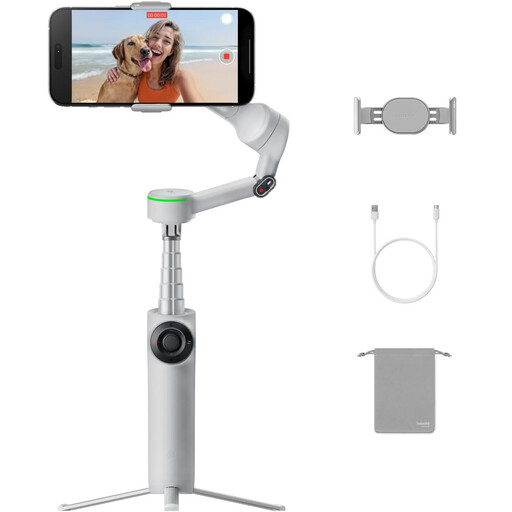
Why we love it: The Insta360 Flow is the specialist in smartphone AI subject tracking. Its secret weapon? DockKit compatibility, which allows its smart tracking to work natively in over 200 apps, including social media platforms like TikTok and Instagram. A decisive advantage for live content creators.
Key features:
Who is it for? For smartphone power users who churn out content for social media. Its cutting-edge tracking and versatility make it the tool of choice for dynamic vlogging and live streams.
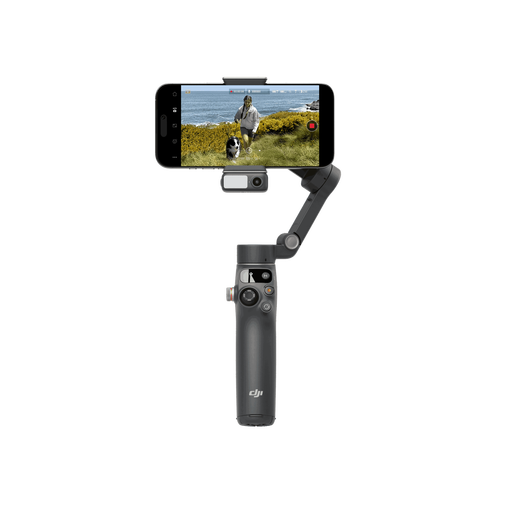
Why we love it: The DJI Osmo Mobile 7P is an ultra-comprehensive smartphone stabilizer, designed as a true mobile creation station. It cleverly combines a telescopic selfie stick, tripod, and software features to simplify shooting and editing, all with the legendary reliability of DJI stabilization.
Key features:
Who is it for? For smartphone creators looking for an all-in-one, intuitive, and ready-to-go solution. Perfect for vlogs, tutorials, and travel videos where every second counts.
Do the models we've featured not quite match what you're looking for? Want to explore other types of accessories to enhance your shots? Our catalog is full of other gems.
? Browse our Equipment Tracking Device category for more options
1. Do I really need a stabilizer if my smartphone already has stabilization? While the optical (OIS) or electronic (EIS) stabilization in modern smartphones is effective at smoothing out micro-jitters, it reaches its limits with larger movements, like walking or running. A mechanical 3-axis gimbal provides a whole other level of smoothness, giving your videos that professional, cinematic look that internal stabilization alone can't achieve.
2. Is a smartphone stabilizer compatible with all models? The vast majority of stabilizers are designed to accommodate a wide range of smartphones. However, it's crucial to check the manufacturer's specifications before buying. The maximum dimensions (width, thickness) and weight supported by the gimbal are always specified.
3. What's the difference between 2-axis stabilization and a 3-axis gimbal? A 2-axis stabilizer corrects for tilt (up/down) and roll (sideways rotation). A 3-axis gimbal adds correction for pan (left/right panoramic movement). This third axis is essential for neutralizing unwanted rotational movements when you walk, delivering a much more stable and professional result. Today, nearly all serious YouTube gear relies on 3-axis stabilization.