
Livraison le jour même ou le lendemain

Qualité garantie

Débloquez vos offres de bienvenue: Livraison GRATUITE | Jusqu'à -80 % | 30 jours d'essai gratuits à JoyPlus
Téléchargez l'application
Creating smooth, professional videos is no longer exclusive to Hollywood studios. But a shaky image or a sudden movement is all it takes to ruin your shots and betray an amateur look. The video stabiliser is the exact accessory that transforms a mundane shot into captivating content. Between a smartphone gimbal and an all-in-one stabilised camera, the options are vast. Don't worry, we're here to help you navigate the choices.
This guide is designed to give you everything you need to choose the ideal gear for your projects, whether you're a content creator, an avid traveller, or simply an enthusiast looking to capture your memories with flawless image quality.
By the Joybuy editorial experts, 14 July 2026.
Before committing to a model, it's important to consider a few key questions. Two main product categories are available to you.
A smartphone gimbal is a motorised mount that you attach your phone to. Its motors compensate for your slightest movements in real time to ensure perfect stability. This is the ideal solution if you're already happy with your smartphone's video quality and your number one goal is to get ultra-smooth footage. Most models are compact, foldable, and enhanced with software features via a dedicated app, such as the very practical AI subject tracking.
Also known as a 4K pocket camera, the stabilised camera merges a camera and a gimbal into a single, ultra-compact body. Its key advantage? Complete autonomy: it doesn't rely on your smartphone and therefore won't drain its battery. Designed from the ground up for video on the move, these devices often offer superior image quality and stabilisation. It's the perfect choice for a vlogging stabiliser or for adventurers who want dedicated gear that's always ready to go.
Here are the models that caught our attention, each excelling in a specific area.
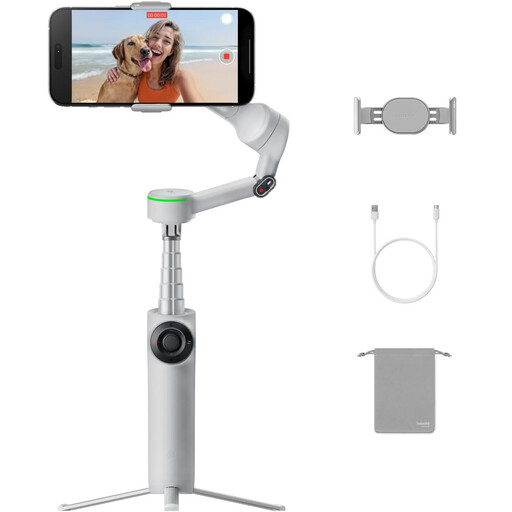
Why we love it: This smartphone gimbal focuses on its state-of-the-art artificial intelligence. Its tracking system, compatible with over 200 apps via DockKit, is impressive: it keeps the subject perfectly framed, even during complex movements or in a crowd. Its foldable design makes it super-easy to slip into a bag.
Pros:
Who is it for? Content creators on TikTok, Instagram, or YouTube who often film themselves alone and need rock-solid automatic tracking.
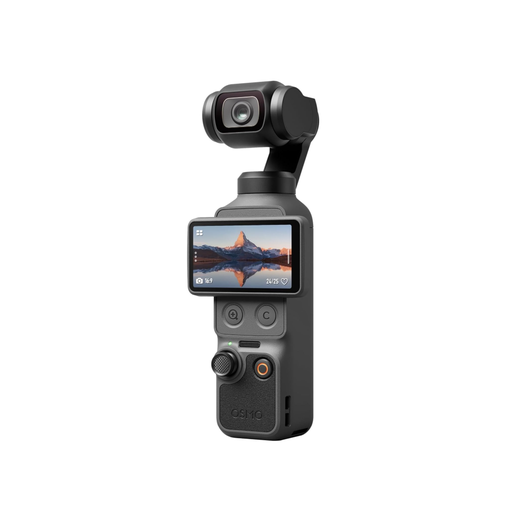
Why we love it: The DJI Osmo Pocket 4 is the Swiss Army knife for creators on the go. This 4K pocket camera combines formidable image quality with mechanical stabilisation in a format that fits in your hand. Its large 1-inch CMOS sensor works wonders in low light, and its ability to shoot in 4K/240fps opens the door to spectacular slow-motion shots.
Pros:
Who is it for? Travellers and vloggers looking for a discreet and powerful solution that offers image quality far superior to a smartphone, without the bulk of a camera.
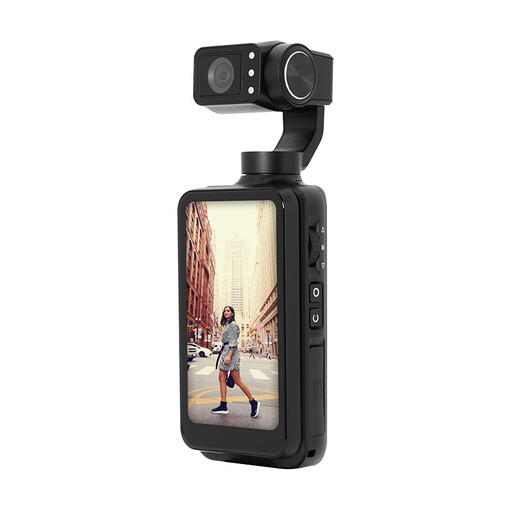
Why we love it: This stabilised camera has a killer feature: its huge 3.5-inch rotating touchscreen. It's a game-changer for framing yourself, especially for front-facing vlogs. It goes even further with up to 5K recording and a 120° wide-angle lens, perfect for capturing all of the scenery or action.
Pros:
Who is it for? Content creators focused on vlogging who want clear video feedback and a wide angle to easily film themselves in any setting.
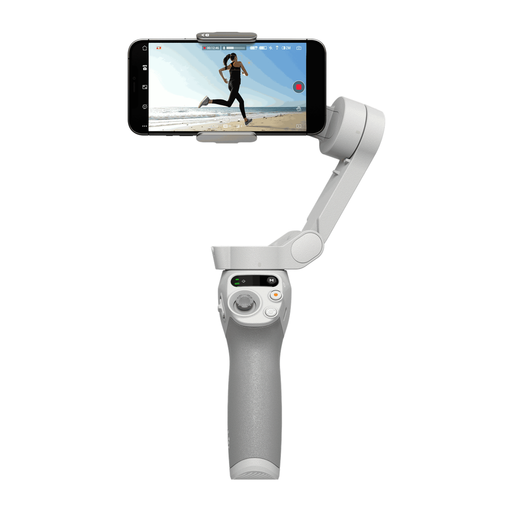
Why we love it: The Osmo Mobile SE is the ideal and affordable entry point into the DJI ecosystem. It incorporates the technologies that have built the brand's reputation, such as 3-axis stabilisation and the ultra-reliable ActiveTrack 5.0 subject tracking, all in a portable and foldable format. A remarkably effective tool for transforming your smartphone videos.
Pros:
Who is it for? Amateur videographers and smartphone users (Android/iPhone) who want to take their video quality to the next level (social media, family memories) without any hassle.
Our selection is just a glimpse of the excellent products available on the market. If you can't find what you're looking for or simply want to explore other options, many models with various features await you.
? Discover our complete collection of gimbal stabilisers to find the perfect model.
In reality, the two terms are often used interchangeably. To be precise, "stabiliser" is the generic term. A "gimbal" is a type of stabiliser that uses motors and gyroscopes to actively compensate for movements on multiple axes (usually three). Today, almost all consumer video stabilisers are gimbals.
Be careful, a stabiliser is not universal! Compatibility depends on the weight and dimensions of your smartphone. Each manufacturer specifies a weight and width range to adhere to. It is crucial to check that your phone is compatible before purchasing; otherwise, the motors won't be able to function correctly and the stabilisation will be ineffective.